
THE SHORT ANSWER
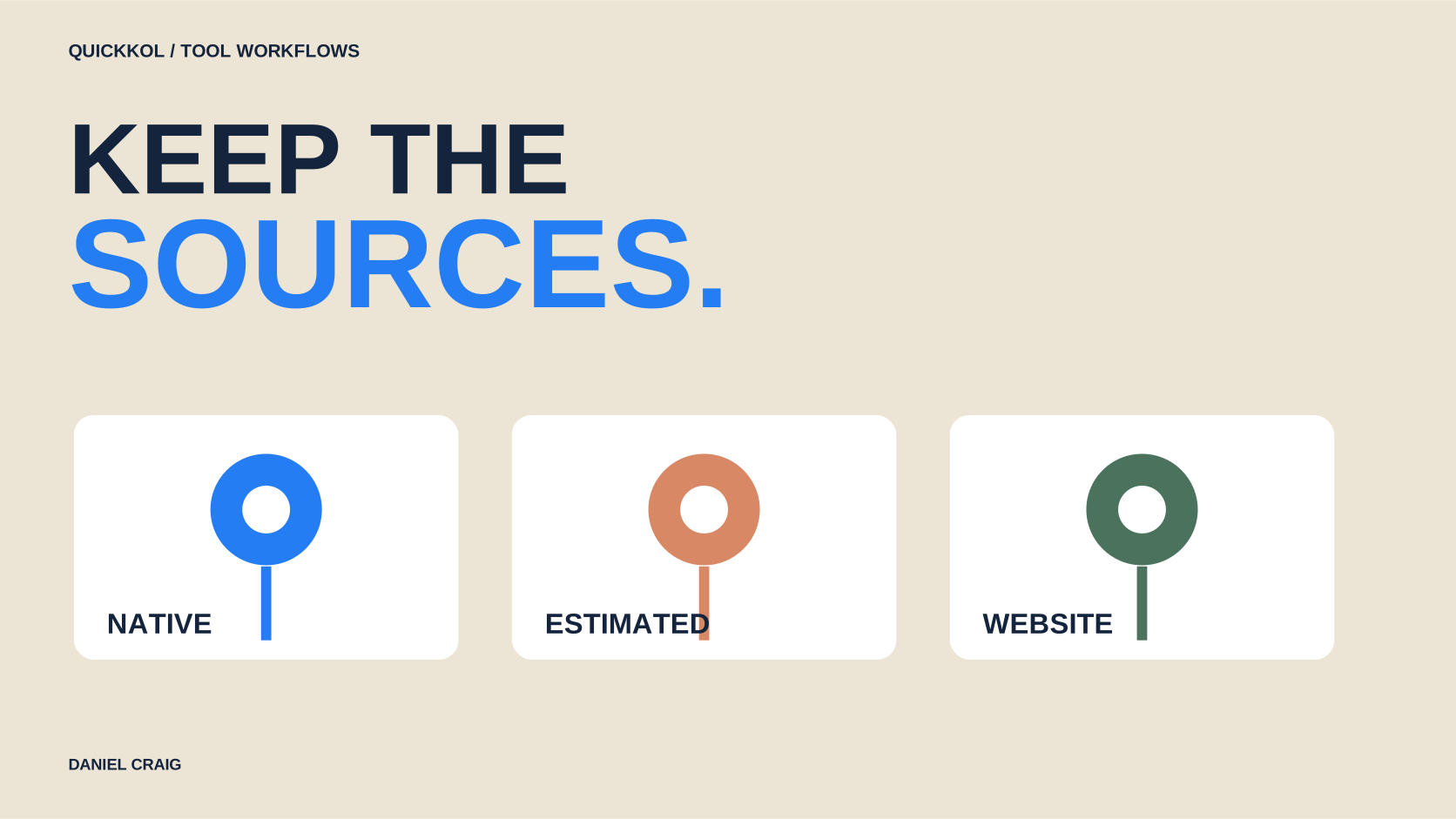
Influencer analytics tools should divide the questions: native reports describe content performance, third-party estimates support audience assessment, and website analytics observes tagged visits and attributed outcomes. Connect accounts, assets and windows while retaining provenance. The stack should answer different questions rather than repeat the same number across more dashboards.
Choose the data layer from the business question
Whether people saw content, whether the intended market was represented and what happened after a visit require different evidence. Define the next brand decision, such as changing an explanation or a creator, then identify supporting data. Three charts in one tool do not necessarily answer all three questions.
Separate pre-campaign estimates from post-publication observations. Estimated audience is not the actual viewers of this campaign, and prior performance does not guarantee sales. Explicit purposes make unsupported report conclusions easier to spot.
Use native reports within authorized access
YouTube Advanced Mode documents report comparison and export. That does not grant a brand access to any creator’s backend. Use appropriate authorization or relevant reports shared by the creator, retaining platform, period and export time.
A screenshot without headings is difficult to interpret. Request the minimum useful evidence with metric definitions, asset identifiers and organic or paid context. If only some fields are available, state the limit and assess whether it supports the current decision instead of silently inserting external estimates.
Keep third-party audience data labeled as estimates
External audience information can help compare market direction, but retain its source or methodology, update date and coverage conditions. Decimal precision does not turn an estimate into an exact native statistic.
QuickKOL lists audience analysis separately from other actions in pricing; verify inputs, visible fields and usage against the task. Any reporting tool should distinguish native observations, external estimates and unknowns. Consistent visual styling should not erase those evidence differences.
Connect website behavior through explicit identifiers
Google Analytics campaign URL documentation supports source tagging with parameters. Map creator, account, campaign, asset and link identifiers, fixing naming and case conventions. Revised assets should remain distinguishable.
Before aggregation, reconcile period, currency and order status. Native views cannot simply be added to website visits, and attributed orders do not measure the purchase rate of every viewer. If a link circulates elsewhere, retain the attribution limitation rather than assigning exclusive credit automatically.
Reconcile conflicts rather than silently overwriting them
When a native export differs from a third-party snapshot, compare collection time and definitions first. Define a primary source, fallback and adoption condition for each field. Preserve both values and an explanation where necessary instead of deleting differences to tidy the dashboard.
A seven-day cumulative report and an in-month increment can both be correct. Route the conflict to someone who understands the platform and document the resolution. Without reconciliation ownership, more connectors simply spread errors faster.
Keep connections that support real decisions
Each tool should answer a distinct question and expose source values, an owner and a review date. Identify reports never used to change candidates, content or spending. Remove unused connections before adding another source.
Use the single-tool analytics audit when evaluating one product. For collection timing and exceptions after launch, read the campaign tracking plan. The outcome of a data stack is an explainable decision record, not an ever-longer list of connectors.
Research method and scope
Official export, campaign URL and this site’s audience-analysis documentation were checked October 15, 2026. This guide claims neither complete cross-platform deduplication nor access to arbitrary account analytics. Implement connections within actual brand permissions.
Responsibilities across the analytics stack
The layers complement one another; native, estimated and attributed results are not interchangeable.
| Layer | Question answered | Limit to retain |
|---|---|---|
| Authorized native reports | How content performed in the reporting window | Account access and definitions |
| Third-party audience estimates | Whether audience-market fit deserves review | Method, date and coverage |
| Website behavior | Tagged visits and attributed outcomes | Rules, windows and link circulation |
| Reconciliation record | Why values conflict and which is used | Primary source and repair ownership |
CHECKLIST
Analytics stack launch checks
Have the brand owner confirm each item with evidence and a next action.
- Assign one question to each data layer
- Retain permissions, provenance and windows
- Map account, asset and link identifiers
- Assign a primary source for conflicting fields
- Connect reporting to the next brand decision
Sources and further reading
- 01YouTube: Advanced Mode reports and exports
- 02Google Analytics: Campaign URL parameters
- 03QuickKOL: Current plans and credit definitions
External pages can change. Recheck platform rules, contracts and local law before launch.