
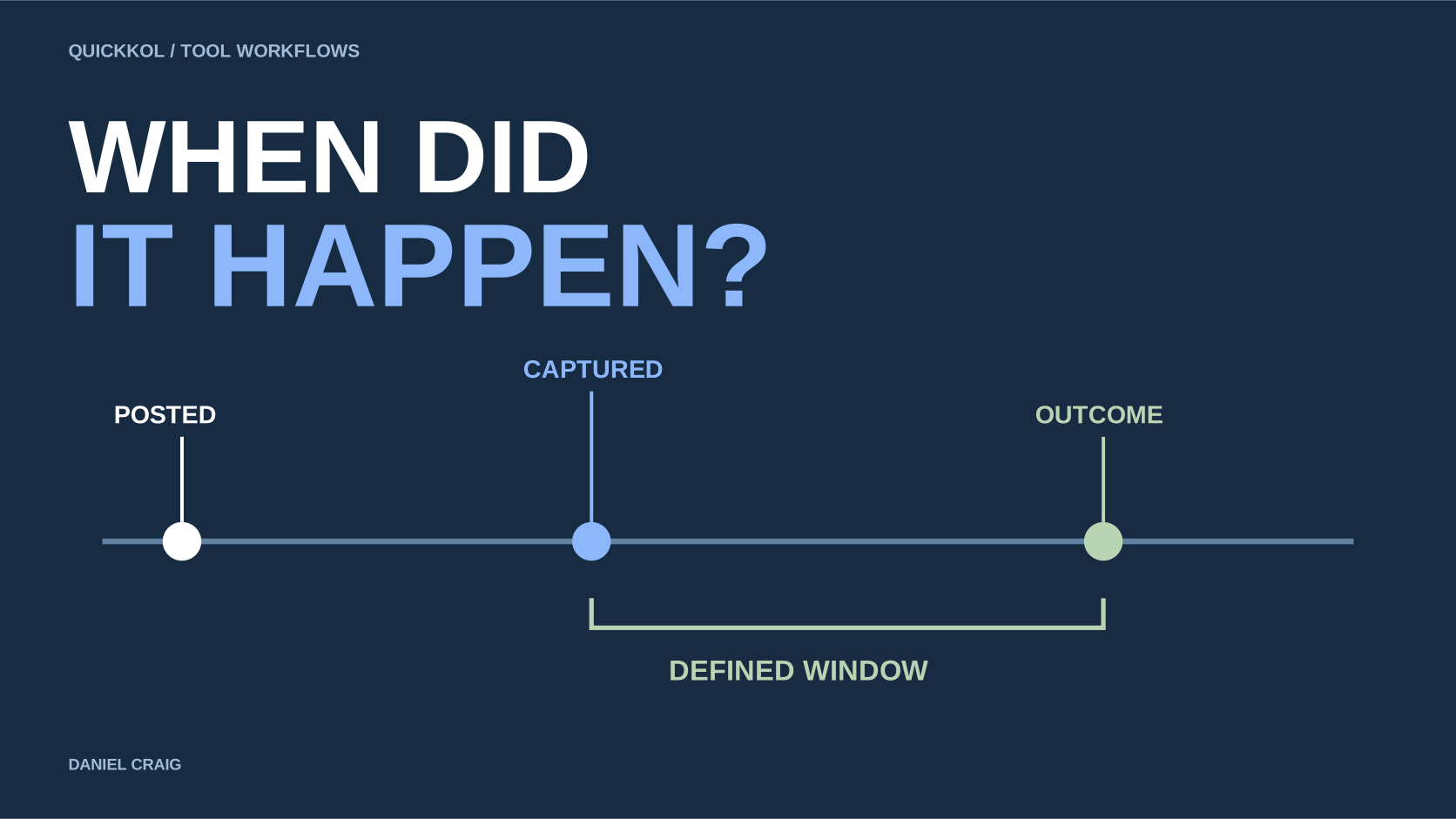
THE SHORT ANSWER
Influencer tracking tools should explain when promised content appeared, when it was captured, which window its metrics describe and what outcomes connect to the campaign. Publication, capture, licensing and conversion are different facts. Define evidence and timing before handling exceptions. A tracked link and report do not prove incremental sales.
Turn commitments into trackable objects
For every deliverable, retain creator account, format, expected date, allowed timing range and acceptance method. A signed partnership may contain multiple videos, temporary posts and revisions, so the creator record alone is insufficient.
Connect each content object to the partnership ID. Where product experience carries no posting obligation, state that instead of classifying silence as lateness. Tracking starts with what should happen, not indiscriminate collection of every brand mention.
Distinguish publication from capture
Keep original URL, public publication time, first observation and latest collection time separate. A tool finding a post one day late does not establish late delivery. Deletion, access changes or mention patterns may also affect capture.
QuickKOL lists campaign tracking separately in pricing; verify actual coverage and collection capability in the account. Test normal publication, delayed capture and a manual addition. A monitoring capability does not establish complete capture across every network and format.
Compare content at defined observation ages
Two-hour-old content cannot be fairly compared with seven-day cumulative performance. A brand may define day-one and day-seven checkpoints, but should retain actual collection time. Label late data rather than rewriting it as an on-time snapshot.
YouTube documentation distinguishes impression and viewing definitions. Retain metric name, platform, format and source rather than merging unlike counts without explanation. Any aggregate should state whether it counts events rather than deduplicated people.
Connect actions with links without overstating attribution
Google Analytics campaign URL parameters can identify visits arriving through tagged links. Define source, medium, campaign and content naming, with explicit mappings to creators and assets. Test the landing page and parameter retention before launch.
Site measurement also depends on access, attribution settings and user behavior. Codes can circulate beyond the original audience. Separate tagged visits, attributed orders and experimental lift. An observed click path does not assign every later sale to the creator or establish causality.
Create an actionable tracking exception queue
Separate overdue publication, uncaptured posts, broken links, missing licenses and delayed metrics. Assign a reviewer, deadline and correction route to each. One generic missing indicator forces the operator to rediscover the cause every day.
If eighteen live deliverables produce sixteen automated report entries, investigate the two capture gaps rather than claiming only sixteen were delivered. This is an operating example. Retain the source and correction time for manual repairs so recurring failures can be identified.
Evaluate continuity through evidence completeness
Review deliverable matching, capture repairs, timestamp accuracy and manual effort rather than the number of charts. Check whether the brand can export source links, snapshot times and mappings after the subscription ends. Campaign history should remain usable at handoff.
For native and website data together, read the analytics stack guide. For one reporting product’s provenance and windows, use the single-tool analytics audit. Before monitoring in QuickKOL, define which facts the current campaign needs to establish.
Research method and scope
Official metric, campaign URL and this site’s tracking references were checked October 15, 2026. Timing, counts and exception scenarios are operating suggestions, not capture-rate or incremental-sales tests.
Four facts on a tracking timeline
Tracking and attribution need explicit definitions; connected observations do not establish causation.
| Fact | Evidence | Does not establish |
|---|---|---|
| Published | Original URL and publication time | Successful capture |
| Captured | Observation time and metric snapshot | Content-use permission |
| Visited | Tagged link and site record | All visits came from original viewers |
| Attributed order | Defined rules and window | Confirmed incremental sales |
CHECKLIST
Campaign tracking launch checklist
Have the brand owner confirm each item with evidence and a next action.
- Create a record per deliverable
- Separate publication, observation and collection time
- Define metric windows and sources
- Click-test each campaign link type
- Assign capture gaps and delays to an owner
Sources and further reading
- 01YouTube: Impressions and watch-time definitions
- 02Google Analytics: Campaign URL parameters
- 03QuickKOL: Current plans and credit definitions
External pages can change. Recheck platform rules, contracts and local law before launch.