
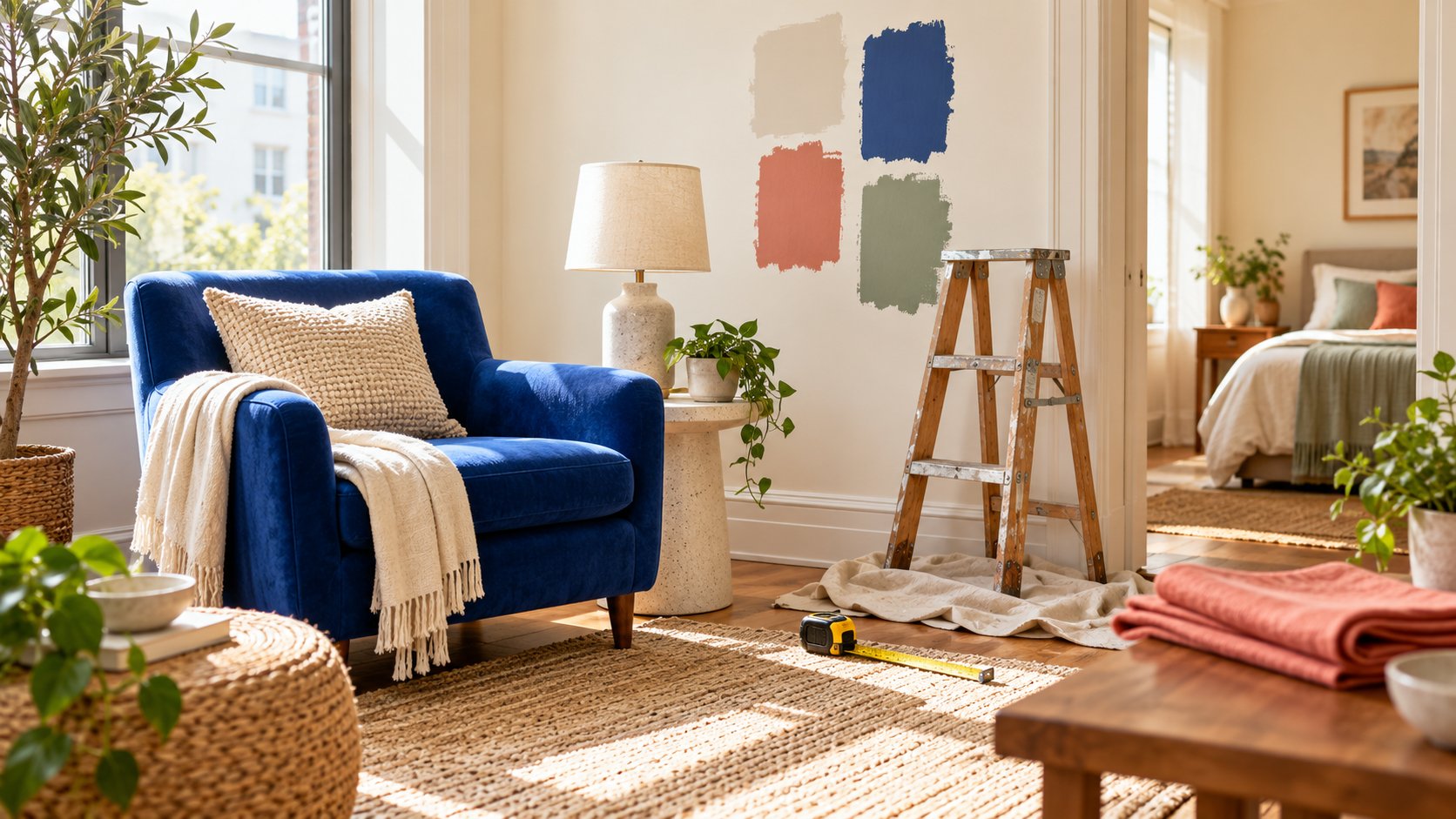
AI-generated editorial illustration; people are not the creators named in this article.
THE SHORT ANSWER
Choose home-decor creators by project type: rental constraints, DIY transformation, individual styling or a larger renovation. The Sorry Girls, Alexandra Gater and Lone Fox are distinct official research references, not a verified sponsorship ranking. Space, timing, product availability and rights often determine feasibility before follower count matters. A beautiful room is not enough evidence that a creator can fit a particular item into the brand’s budget, production schedule and serviceable market.
Let the space and product determine the search
Lighting, paint, furniture and storage need different installation and demonstration conditions. A rental may prohibit drilling. Large furniture introduces doorway and delivery constraints. A custom item may require a longer lead time than the campaign calendar allows.
Confirm dimensions, delivery, installation and returns before approaching a recognizable name. The right question is not simply whether a creator makes attractive rooms, but whether the proposed product can credibly work in the available space. Record hard constraints in the brief and use them to shape discovery. This prevents a brand from building a creative proposal around a room or date that cannot actually accommodate the item.
The Sorry Girls: study the project process
The Sorry Girls’ official site describes DIY, design and sustainability-related content and identifies a team. A brand can research explanations of process, tools and material choices rather than treating the publication as a single-person account.
For a transformation project, clarify who produces, who installs and how the item will be used. An editorial interest in sustainability does not substantiate an environmental claim about a sponsored product. Prepare the relevant facts and let the project reveal practical trade-offs. A detailed installation sequence can be valuable even when it is less immediately glamorous than a finished-room image, because it answers the customer’s feasibility questions.
Alexandra Gater: research space-specific makeovers
Alexandra Gater’s official site provides makeover, design and owned-product routes. Use that as a starting point to understand space-specific content rather than choosing a creator solely because a room’s palette resembles the brand mood board. Owned products also warrant a conflict check.
Rental and small-space assignments can impose important constraints, but confirm them for the actual project. A website title does not establish every viewer’s housing situation or the team’s available capacity. Ask which room, problem and deliverable are proposed. A small, clearly bounded styling task may be more feasible than forcing a large renovation into a short launch window.
Lone Fox: separate editorial projects from commerce
Lone Fox’s official site presents home products and Drew’s projects. A brand can study styling and project presentation while keeping the commerce context visible. The site does not establish that any product placement or existing image is available for permanent commercial reuse.
Check owned-category competition, exclusivity and third-party material. A complete room can contain several brands and rights holders, and the agreement should describe the rights the brand actually receives. Do not assume ownership of a finished-room photograph merely because one featured item was gifted. Separate a new production assignment from licensing an existing project asset.
Compare quotes through project dependencies and rights
A quote may need survey, materials, installation, filming, reshoots, publication and rights. In a hypothetical example, furniture costs $800, shipping and installation $250 and production plus publication $1,200, for a $2,250 cash plan. Advertising rights remain a separate question. These are not market averages.
Agree on what happens if the product is late: replacement, revised scope or delayed publication. A last-minute color preference differs from correcting an inaccurate specification. Record that distinction so the creator does not absorb every procurement delay as unpaid rework. The scope-change guide can help the brand assign the cost and approval for a real change.
Measure project explanation and the next customer action
Home purchases can involve measuring, saving, asking a question and buying later. Record those actions separately. A save is not an order, and watching a full room transformation does not establish sales of one featured product.
Use identifiable product links and consistent windows. QuickKOL can support project-themed discovery and content matching, while space, dates and terms still require confirmation. Before expanding, decide whether the portfolio needs more examples of the same room or evidence from a different situation. The portfolio-gap guide helps distinguish repetition from useful coverage. A successful project should leave customers better able to judge fit, not merely with a striking before-and-after image.
Worked example: qualify a small furniture makeover assignment
Suppose a brand wants a narrow side table included in a room makeover. Confirm dimensions, delivery, assembly, materials and relevant use limitations before the project commits to a placement. A creator’s design capability does not establish that every room can accommodate the product or that the available version suits the planned scene.
The schedule may depend on installation, other suppliers and access to the space. Separate what the brand controls from those external dependencies. A delay elsewhere in the room should not become an unexplained failure attributed to one creator or one shipment. Agree on what can change without undermining the assignment and when a scope review is required.
If the brand needs still images or later advertising use, discuss that at the beginning. A finished room is not automatically a library of freely reusable brand assets. The relevant rights may involve the creator, property, participants or other material. This example turns a visually attractive home-decor idea into a feasible project, with product fit, timing and usable output established before the team relies on the reveal as a launch commitment.
FAQ: are attractive images enough to select a home creator?
Attractive images demonstrate part of an aesthetic and production capability. They do not establish installation, practical explanation or project management. Review complete work comparable to the assignment and confirm the actual production conditions. An excellent styling account may be unsuitable for a project requiring technical assembly, while a capable DIY team may need a different scope and schedule from a simple product photograph.
Home content can also have a long production cycle and remain discoverable after publication. Align the observation window, asset license and product availability with that reality. A long-lived article or video pointing to a discontinued version or expired offer can create avoidable customer confusion.
Decide what the brand needs after the initial reveal: a reusable image, a documented use scenario, qualified visits or another specific result. Confirm the permission and measurement route for that result. This keeps selection grounded in the full assignment rather than in a thumbnail alone. The named references help describe content directions; they do not replace a current check of commercial policy, available space, audience evidence or willingness to include the proposed product.
Research date, evidence and limitations
Official sites checked October 21, 2026. Examples are research references, not tested sponsorship recommendations. Budgets are hypothetical and execution advice is editorial judgment.
Home-content types and execution conditions
Editorial analysis and labeled hypothetical examples, not performance rankings, quotes or guarantees.
| Format | Useful job | Verify first |
|---|---|---|
| Rental makeover | Use under space constraints | Permission and dimensions |
| DIY process | Materials and technique | Skills, responsibility and tools |
| Product styling | Scale, color and context | Availability, scene and rights |
CHECKLIST
Before you put this into practice
Record the answers in the campaign working file.
- Confirm the item fits the space
- Assign delivery and installation
- Define delays and scope changes
- Do not infer image rights from gifting
Sources and further reading
- 01The Sorry Girls: DIY and home projects
- 02Alexandra Gater: Home makeovers and design
- 03Lone Fox: Home projects and products
External pages can change. Recheck platform rules, contracts and local law before launch.