
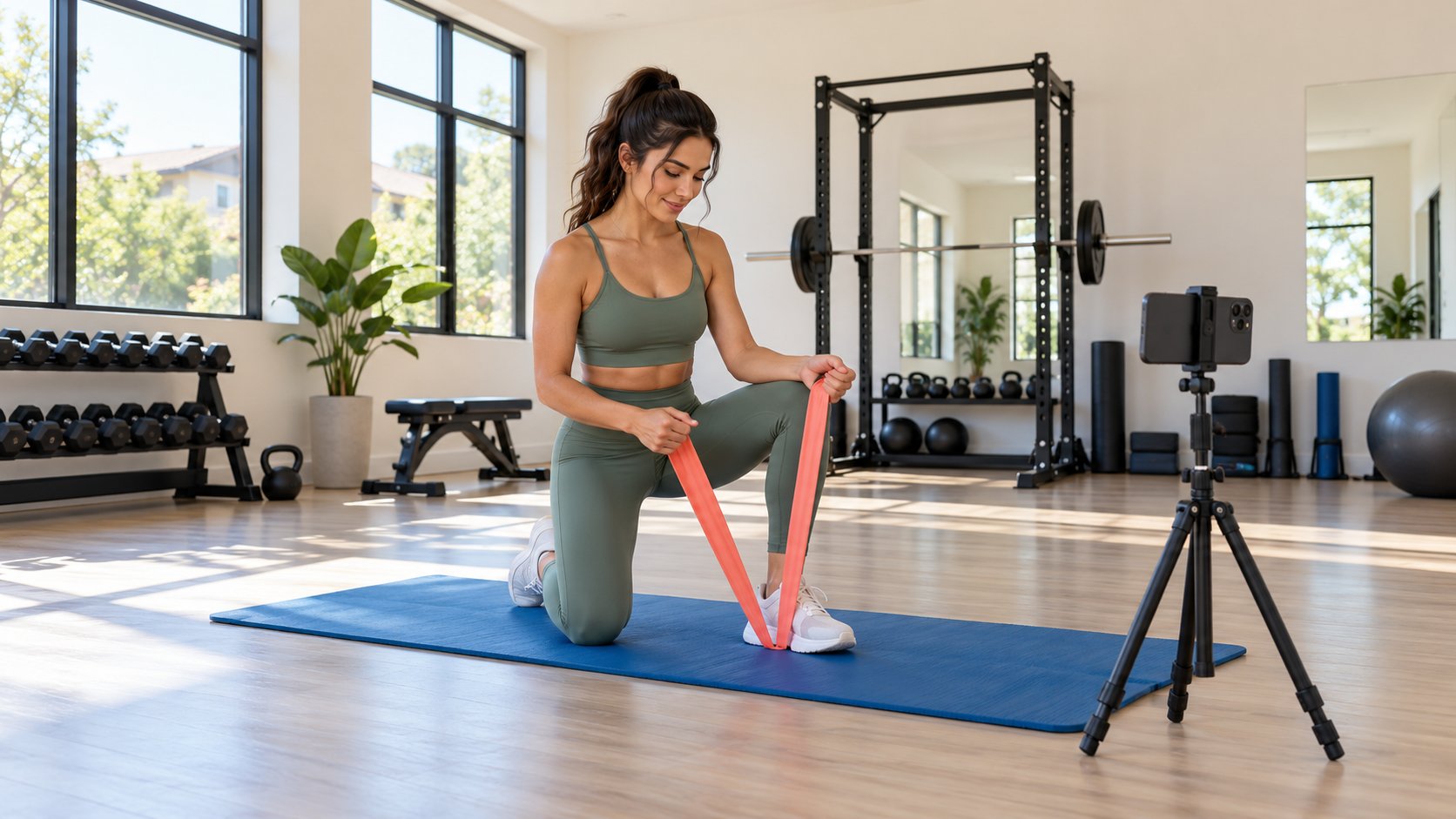
AI-generated editorial illustration; people are not the creators named in this article.
THE SHORT ANSWER
Choose fitness influencers by the training situation in which the product is useful. Strength instruction, follow-along home workouts, beginner calisthenics and yoga require different content. Verify relevant work, audience evidence and commercial feasibility before buying distribution. Set boundaries for health and performance claims before production. This guide explains the sourcing method; the separate fitness shortlist article provides named examples to research. A creator’s appearance, training ability or follower total does not establish suitability for your product.
Break fitness into product-use situations
“Fitness” is too broad to function as a buying brief. Lifting straps, yoga mats, apparel and training software create different demonstrations. Define user experience, environment, equipment, frequency of use and the hesitation the content should address. Search the activity and problem before searching the creator label.
A beginner home-training product may need setup and storage evidence. Clothing may need movement, sizing context and honest limitations. A training app may need an explanation of workflow rather than an athletic performance clip. These distinctions help the brand exclude irrelevant accounts without judging the person’s body or achievements. The question is whether the creator can make the proposed product task understandable within a format their audience already watches.
Use real content formats to build the search
Caroline Girvan’s official site is a starting point for structured training content. Hybrid Calisthenics provides movement progressions, while Yoga with Adriene provides yoga material. These examples illustrate different content approaches; they do not establish sponsorship availability or recommend a particular program for an individual’s health.
Build queries around movement instruction, training structure, routine adherence or equipment comparison, then add language and market. Treat recognizable creators as research seeds rather than the entire candidate pool. A relevant smaller account can emerge from the same content questions. Save the original example that inspired the query so a teammate can understand why an account belongs in the shortlist.
Inspect how the creator actually explains and demonstrates
Review a manageable sample of recent relevant work, including at least one complete demonstration rather than only thumbnails and opening clips. Record whether instructions are understandable, whether the product is actually used, whether limitations are addressed and whether the creator responds to relevant audience questions.
Do not confuse extreme movements or dramatic transformation promises with explanatory quality. Record a professional qualification only when it matters to the assignment and can be verified; do not infer one from a biography or physique. A creator can be an effective apparel storyteller without being a medical authority. Keep the proposed commercial role narrow enough that the evidence you have actually supports it.
Verify the reachable market and customer context
A creator living in the United States may reach people elsewhere, and not every viewer can buy from a US storefront. Check market, language, content habits and delivery eligibility. Public comments can generate a hypothesis about audience context; they cannot replace a dated audience report.
For a local gym, realistic travel distance matters. For equipment ecommerce, shipping cost, dimensions and service coverage may determine feasibility. Resolve these hard conditions before optimizing an engagement threshold. When the audience evidence is unavailable, keep the condition open and use a smaller test if the remaining risk is acceptable. Do not translate uncertainty into an invented percentage of “qualified followers.”
Set health-claim boundaries before the creative brief
FTC health-product guidance addresses substantiation for objective health-related claims. For the campaign, establish supported product facts before asking a creator to describe their experience. A personal observation should not quietly become a promise about everyone’s results.
For supplements or medical claims, this general marketing workflow is not a substitute for appropriate review. The operational recommendation is to keep the proposed statement, supporting evidence, limitations and approver together. Give the creator room to communicate honestly within those boundaries. It is easier to remove an unsupported claim from a brief than to repair a live campaign after the same claim has been repeated in several edits and advertisements.
Choose the first batch using fit and full cost
Suppose three of six candidates can execute the same task and quote $400, $600 and $900. Those hypothetical figures are comparable only after deliverables, timing, advertising rights and additional production costs are aligned. A low price does not solve a missing capability, and an expensive creator does not automatically improve the evidence.
Start with a bounded batch and learn about communication, production and audience response before expanding. QuickKOL can assist brief-led sourcing, content interpretation and personalized invitations. Use the single fitness-influencer pilot guide to define the first project after the shortlist exists. This separates a sourcing decision from a commitment to an ongoing ambassador program or an untested acquisition forecast.
Worked example: one accessory, different training contexts
Imagine a brand selling a portable exercise mat. Home strength sessions, travel mobility routines and yoga practice may all be relevant, but they raise different product questions. A home user may care about floor space, a traveler about packing and a yoga practitioner about the intended use conditions. Select one assignment before comparing creators.
A candidate does not pass merely by using a fitness label. Retain a piece of work showing the comparable setting, note the questions viewers ask and confirm that the product is suitable for the planned demonstration. A physique photograph is not evidence of teaching ability, product compatibility or the appropriateness of an exercise for every viewer.
Build the shortlist around the explanatory task and verify product statements separately. If the brand cannot support a performance claim, changing the creator does not solve the evidence gap. The example helps distinguish the broad “fitness influencers” discovery task from the single-creator pilot guide and the named reference list. Each serves a different decision: mapping suitable contexts, scoping an assignment and studying documented content directions.
FAQ: should brands choose only the strongest performer?
Sporting performance, explanatory skill and collaboration capability are different forms of evidence. A highly accomplished athlete may be well suited to a competitive story. A creator showing ordinary home routines may be better suited to a storage or convenience question. Neither choice should be made solely from a body type or a follower total.
Ask what the customer needs to understand and which work demonstrates that ability. A product assignment does not require the creator to act as a universal training authority. Avoid unsupported health outcomes, weight-loss promises or assurances that every viewer can reproduce a routine. The brand should supply accurate product information and identify statements that need evidence before the creator develops the story.
If a key condition remains unresolved, change the assignment or obtain the necessary review before filming. A modest demonstration of setup, dimensions or carrying convenience may be both more useful and more supportable than an ambitious transformation narrative. The collaboration becomes stronger when the limits are visible in the brief rather than added as a hurried caveat after production.
Research date, evidence and limitations
Reviewed October 21, 2026. Named creators illustrate content approaches; availability, pricing and willingness are unverified. Sample sizes and costs are operating assumptions.
Training context changes the evidence needed
Editorial analysis and labeled hypothetical examples, not performance rankings, quotes or guarantees.
| Product job | Content evidence | Confirm |
|---|---|---|
| Home equipment | Complete setup and storage | Space and shipping |
| Training apparel | Fit explained through movement | Sizing and usage scope |
| Training software | Actual workflow demonstration | Platform, access and facts |
CHECKLIST
Before you put this into practice
Record the answers in the campaign working file.
- Define the product-use situation
- Review a complete demonstration
- Approve claim boundaries before production
- Compare cost on the same scope
Sources and further reading
- 01Caroline Girvan: Training content and programs
- 02Hybrid Calisthenics: Movement and training content
- 03Yoga with Adriene: Yoga content
- 04FTC: Health Products Compliance Guidance
External pages can change. Recheck platform rules, contracts and local law before launch.