
THE SHORT ANSWER
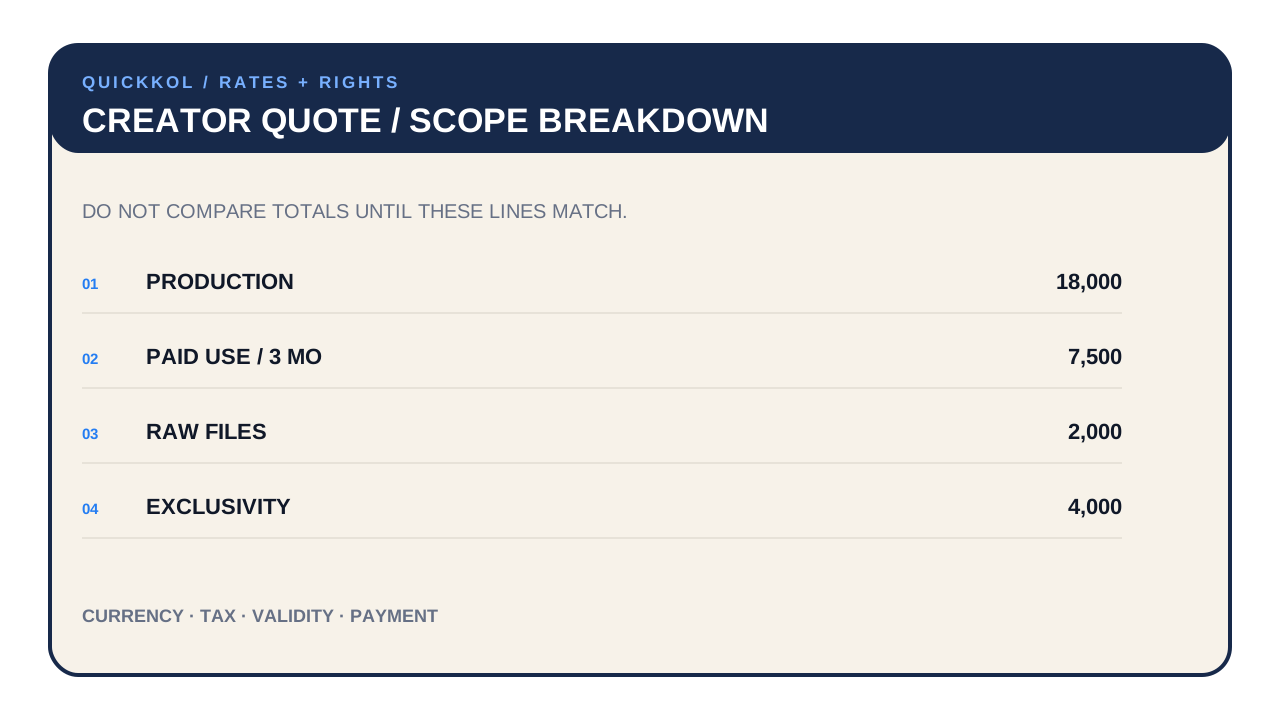
A rate card is a starting point, not a comparable final price. Break every package into platform, format, quantity, production, publication, live period, included revisions, organic reposting, paid use, exclusivity, raw assets and tax. Normalize all candidates to one brief by removing unnecessary items and adding missing rights, while recording currency and validity. Only aligned scope makes totals or CPM comparable.
Unbundle the package
“One Reel plus three Stories” still lacks duration, link, live period, production requirements and revisions. Ask what is included and excluded.
If a bundle cannot be unbundled, mark items that are included but unnecessary so a low unit price is not mistaken for high value.
Normalize rights and time
Thirty days of organic reposting is not six months of paid advertising. Put asset, channel, territory, term and editing permission on separate rows.
Align quote validity, exchange-rate date and tax treatment. Keep original and converted currency for cross-market history.
Separate production cost from media value
Production complexity affects filming and editing, audience performance affects publication value, and rights affect later media use. They can share one total while supporting different decisions.
Do not divide price by followers as a universal metric. Include median views, target-market audience and content job.
Preserve the final negotiated version
Final scope may differ from the rate card. Save the initial card, negotiated changes, approver, final amount and date so agreement and budget do not use an old version.
Keep the rate card as a historical attachment and the current quote as structured data in QuickKOL, making changes reviewable without comparing screenshots.
Normalize quote scope instead of comparing totals
Two quotes are comparable only when deliverables, platform, production, revisions, organic use, paid use, exclusivity, raw files, term, tax and payment conditions align. Meta treats branded content and partnership ads as related but distinct commercial capabilities; posting only and paid amplification are different scopes.
Quote A may be 18,000 for one video and 30 days of organic use; quote B may be 25,000 for two videos, three months of paid use and raw files. Once add-ons are separated, B is not automatically more expensive. Normalization reveals scope and does not declare a “market rate.” Final price remains a negotiated value decision.
Quote normalization fields
Keep currency, tax treatment and validity date.
| Scope item | Unit | Question |
|---|---|---|
| Production | Asset / format | Revision rounds |
| Organic posting | Platform / term | Required live period |
| Paid use | Month / market | Account and ad type |
| Exclusivity and files | Category / file | Scope and delivery format |
PRACTICAL TOOL
Creator quote normalization calculator
Separate base fee, deliverables, rights and add-ons into a comparable scenario.
Sources and further reading
External pages can change. Recheck platform rules, contracts and local law before launch.