
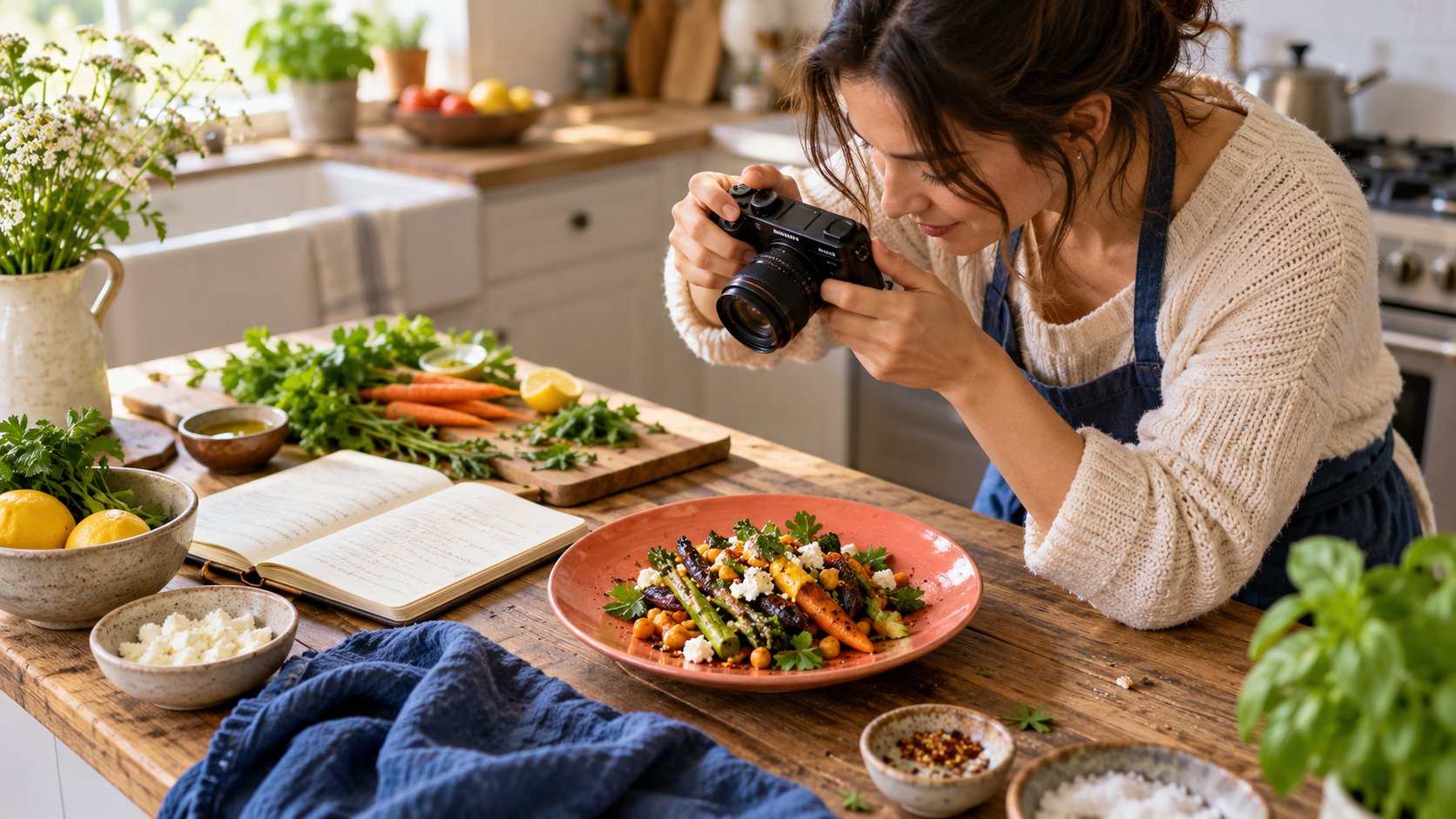
AI-generated editorial illustration; people are not the creators named in this article.
THE SHORT ANSWER
A food-blogger partnership can involve recipe development, photography, publication, social distribution or licensing. Define those jobs separately. Smitten Kitchen explicitly states a no-sponsored-endorsement policy, so it belongs here as a content reference rather than an assumed paid prospect. Just One Cookbook and RecipeTin Eats also require policy and availability checks. A recognizable food publication is not automatically an accessible advertising package, and a recipe’s popularity does not establish that it can demonstrate your specific product.
Decide whether you need recipe work, distribution or both
An ingredient brand may need repeated recipe testing. A kitchenware brand may need an understandable technique demonstration. A restaurant may need a visit or local guide rather than a recipe. These jobs have different production time, costs and rights.
State the customer question: how does a new ingredient fit a familiar meal, how does equipment support a technique, or how can a nearby customer visit? “Create a viral recipe” is not a useful scope when the brand has not supplied materials, testing time or factual boundaries. Decide whether the main purchase is development, explanation or access to an audience before discussing a post fee.
Smitten Kitchen: respect an explicit sponsorship boundary
Smitten Kitchen’s About page describes its recipe publishing and explicitly declines sponsored endorsements. A brand can study how it explains cooking or addresses reader questions, but should not present it as an available guaranteed-sponsored-post option.
This is why a research list needs exclusion reasons, not only recognizable names. A publication’s stated policy should carry more weight than a third-party spreadsheet saying it can be contacted. Respecting a clear boundary saves time and protects the relevance of outreach. The example is not a negative assessment of the publication; it is evidence that excellent editorial fit and commercial availability are separate questions.
Just One Cookbook: research a specific cooking context
Just One Cookbook’s official About page introduces Nami and the team behind its Japanese-cooking content. For a brand, the research value is a clearly defined culinary context rather than a generic category called food. Look at how ingredients, steps and context make a dish understandable to a reader.
Resolve market availability and product compatibility before proposing work. An ingredient substitution can change the recipe’s purpose; a product unavailable to readers can make an otherwise attractive assignment impractical. This guide does not assume a current sponsorship offer or an unverified audience geography. The official identity and editorial direction are research evidence, while the commercial conversation remains a separate step.
RecipeTin Eats: examine the publishing system behind the name
RecipeTin Eats’ official author page identifies Nagi and the recipe project. A brand should then establish who would perform the proposed work, which channels are in scope and whether recipe, photography and video permissions are separate. A recognizable personal name can sit within a broader publishing operation.
Existing books, products or commercial commitments may also affect fit. A comprehensive website does not mean every asset is available to license, or that payment buys a permanent placement. Ask for a proposal against a concrete task rather than asking only for “a collaboration.” The proposal should state what is created, what is published and what the brand may subsequently reuse.
Scope testing, revisions and content rights
Agree on ingredients, test rounds, permitted substitutions, image quantities, credit, channels and duration. A published article does not automatically authorize copying the full recipe onto a product page or using original photographs in paid ads. Separate the creation and distribution purchase from the license.
For a hypothetical budget, testing costs $500, photography $700, publication $600 and materials $100, totaling $1,900 before separately negotiated licensing. These inputs are not market prices. A recipe’s development effort can be substantial even when a creator has a smaller following. Compare the proposed work and revisions rather than attempting to derive the whole fee from audience size.
Measure the actual path over an appropriate window
A recipe article can attract traffic through search, email and social sharing rather than only on publication day. Agree on the reporting window, links and evidence type. Separate page visits, product clicks and deduplicated orders; an attractive photograph is not a transaction report.
FTC guidance addresses material brand-relationship disclosure. Keep product facts accurate and avoid treating the recipe writer’s experience as proof of a broader unsupported product benefit. QuickKOL can assist content-fit discovery and outreach preparation, while editorial policy and licensing remain matters for the actual parties. A useful shortlist identifies the right content capability and a valid business route, not merely a set of famous food names.
Worked example: turn an ingredient brief into a recipe assignment
Suppose an ingredient brand wants to feature a canned bean product. Define the intended dish, serving context, product version, supportable information and practical testing arrangements. Recipe development, photography, publication and brand reuse are separate scope questions. A single fee label should not conceal all of them.
Look for comparable work and a compatible commercial policy. A strong recipe publisher may be a useful editorial reference while declining sponsored endorsements. Respect that boundary. Study the content structure without turning the author into a sales lead to pursue repeatedly. Find another suitable partner when the proposed relationship is not accepted.
For a willing candidate, confirm what happens if the product does not work in the planned recipe. Development can reveal a mismatch, and the agreement should provide a way to revise or stop the assignment rather than require a misleading result. Keep factual product information separate from the creator’s culinary judgment. This example shows why food-blogger collaboration needs more than an attractive finished dish: the recipe process, commercial policy and usable rights must fit the brand’s actual task.
FAQ: how should a blog article be compared with a social post?
A blog article and a social post can have different discovery paths, lifecycles, link routes and rights. Comparing only cost per immediate view can miss the job being purchased. Decide whether the brand needs a discoverable recipe, production assets, short-term distribution or qualified product visits, then evaluate the corresponding scope.
A longer-lived article also needs clarity about product changes, broken links and update responsibility. Publication does not give the brand ownership of the full text, images or unlimited revision rights. The publisher’s editorial policy remains relevant after the first launch period. If the brand needs its own reusable recipe asset, purchase that permission explicitly.
Keep the reporting window aligned with the intended use while avoiding a promise that evergreen content will produce traffic indefinitely. A useful review may distinguish initial publication results from later observations. The reference authors in this guide illustrate editorial directions and policies; they are not a current ranking of commercial outcomes. The strongest collaboration combines relevant food work, a willing partner and a scope that can be maintained honestly as the product and content age.
Research date, evidence and limitations
Official policies checked October 21, 2026. Except for Smitten Kitchen’s stated policy, no acceptance or refusal of sponsorship is inferred. Budget figures are hypothetical.
How to use three food-publishing references
Editorial analysis and labeled hypothetical examples, not performance rankings, quotes or guarantees.
| Reference | Research direction | Commercial boundary |
|---|---|---|
| Smitten Kitchen | Recipe explanation and reader questions | Explicit no-sponsored-endorsement policy |
| Just One Cookbook | Japanese-cooking context | Policy, availability and scope require confirmation |
| RecipeTin Eats | Recipe publishing operation | Confirm publishing and licensing separately |
CHECKLIST
Before you put this into practice
Record the answers in the campaign working file.
- Check sponsorship policy first
- Separate recipe work and distribution
- Do not infer rights from publication
- Use an appropriate reporting window
Sources and further reading
- 01Smitten Kitchen: Author and no-sponsored-endorsement policy
- 02Just One Cookbook: Nami and editorial team
- 03RecipeTin Eats: Nagi and recipe publishing
- 04FTC: Disclosures 101 for social media influencers
External pages can change. Recheck platform rules, contracts and local law before launch.