
THE SHORT ANSWER
Rolling out influencer marketing tools starts with the team’s work: define a complete partnership chain and ownership, then introduce discovery, outreach, delivery and measurement in stages. A brand need not buy everything at once. Prove adoption, handoff and reviewable results in a pilot before adding products and automation around observed bottlenecks.
Separate missing capability from missing execution
Failure to find relevant content may be a coverage problem. Finding people but never contacting them may be an ownership problem; stalled replies may lack a rate or rights decision owner. Additional subscriptions do not solve every cause.
Review the last partnership and record waiting, missing inputs and operator time at each step. Assign unowned work before deciding which capability is absent. Adoption depends on how the organization works, not only how convincing the product demonstration looks.
Start by fixing the brief and ownership
A four-week pilot is one possible rollout example, not a completion promise for every brand. Begin with the market, customer problem, content task and budget, then assign discovery, approval, communication and acceptance owners.
Keep a simple shared project record with current scope, version and unknowns. If one person leaving makes the partnership impossible to explain, repair the record before adding automation. Tools can reduce repetitive work; they cannot choose the brand objective.
Connect discovery to an owned conversation
Create a small evidenced pool from the same brief, verify identity and fit, then prepare outreach for human approval. QuickKOL describes natural-language search, content understanding and outreach preparation, making this a practical entry point to evaluate.
Observe actual use: do candidates enter review, drafts receive decisions and replies reach an owner? Account registrations and generated emails do not by themselves establish adoption. If outputs remain in the tool without a next action, inspect handoff and responsibility first.
Validate delivery and measurement together
For agreed partners, define deliverables, dates, approval and usage rights, connecting assets and original links to the project. Choose measures that answer this campaign’s objective rather than charting every available field. Record collection time, reporting window and missing evidence.
Google Analytics tagged links can support website source identification, but sales need not be the sole goal of every campaign. Product explanation, licensed assets and useful visits can have distinct acceptance conditions. Define them before launch rather than selecting attractive numbers afterward.
Review the cost of actual adoption
Measure subscription, training, operation, verification and rework separately. If software saves organization time but makes approvers check more errors, report both rather than only the saving. Include rescue work performed outside the system.
Document continue, adjust or defer decisions for each product. Low usage can reflect a low task volume or a broken handoff; distinguish them before acting. Do not create unnecessary activity merely to justify a purchase and its maintenance burden.
Expand automation after the process is stable
Begin with bounded organization, reminders and status preparation before actions that send messages, change payments or create commitments. Define approval, failure handling and stop paths before expansion. One operator succeeding in a pilot does not establish clear accountability at team scale.
Use the tool procurement scorecard for vendor reselection. For signed partnerships moving between agreement, asset and finance systems, read the management systems handoff guide. Every additional product should address an already observed problem.
Research method and scope
This site’s product context and official campaign-parameter documentation were checked October 15, 2026. The stages and four-week framing are adaptable examples, not efficiency, revenue or implementation-duration promises.
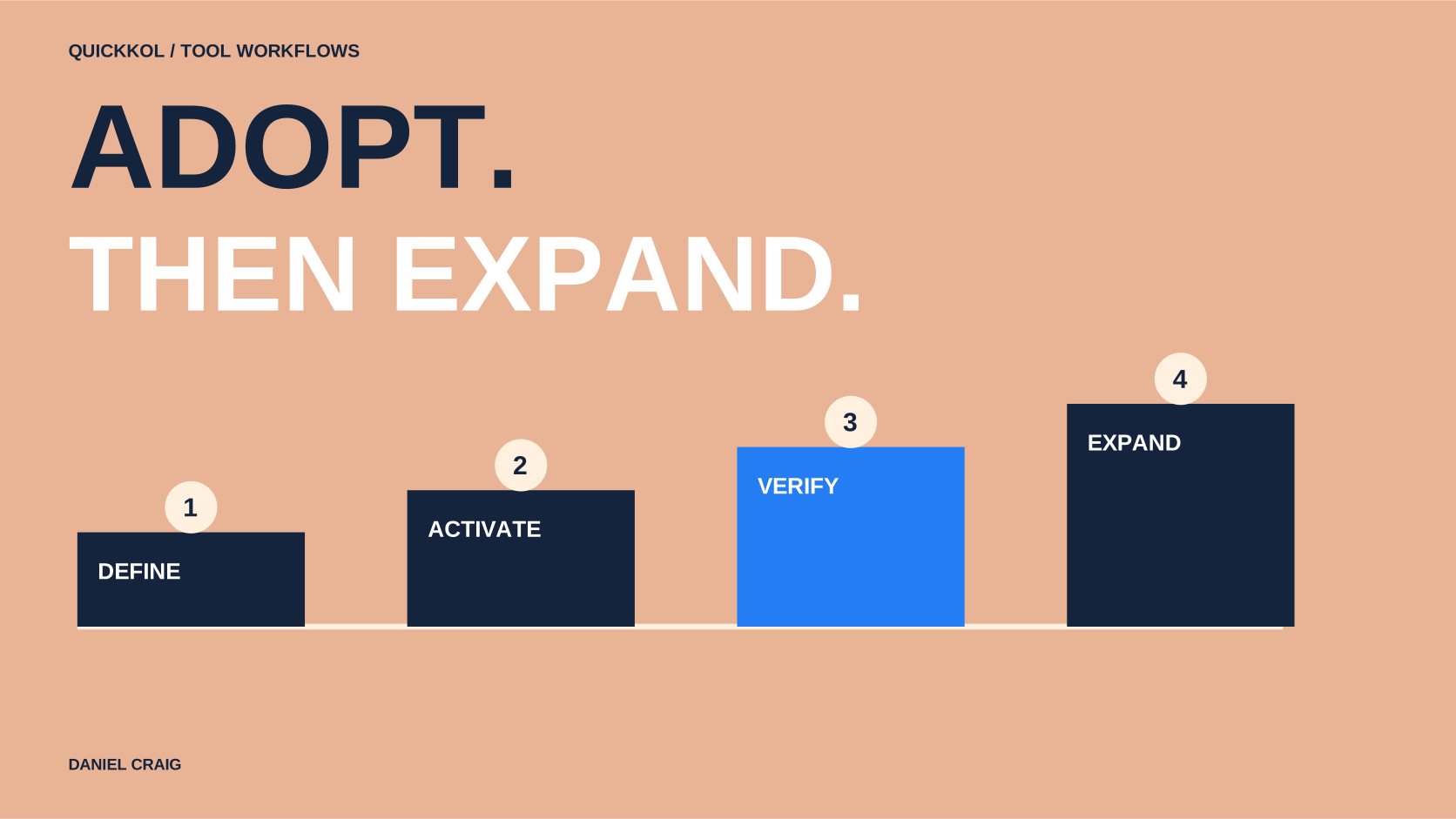
Four stages of a bounded rollout
Adapt the stages to capacity; this is not a four-week completion or performance guarantee.
| Stage | Brand task | Condition to proceed |
|---|---|---|
| Define | Brief, goal and ownership | The team can explain the current job |
| Activate | Candidates, review and outreach | Outputs reach an owned next action |
| Verify | Delivery, rights and reporting windows | Evidence supports the predefined goal |
| Expand | Time, rework and automation scope | New capability solves an observed bottleneck |
CHECKLIST
Marketing toolkit rollout checks
Have the brand owner confirm each item with evidence and a next action.
- Separate capability gaps from ownership gaps
- Fix one pilot brief and objective
- Assign discovery, approval, delivery and reporting owners
- Include verification and external rework in cost
- Expand against the next observed bottleneck
Sources and further reading
External pages can change. Recheck platform rules, contracts and local law before launch.