
THE SHORT ANSWER
Define sample and categories before analyzing comments. Draw 50–100 visible comments across three to five comparable posts, recording pins, replies, timing and giveaways. Code product questions, use experience, purchase action, objections, community interaction and low-information reactions. Purchase intent requires explicit language; “love it,” “need this” and emojis should not automatically become sales intent.
Use a repeatable sampling method
Sample recent, most-liked and random positions rather than only favorable comments. Remove spam, duplicates and non-linguistic reactions while recording exclusion counts.
Platform ranking differs, so compare similar platforms and formats. Save sample date and content links.
Create mutually exclusive primary codes
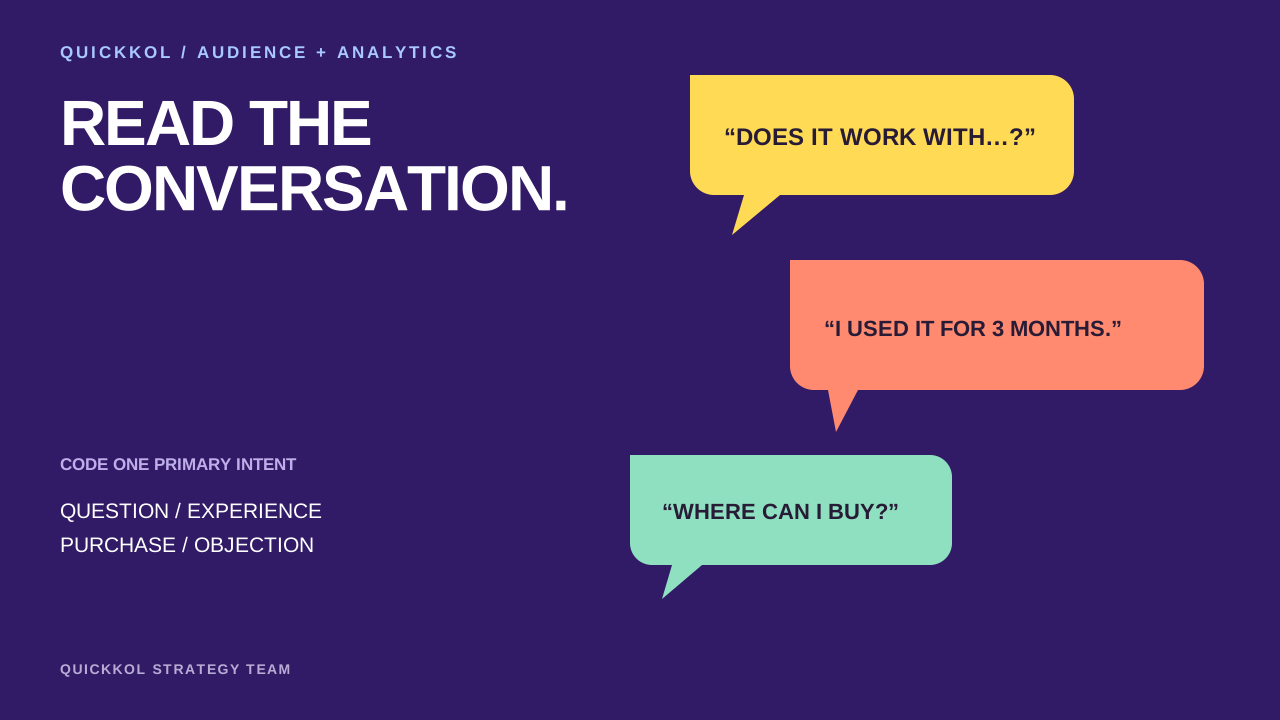
Assign one primary category and an optional secondary tag. “What is the price?” can be a product question with a purchase-intent tag, preventing totals from exceeding the sample.
Have two reviewers independently code 20 comments, resolve disagreements and refine definitions before completing the sample.
Separate action from vague enthusiasm
“I ordered,” “where is the link?” and “does it ship to Germany?” carry more decision value than “love this.” Report counts, shares and representative examples rather than an opaque intent score.
Pins, creator replies and promotional mechanics influence comments. Keep these as context so operational activity is not mistaken for organic demand.
Route comment insight back to content and product teams
Recurring questions can inform the next brief, objections can go to product or support, and authentic language can improve outreach and landing pages. Do not expose personal identities without permission.
Keep only necessary anonymized summaries, source links and coding rules in QuickKOL. Comment analysis improves questions; it should not profile individual users.
Keep the denominator and context in comment sampling
The FTC rule on fake social indicators reminds brands that comments can be used to express influence, so raw comment count is not audience interest. Sample at least 100 non-pinned comments across comparable posts and code questions, experiences, purchase intent, objections, low-information reactions, repetitive text and irrelevant traffic.
In a sample of 120, there may be 28 specific questions, 22 experiences, 14 purchase-intent comments, 18 objections, 30 low-information reactions and eight repetitive or irrelevant comments. The 64 high-information comments represent 53.3% of the sample only, not all followers. Have a second reviewer recode 20 comments and compare agreement.
Comment-sample coding table
Assign one primary intent and keep the source URL.
| Category | Signal | Supported inference |
|---|---|---|
| Question | Requests specific information | Information need |
| Experience | Describes use or comparison | Use-case relevance |
| Purchase intent | Price, retailer, availability | Action interest |
| Low-information / irrelevant | Emoji, repetition, off-topic | No quality conclusion |
CHECKLIST
Comment-quality sampling process
Eight steps create a reviewable comment sample.
- Choose five to ten comparable posts
- Exclude pinned and creator comments
- Keep at least 100 random comments
- Code one primary intent per comment
- Record language, date and post URL
- Separate low information from suspicious repetition
- Second reviewer recodes 20 comments
- Report sample size and limitations
Sources and further reading
External pages can change. Recheck platform rules, contracts and local law before launch.