
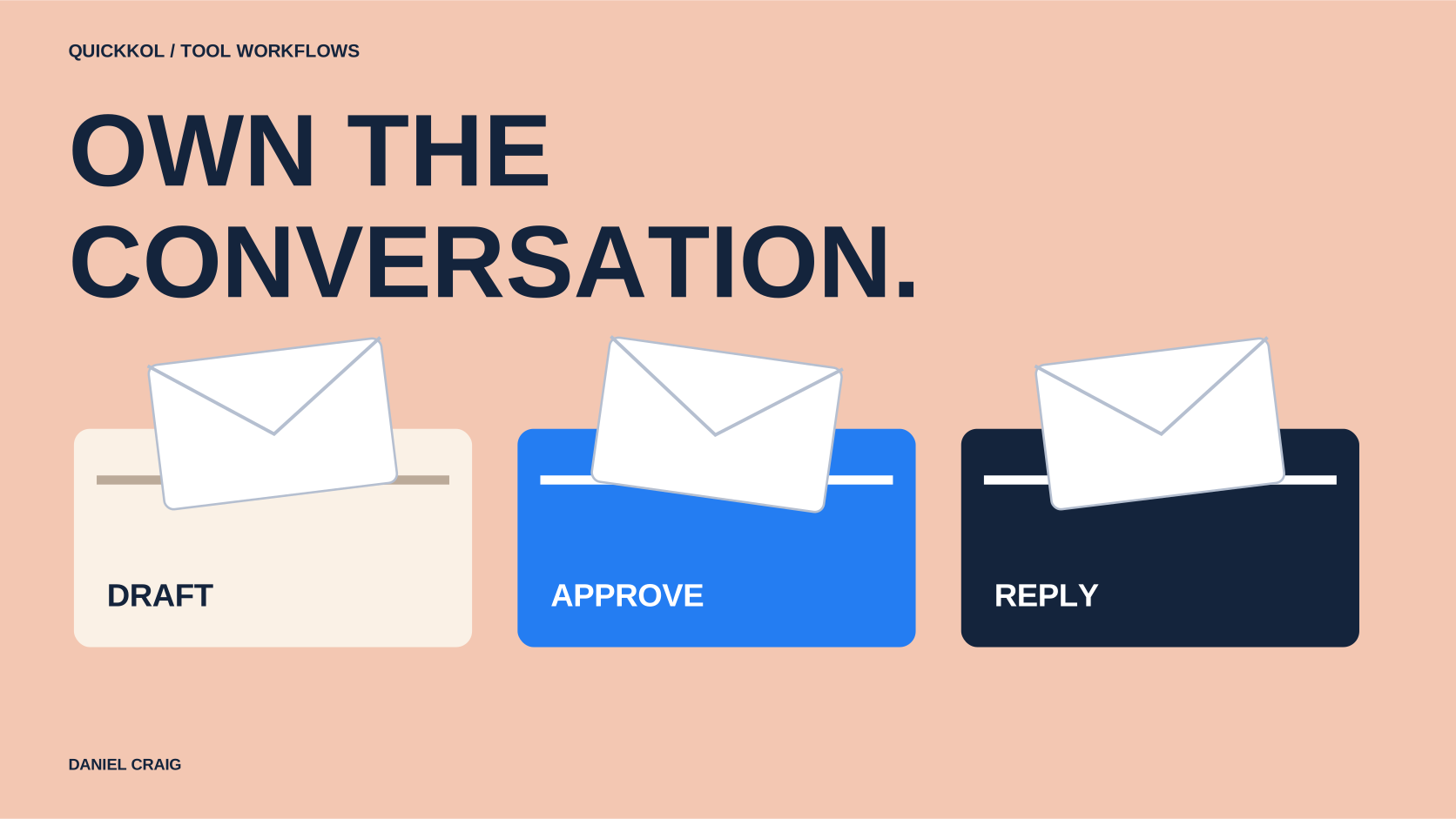
THE SHORT ANSWER
Influencer outreach tools should connect a verified business contact, relevant message, sending approval and reply owner. Email counts and sending volume do not establish partnership efficiency. Confirm the recipient and source-based reason, use stoppable follow-ups, and route useful replies to someone authorized to discuss scope and fees.
Verify the recipient before drafting
Separate creator, manager, partnership inbox and general support contacts. Retain the public business channel or obtained contact source, observation date and relevant account. Finding an address does not establish that its owner can negotiate for the creator.
The same person may appear across platforms and team lists. Inspect conversation history, ownership and stop-contact records before sending. Unknown provenance or conflicting identity requires review rather than automated expansion across the list.
Separate five operating responsibilities
Contact discovery, drafting, sending, reply handling and relationship records may live in different systems, but every action needs an accountable owner. Demonstrate one real candidate and inspect whether identity, fit evidence and contact status survive handoffs.
Evaluate QuickKOL for content-fit reasoning and personalized outreach preparation. Verify sending permissions, reply location and approval in the actual account. An automation label does not establish authority to accept rates, contracts or content licenses.
Review the facts behind personalization
A brand message should state a concrete content fit, the assignment, timing and next step. Referencing a genuinely reviewed post opens a more useful discussion than generic admiration. AI may draft the tone; a person should verify factual claims against the source.
Return drafts that invent previous sponsorships, attribute another person’s video or promise unapproved fees. Check a small batch before expanding. Faster generation does not compensate for the cost of a wrong recipient or invented experience.
Manage delivery infrastructure and recipient interest separately
Gmail sender guidance distinguishes general requirements from additional requirements for large volumes to personal Gmail accounts. Have the email owner check current scope, authentication and unsubscribe handling. A volume threshold is not permission to contact anyone indiscriminately.
Set business stop conditions separately: a decline, an existing reply, an unsuitable assignment or a stop-contact flag should halt the relevant sequence. Delivery does not establish interest, and silence does not automatically justify greater frequency.
Route useful replies to someone who can act
Assign an owner, due date and current question to each conversation. Route budget questions to the budget owner, update representation when a manager replies, and distinguish automated messages from genuine interest. Prevent teammates from promising conflicting terms.
A pilot can manually inspect twenty conversations for misrouting, missed replies and duplicate follow-ups. That is a working sample. Repair the common handoff failures before expanding the list, rather than treating daily sending volume as the main operating goal.
Evaluate the tools through the partnership funnel
Track contactable candidates, approved messages, useful replies, scope discussions and signed partnerships separately. Keep bounces, automated responses and declines distinct from qualified interest. Include fact-checking and reply-handling time when assessing operating value.
Use the creator identity resolution guide if the source list contains namesakes. For contracts, delivery and finance handoffs, continue with the management systems handoff guide. Ownership and stop conditions should travel with the record rather than resetting after an export.
Research method and scope
This is a brand outreach operating guide, not a delivery or partnership guarantee. Google sender guidance was checked October 15, 2026; the email owner should verify applicability. Twenty conversations is an illustrative review sample.
Outreach actions and ownership
Delivery infrastructure and recipient interest are separate questions. One state cannot establish the other.
| Action | Record | Stop or handoff |
|---|---|---|
| Find contact route | Account, source, date | Review unresolved identity |
| Draft and approve | Fit evidence, scope, approver | Return unsupported claims |
| Follow up | Current reply and stop status | Reassess after reply or decline |
| Advance partnership | Owner, next action, conditions | Route to an authorized decision owner |
CHECKLIST
Before outreach goes live
Have the brand owner confirm each item with evidence and a next action.
- Verify identity and business-contact provenance
- Review the source behind personalization
- Assign approval, sending and reply owners
- Test declines and stop-contact handling
- Measure useful conversations and operator time
Sources and further reading
External pages can change. Recheck platform rules, contracts and local law before launch.