
THE SHORT ANSWER
Multiple influencer management tools can support brand partnerships when key fields have an authoritative source and handoffs carry stable identifiers and ownership. Signed, accepted and settled are different facts, not one completed status. Define how those facts move and are corrected before automating synchronization, so inconsistent records are not copied faster.
Map the handoffs for one signed partnership
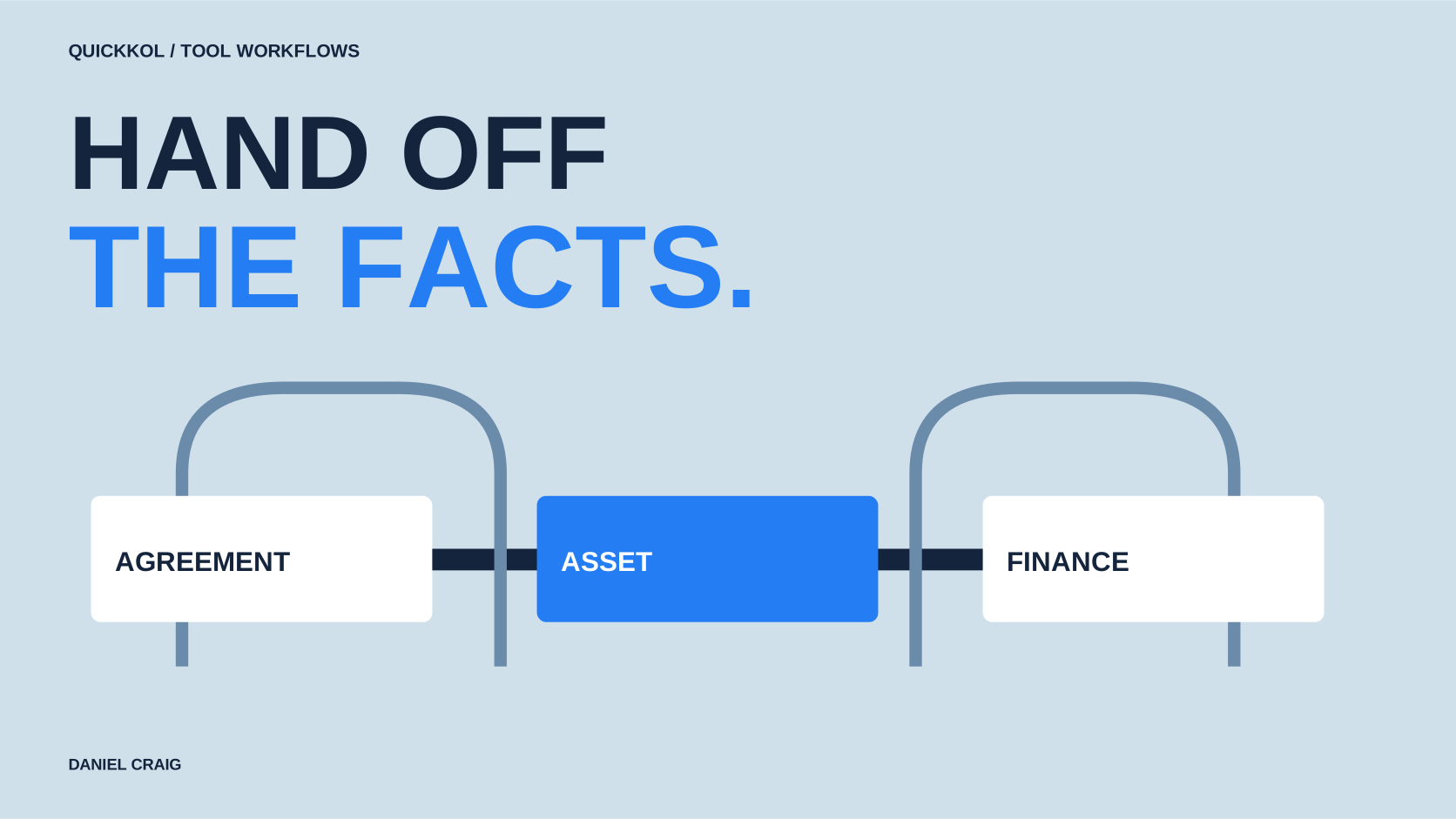
List where agreements, communication, assets, acceptance and finance live. Follow one real partnership from signing to production and from content approval to payment instead of beginning with connector counts. For each handoff, identify the initiator, payload and confirmation owner.
If the content team approves an asset, can finance identify the contractual deliverable it satisfies? A chat screenshot may still require a reconciliation record. A connector establishes that some information can move, not that the information has been correctly defined.
Assign an authoritative source to each field
Use the approved agreement for scope, publication evidence for live content and reconciled finance records for payment. Avoid allowing three systems to overwrite the same field unconditionally and hoping the latest synchronization produces the truth.
Aspire presents agreements, approvals and campaign workflows as a direction to evaluate. Verify actual fields, permissions and external interfaces. Document who can change each fact, which edits need review and what happens when reconciliation fails.
Connect people and deliverables with stable identifiers
Distinguish creator, platform account, partnership, agreement version, deliverable and payment record. A creator can have several accounts and a partnership several assets. A name-plus-date shortcut can break during renewals or namesake collisions.
Export a small batch and verify the relationships manually before synchronization. Preserve links and reasons when deleting or merging records so content does not survive without its agreement. The brand needs traceable relationships, not the same name repeated in every table.
Make each state transition a specific fact
Record signed, draft received, approved, published and settled separately with time and owner. Content approval may allow publication after changes rather than satisfy payment conditions. A transfer initiated is not necessarily a reconciled payment.
Design reversal as well as progress. If an approved asset needs correction, specify which downstream actions pause, who informs finance and whether an older version remains usable. Validate the manual handoff before automating actions that create commitments.
Test synchronization with failure cases
Test duplicate delivery, missing fields, late versions and an owner leaving the team. Check duplicate recognition, conflict queues and controlled retries rather than a total synchronization-success count.
A deliverable synchronized twice must not create two payment obligations. A late agreement version should not silently replace previously approved scope. Where the tools cannot handle a case natively, retain a manual confirmation step. Explicit limits make the system easier to maintain.
Preserve history after the active partnership ends
After a partnership ends, asset expiry, refunds, invoice corrections or future contact may remain. Export agreement versions, source links, license terms, settlement states and stop-contact flags. Ending a subscription should not erase the basis of past decisions.
Use the single-campaign tool acceptance test for one project product. For adoption across the marketing team, use the marketing toolkit rollout guide. QuickKOL can enter through discovery and outreach preparation, while later handoffs require verification of capability and ownership.
Research method and scope
Product directions use official references checked October 15, 2026. Field ownership and failure cases are implementation guidance, not claims that Aspire or QuickKOL passed these integration tests.
Which system owns which fact
Source ownership is a brand governance decision, not a claim about vendor defaults.
| Fact | Authoritative source | Receiving system needs |
|---|---|---|
| Agreed scope | Approved agreement version | Version, term and owner |
| Content acceptance | Deliverable record with approver | Deliverable ID and approval time |
| Publication | Original URL and observation | Account, format and window |
| Settlement | Reconciled finance record | Obligation, transaction and state |
CHECKLIST
Management systems handoff checklist
Have the brand owner confirm each item with evidence and a next action.
- Map one real partnership handoff
- Assign authoritative sources
- Align stable IDs and agreement versions
- Test duplicates, conflicts and reversals
- Export history needed after exit
Sources and further reading
External pages can change. Recheck platform rules, contracts and local law before launch.