
THE SHORT ANSWER
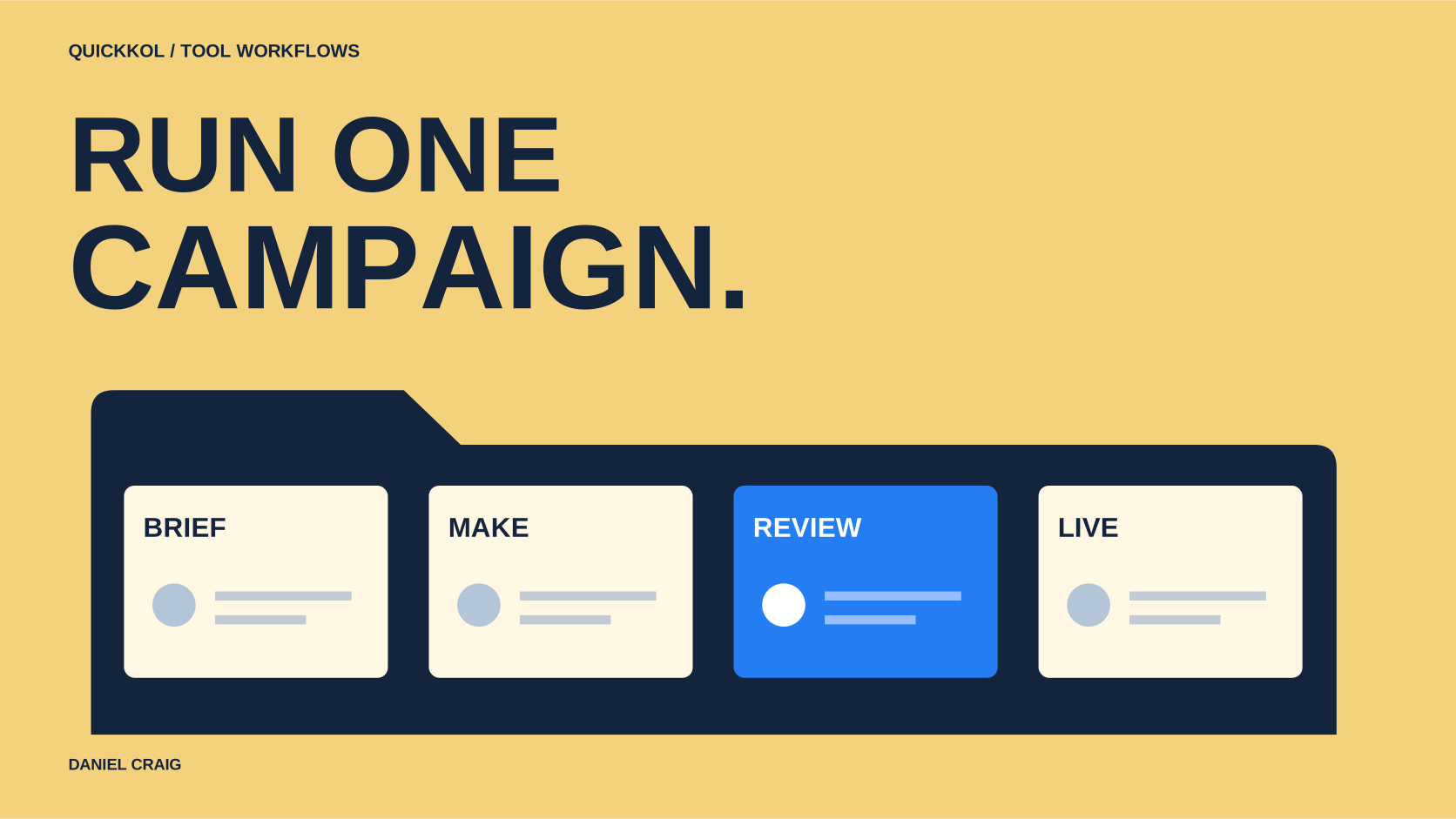
Evaluate an influencer management tool by running one real cycle from brief and ownership through drafts, revisions, approval, publication and settlement handoff. Every state needs an actual fact and next action. A board does not establish accountability. Test exceptions and personnel handoffs before approving the product for the current project.
Choose a bounded brand campaign
Choose one market, one main format and a small cohort so the team can inspect every important step. The pilot observes how commitments become actions rather than attempting the largest program. Use a real brief instead of simplifying the work to suit a demonstration.
Define completion: owned deliverables, recorded draft approval, traceable revisions, original publication links and payment-condition handoff. A demo covering only discovery and invitations has not tested the core management work.
Create a minimum viable partnership record
Retain account, scope, dates, fees, usage rights and the next owner for each partnership. Separate the person from the deliverable: two videos cannot be represented safely by one completed checkbox. Keep unresolved conditions visible instead of scattering them in private conversations.
QuickKOL can enter through requirements, candidates and outreach preparation. For specific management tasks, inspect available fields, edits and exports in the actual account and assign uncovered steps. Product direction alone does not establish complete native functionality.
Make states trigger an owned next action
Separate pending confirmation, agreed, in production, awaiting review, revision required, approved to publish and published. Every state should answer who is expected to act, what is needed and when to check, rather than merely coloring a weekly report.
Aspire presents campaign and content-approval capabilities as a direction to evaluate. Return one draft for revision during the demonstration and inspect clear feedback, retained versions and ownership of the next review.
Test one change of scope
Suppose the original brief requests one sixty-second video and the brand later adds a short version and advertising use in another territory. Record added delivery, fees, timing and approval rather than overwriting scope in an old task note.
Keep the change pending until both sides confirm. An external approval record is possible if connected to the project. The acceptance question is whether the team can explain the final scope and authorized cost, not merely create another task.
Have a new operator handle an exception
Ask a teammate unfamiliar with the campaign to handle a delay, missing information or an absent owner. Can the person find current scope, latest version, open questions and the next action? If every answer requires the original operator, the relevant context may never have entered the system.
Export the project and verify links between agreements, assets, approvals and payment states. Management value comes from fewer omissions and easier handoffs, not a screen filled with activity.
Decide based on the campaign gaps that remain
Review omissions, duplicate revisions, unowned tasks and manual supplementation time. Separate process fixes, configuration work and unsupported requirements. Completing the pilot does not justify ignoring the work performed outside the system to rescue it.
Use the management systems handoff guide for multiple departmental tools and the tool procurement scorecard when reopening vendor selection. Establish that one product reduces omissions in the current campaign before expanding into a more complex organization.
Research method and scope
This is a single-campaign acceptance method. Product directions were checked October 15, 2026. The video length, change and exceptions are test scenarios, not vendor implementation results or default permissions.
Acceptance points in one campaign
This is a brand pilot design, not a claim that any vendor passed every stage.
| Stage | Demonstration | Evidence retained |
|---|---|---|
| Create partnership | Confirm scope and owner | Approved brief and unresolved terms |
| Review content | Return a draft, then approve | Versions, feedback and approver |
| Change scope | Add a deliverable or right | Fees, timing and agreement |
| Operator handoff | Have a new operator handle an exception | Sources, next actions and export |
CHECKLIST
Single-campaign tool acceptance test
Have the brand owner confirm each item with evidence and a next action.
- Run a complete delivery cycle using a real brief
- Give every state an owner and next action
- Retain revisions, versions and approvals
- Test one fee or scope change
- Have a new operator take over and export
Sources and further reading
External pages can change. Recheck platform rules, contracts and local law before launch.