
THE SHORT ANSWER
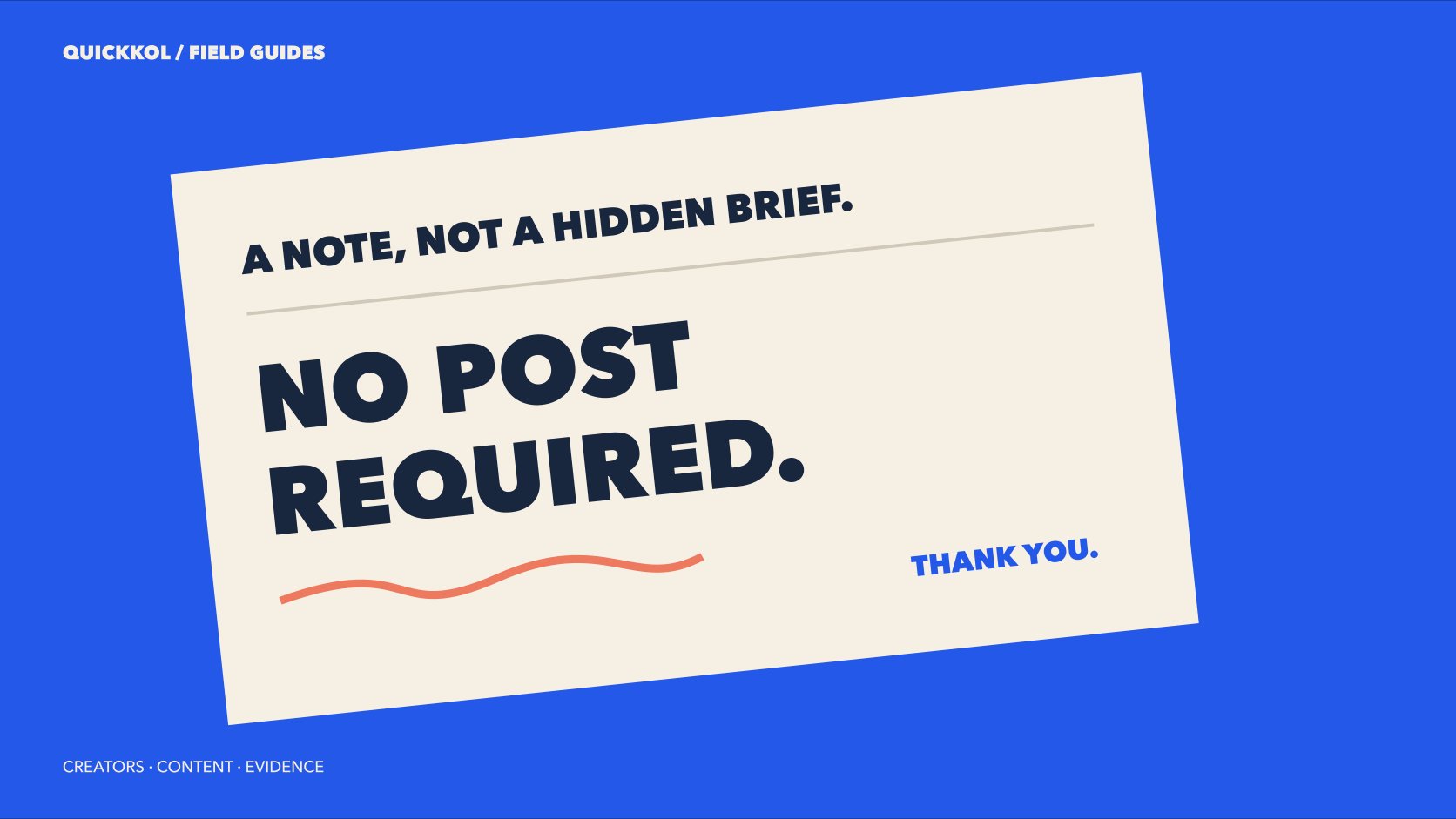
A useful influencer gift note identifies the sender, explains relevance, gives essential product context, states whether posting is expected and provides a contact route. For an unconditional gift, say that no post is required. For a contracted collaboration, refer to the agreed scope instead of adding surprise deliverables inside the package. The examples below are editable templates, not messages that have been sent or promises that gifting produces coverage. Confirm acceptance and shipping arrangements before mailing anything.
Identify the relationship before writing the note
An unconditional gift, an invitation to try a product, a contracted campaign package and a product exchange with deliverables are different relationships. Set expectations in the outreach conversation first; the enclosed card should reflect that agreement. It is too late to introduce a binding creative request after the creator opens the box.
If the brand requires a date, specific content or guaranteed publication, discuss a collaboration before shipping. “We cannot wait for your post” can imply an obligation that was never accepted. Clear wording is more respectful and operationally useful than making a transactional request look like a personal favor.
Example one: an unconditional gift
“Hi [name], we are the team at [brand]. Your [specific public work] about [relevant situation] made us think [product] might be useful to try. This gift comes with no requirement to post or review, and we do not expect a positive opinion. If you have product questions or need anything clarified, contact [name and email]. Thank you for sharing your work on [specific topic]. — [brand team]”
Use this only when the gift is unconditional. Replace the brackets with accurate details, not assumed personal information. Do not add mandatory tags, a publication deadline or a request for guaranteed praise elsewhere in the package. If the relationship changes, agree on the new scope directly.
Example two: a package for an agreed paid collaboration
“Hi [name], thank you for joining [campaign]. This package contains [product and version] for the brief we confirmed. Deliverables, timing and rights follow [agreement or approved brief]; this card adds no new work. If the product or shipment creates a problem, contact [owner] so we can resolve it and confirm any schedule change. We look forward to your perspective on [agreed topic]. — [brand]”
Keep disclosure, links and approval requirements in the formal working brief, where they can be reviewed and updated. The card provides welcome and context. It should not become the only place an important requirement appears or contradict an earlier scope.
Example three: invite feedback without buying praise
“Hi [name], thank you for agreeing to try [product]. If you would like to share feedback, we are particularly interested in [specific use question]. We are not asking for a favorable opinion, and there is no publication assignment beyond anything separately agreed. You can send feedback to [contact]. Product instructions and limitations are at [reliable route]. If the product is not a fit, please tell us. — [brand]”
Ask only for useful product feedback. Silence is not a breach when no feedback commitment exists. Do not request unrelated private audience data as the hidden price of a sample. A focused question, such as whether setup instructions were clear, is more useful than asking whether the creator “loves” the product.
Address gifts and disclosure before publication
If the creator chooses to mention the product, review the applicable material-connection disclosure requirements for the target market. FTC guidance is an official US reference. Saying “no post required” does not mean the gift becomes irrelevant to disclosure when the product is later discussed.
Do not present one fixed disclaimer as universally sufficient for every format and market. Place disclosure review in the working process, using the actual content and relationship. The gifting disclosure guide develops the distinction. The note can remind the creator to follow applicable requirements, but it should not claim that the brand has removed all disclosure responsibilities through a sentence on a card.
Confirm logistics and follow-up boundaries
Obtain acceptance before shipping and confirm necessary specifications, address use and delivery scope. Product instructions, ingredients or compatibility information should be accessible where relevant; a beautiful card cannot replace them. The product-seeding logistics guide helps organize these details without turning a gesture into a fulfillment problem.
A follow-up can check receipt and offer help. It should not repeatedly demand publication from someone who accepted an unconditional gift. If the brand later wants a post, make a separate, explicit proposal. QuickKOL can help prepare relevant outreach; the brand confirms shipping, commitments and evidence. The best note is consistent with how the team behaves after the package arrives.
Editing exercise: replace implied expectations with clear wording
Consider the sentence “We cannot wait for you to share this next week and tag us.” It introduces a deadline and a publishing task. It does not belong in an unconditional gift note unless a separate collaboration has already established those requirements. If there is no obligation, replace it with a clear statement such as “No post is required; please contact us if you have product questions.”
If publication really is required, changing the card alone is insufficient. Discuss and agree on the commercial scope before shipping. Likewise, “we hope you enjoy trying it” can be a courteous wish, while “please give us a positive review” requests a favorable opinion. Check the entire relationship rather than treating one polished sentence as a solution.
Review the invitation, card and follow-up together. They should describe the same arrangement. A card saying “no obligation” is undermined by repeated later demands for a post. This editing exercise helps the brand identify hidden requests before they reach a recipient. It also makes internal reporting clearer, because the team knows whether it is tracking optional product experience or a contracted deliverable.
FAQ: how long should the note be, and should it include a QR code?
Length should follow the information needed to explain the relationship, product and contact route. The card does not need to contain the full instructions or campaign agreement. It should make the relevant reliable route easy to find. A short clear note is preferable to a long promotional paragraph that hides whether work is expected.
If using a QR code, test the destination on a phone and ensure the page remains useful during the product-experience period. Provide a usable contact method as well, so the recipient is not forced to scan merely to ask a question. A scan should not be treated as acceptance of a publishing assignment or as permission for unrelated tracking.
Handle shipping details and product specifications for the agreed purpose, and keep logistics records separate from content commitments. The note is a small part of a larger respectful process. Its success is not measured by how many enthusiastic adjectives it contains, but by whether the recipient understands the package, knows what is optional or agreed and can resolve a problem without guessing whom to contact.
Research date, evidence and limitations
Reviewed October 21, 2026. Notes are original editable examples and have not been sent. No posting rate, sales result or universal compliance outcome is promised.
Boundaries for three gift notes
Editorial analysis and labeled hypothetical examples, not performance rankings, quotes or guarantees.
| Relationship | Say | Do not add |
|---|---|---|
| Unconditional gift | No required post or review | Hidden deadlines or tagging obligations |
| Contracted campaign | Refer to agreed brief | Surprise deliverables in the box |
| Product feedback | A focused optional question and contact | Guaranteed praise or unrelated data requests |
CHECKLIST
Before you put this into practice
Record the answers in the campaign working file.
- Confirm acceptance before shipping
- State publication expectations
- Do not require favorable opinions
- Provide usable contact and instructions
Sources and further reading
External pages can change. Recheck platform rules, contracts and local law before launch.