
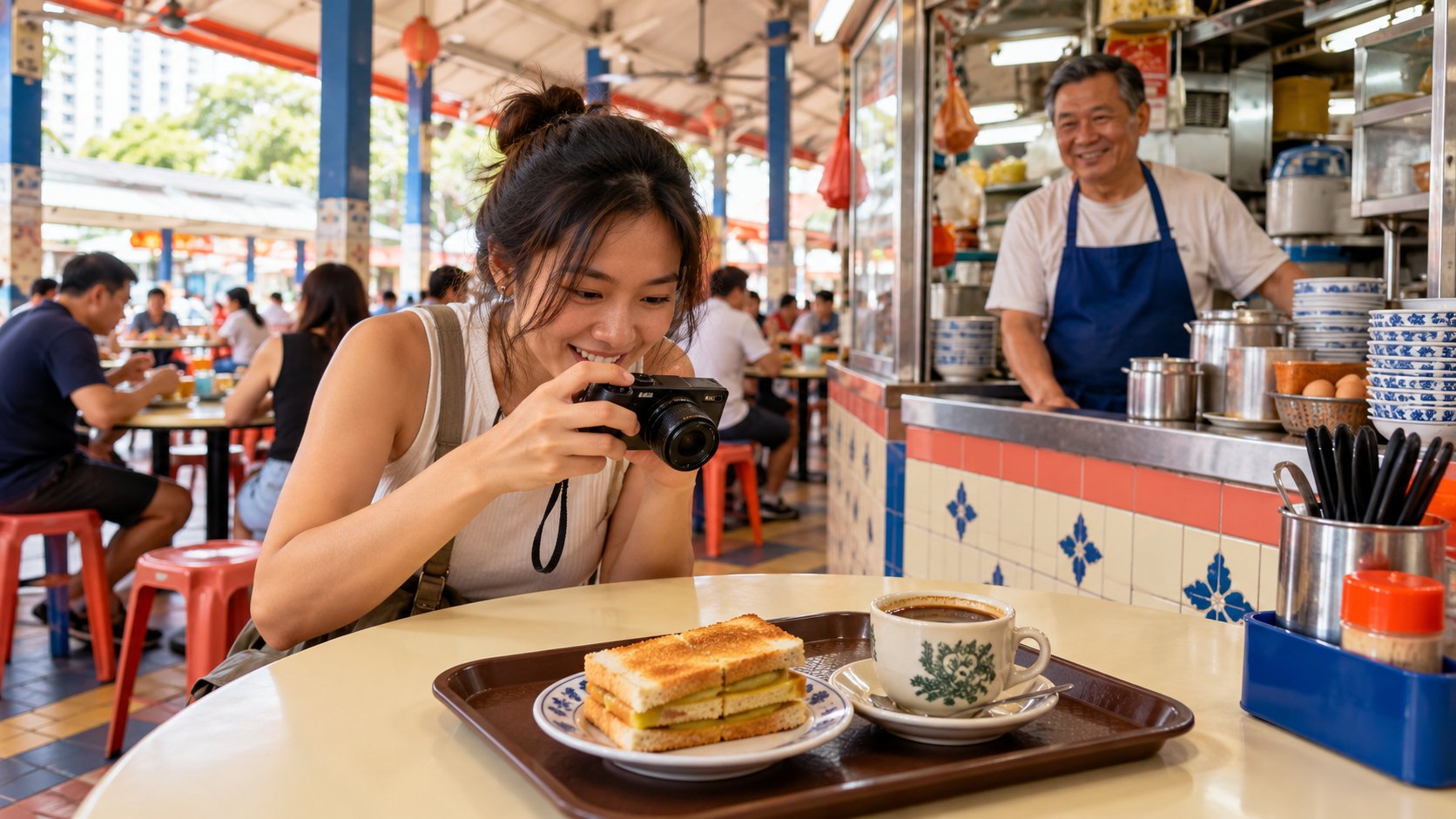
AI-generated editorial illustration; people are not the creators named in this article.
THE SHORT ANSWER
For a Singapore F&B brand, choose food creators around the serviceable neighborhood, dining occasion and story the venue can deliver. ieatishootipost, SETHLUI, Miss Tam Chiak and DanielFoodDiary provide identifiable research starting points, but they are not interchangeable individual influencers or confirmed partners. Compare content fit and local relevance before requesting a commercial proposal. A widely read food page may serve a different job from a nearby creator who can explain a specific lunch, reservation or takeaway experience.
Define the actual dining catchment
A neighborhood lunch counter, reservation-only restaurant and packaged-snack store have different serviceable markets. Define location, hours, price context, language and the demand the operation can accept. The content should answer the visit or purchase question the business can actually fulfill.
Frequent Singapore coverage does not establish that every viewer lives locally or will travel across the island. Visitors and residents can also need different information. Ask for relevant recent evidence and keep unavailable audience data unknown. A large total audience is not necessarily more useful than a smaller audience with a clear reason to visit the venue at the time the campaign runs.
Use four documented starting points for research
ieatishootipost organizes food coverage including hawker categories. SETHLUI presents a publication with business routes. Miss Tam Chiak provides guides, reviews and an advertising contact. DanielFoodDiary organizes coverage by geography and food type. These are observations from official sites, not a measured ranking of commercial effectiveness.
A publication can assign writers, producers and commercial staff rather than having its namesake personally create every deliverable. Ask who makes the asset, where it appears and whether video, social and website coverage are separate purchases. The format and editorial route matter more than treating every recognizable food name as the same kind of influencer.
Give the content a useful dining question
Replace “make the food look delicious” with a practical dining question. A lunch story might need portion context, waiting time, entrance location and set-menu limits. A reservation experience needs booking information. A delivery product may need packaging and arrival-condition evidence.
Specify dishes and timing the business can actually supply. Confirm menu, prices, promotion conditions and opening information close to publication rather than copying an older article. Preserve the creator’s honest judgment instead of requiring guaranteed praise. A useful assignment helps the audience decide whether the experience fits their situation, even when that means clearly stating a limitation the brand would prefer to omit.
Plan venue operations before promising exposure
Choose a filming window the venue can support. Agree on permitted areas, staff participation, other customers in the frame and what happens if a dish must be remade. An exposure plan should not leave frontline staff explaining an offer they have never seen.
Suppose an activation can accommodate twenty-five additional tables per day. That hypothetical capacity should shape the booking route and promotion schedule. It is not a forecast of demand. Resolve availability and service quality before maximizing distribution. A campaign that attracts interest the restaurant cannot fulfill can create a poor customer experience even when the reported reach looks successful.
Confirm disclosure and editorial boundaries early
ASAS provides Singapore advertising-code and social-media guidance. Check the requirements relevant to the campaign and agree early on how payment, hospitality or gifted products will be disclosed. This guide does not replace review of the actual local arrangement.
Distinguish editorial coverage from a commercial deliverable. Payment does not automatically purchase control over every opinion or an entire publication’s reporting. The venue should verify menu facts and offer conditions; editorial boundaries and commercial scope need their own agreement. A clear invitation prevents both sides from treating a hosted meal as a transaction with unspoken obligations.
Measure interest, reservations and visits separately
Use a campaign link, identifiable booking source or agreed point-of-sale marker, and explain how staff record it. Reservations are not completed visits, and completed visits are not automatically incremental. Keep cancellations and no-shows visible instead of reporting only the strongest stage.
For a hypothetical campaign, eighty bookings and sixty attended tables yield a seventy-five-percent attendance rate. At S$1,200 total marketing cost, recorded cost per attended table is S$20. These are not publisher benchmarks. Compare order value, contribution and baseline demand before repeating. QuickKOL can assist creator discovery and outreach preparation; the restaurant retains responsibility for operational and booking evidence.
Worked example: plan local content for a new venue
Suppose a Singapore venue wants to introduce a lunch set. Confirm the address, operating hours, booking route, menu version and service capacity before planning content. A useful assignment may need to explain access, dining context and price conditions rather than simply show attractive food. The customer should be able to act on the information without discovering important restrictions after arrival.
Do not create an open-ended invitation when the venue cannot accommodate demand. Confirm the items that can be served during the publication window and identify what happens if a dish changes. A creator should not be asked to describe an unavailable menu from an outdated brief. Keep tasting arrangements, production fees and publication terms explicit.
An editorial visit, advertising package and personal creator experience are different relationships. Determine which the contact route supports before requesting a favorable article. The publication examples in this guide provide research directions, not a guarantee of availability or a measured local customer base. The strongest local collaboration connects accurate venue information, an appropriate content voice and a feasible customer action, with the commercial relationship understood by everyone involved.
FAQ: does a local food account guarantee local customers?
No. A local food account can attract residents, travelers and overseas viewers interested in the city. Location and topic establish a useful research lead, not a verified customer composition. Request appropriate audience evidence when geography is essential, and keep the source date and population clear.
Bookings, visits and code redemptions are also different outcomes. A booking may be canceled; a redemption may come from an existing customer; a visitor may have encountered several other influences. Record the result that is actually observable and avoid calling every code use a newly acquired customer. Consider the venue’s ordinary demand and operational limits when interpreting a publication period.
If the campaign only establishes content delivery and recorded visits to the menu page, report that stage honestly. A local assignment can still be useful without proving incremental revenue in its first test. The next decision might concern clearer venue information, a different dining occasion or better booking continuity. Use the evidence to improve the customer path rather than assuming a geographically relevant food topic automatically produces profitable footfall.
Research date, evidence and limitations
Official sites and ASAS guidance checked October 21, 2026. Current media kits, private audiences, rates and availability are unverified. Singapore-dollar calculations are hypothetical.
Four research routes and different acceptance questions
Editorial analysis and labeled hypothetical examples, not performance rankings, quotes or guarantees.
| Reference | Observed direction | Commercial check |
|---|---|---|
| ieatishootipost | Hawker and food categories | Producer, format and boundaries |
| SETHLUI | Food publication | Editorial versus commercial scope |
| Miss Tam Chiak | Guides, reviews and advertising route | Deliverables and reporting window |
| DanielFoodDiary | Geographic and category coverage | Placement and rights |
CHECKLIST
Before you put this into practice
Record the answers in the campaign working file.
- Define catchment and capacity
- Distinguish publishers and individuals
- Recheck menu and offers before publication
- Record visits and bookings separately
Sources and further reading
- 01ieatishootipost: Singapore food coverage
- 02SETHLUI: Food publication and business information
- 03Miss Tam Chiak: Food guides and advertising information
- 04DanielFoodDiary: Singapore food guides
- 05ASAS: Singapore advertising code and social media guidelines
External pages can change. Recheck platform rules, contracts and local law before launch.