
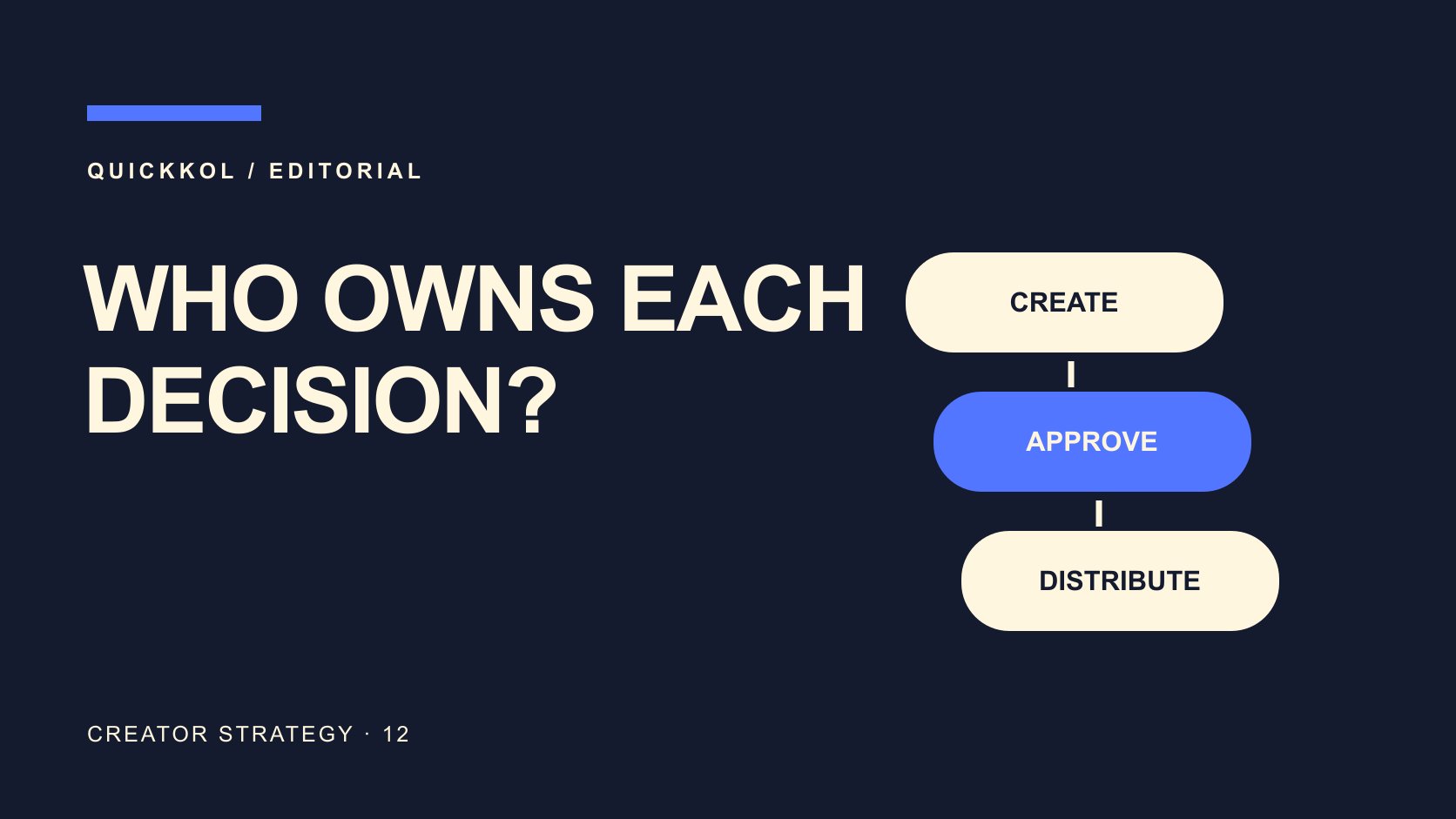
THE SHORT ANSWER
Instagram provides a content and distribution environment; an influencer contributes specific creative work, expression or audience relationships. The brand owns product facts and commercial arrangements. Before commissioning a post, identify who creates, approves, publishes, advertises and interprets the evidence. Treating all of those roles as one instruction to post something creates avoidable disputes about revisions, permissions and responsibility for outcomes that no single participant controls.
Name the creator’s contribution
A creator can explain a complex product, provide a credible use situation, host a conversation or produce visual assets. Audience scale is one condition, not the complete role. Describe the contribution visible in their work before adding commercial requirements. This gives the partnership a clearer basis than a generic request for exposure.
The creator-selection guide supports contribution-based evaluation. If the main purchase is asset production, specify whether organic publication is required. If the main purchase is audience distribution, do not assume it includes permanent brand advertising rights. A person can offer several services, but the agreement should name which ones are being bought. This helps the brand compare offers fairly and lets the creator explain where a requested use falls outside the proposed package.
Own the product facts
The brand supplies the current product version, substantiated statements, limitations and correct destination. Do not make the creator assemble facts from outdated pages and then demand a free reshoot when those facts prove wrong. Name an owner for product updates and explain how changes reach work already in production.
Separate factual corrections, rights or legal review, and style preferences. The creator can retain a distinctive expression while the brand remains responsible for information it supplies. Use one consolidated response when internal reviewers disagree. The useful-brief guide helps organize mandatory information and creative freedom. This does not remove the creator’s responsibility for honest statements; it clarifies where each party’s knowledge and authority should enter the process before the final content is approved.
Separate organic and brand distribution
Organic publication needs an account, window, retention expectation and correction process. Brand reposting, downloadable asset use and advertising involve additional scope. A vague permission to share does not define all of them. Name the use and identity through which the audience will encounter the material.
Agree whether cropping, subtitles, translation or new advertising copy is permitted. Even changing a vertical video into a horizontal crop can remove a qualification or alter the emphasis. The usage-rights guide helps record each use. Keep the final approved asset identifiable so media buyers do not select an earlier draft or edit around a disclosure. Distribution planning should preserve the meaning of the creator’s contribution rather than treat the delivered file as raw material the brand may transform without limit.
Treat paid distribution as another operating layer
Meta Blueprint treats partnership ads and partner controls as operational topics. In a project, platform permission and the contractual license need separate confirmation. The ability to activate an advertising control does not establish that both parties agreed to every possible use, term or edit. Check the current platform route for the actual account configuration.
The brand or its media partner should own budget, targeting, launch and stopping the campaign. Name the person who handles license expiry. A creator does not need to surrender their password to make those responsibilities clear. The licensing-schedule guide develops the two permission layers. Keep evidence of both before launch so a media buyer does not mistake technical access for an unlimited agreement or assume that a signed license automatically means the platform account is ready to run the intended ad.
Assign responsibility for controllable work
A creator can be responsible for agreed delivery, honest expression and timely communication. The brand can own product availability, supplied facts and the destination. Platform distribution and consumer choice are not fully controlled by either party. Align accountability with the actual obligation rather than promising certainty where the process cannot provide it.
This does not mean performance should be ignored. Separate delivery acceptance, distribution observations and commercial outcomes. If compensation depends on a result, define the calculation, window and evidence source in advance. Do not change the rule after seeing the numbers. The metric-definitions guide supports that discussion. A partnership can learn from disappointing performance while still recognizing that a completed asset and an observed sales result are different events with different contractual and analytical meanings.
Worked example: route a change correctly
Suppose the brand wants to replace a product name in a published video and add paid distribution. The product owner first confirms the factual change. The creator assesses whether a reshoot is needed. The commercial owner handles added scope, and the media buyer confirms permission and term. A short message saying please update this does not cover those decisions.
The request may alter four obligations even though it looks like one edit. Record the new version, fee and timing, including how the original publication is handled. These are hypothetical workflow roles, not a universal legal allocation. A clear change route prevents the creator from acting on a casual instruction that the purchasing team has not approved, and prevents media staff from treating a newly exported file as automatically licensed for a broader campaign.
Complete the handoff with a responsibility sheet
Keep a sheet listing the work, decision owner, operator, input and completion condition. One person may hold several roles, but a critical task should not have no owner. When someone leaves the project, transfer records and relevant access rather than assume the next person can reconstruct the arrangement from chat history.
Use the creator-selection guide, useful-brief guide and usage-rights guide to turn posting into an executable partnership. QuickKOL can support research, brief understanding and outreach preparation; production, licensing and media arrangements still require confirmation by the relevant parties. The result should be a shared understanding of who may make each decision and which evidence marks it complete. This ordinary clarity helps the creator retain their contribution while giving the brand a dependable way to commission and distribute it.
Who should answer audience questions?
Assign by question type. The creator can discuss their honest experience, the brand supplies product facts, and order or personal-data issues go through normal support. Prepare the handoff before launch so comments do not become an ownerless support queue. Response speed is useful only when the person replying has the information and authority to give an accurate answer.
Research date, evidence and limitations
Sources reviewed October 23, 2026. Workflows are editorial recommendations. All worked examples are hypothetical, not client results, creator rankings or quotations.
A decision sheet for this assignment
Editorial analysis and labeled hypothetical examples, not performance rankings, quotes or guarantees.
| Condition | Evidence | Decision |
|---|---|---|
| Creation and expression | Work and accepted scope | Creator and named reviewer |
| Product facts | Current information and limits | Brand product owner |
| Distribution and use | License and platform permission | Commercial owner and media operator |
CHECKLIST
Before you put this into practice
Record the answers in the campaign working file.
- Tie roles to contributions
- Consolidate review ownership
- Agree organic and paid uses separately
- Own stopping at expiry
Sources and further reading
External pages can change. Recheck platform rules, contracts and local law before launch.