
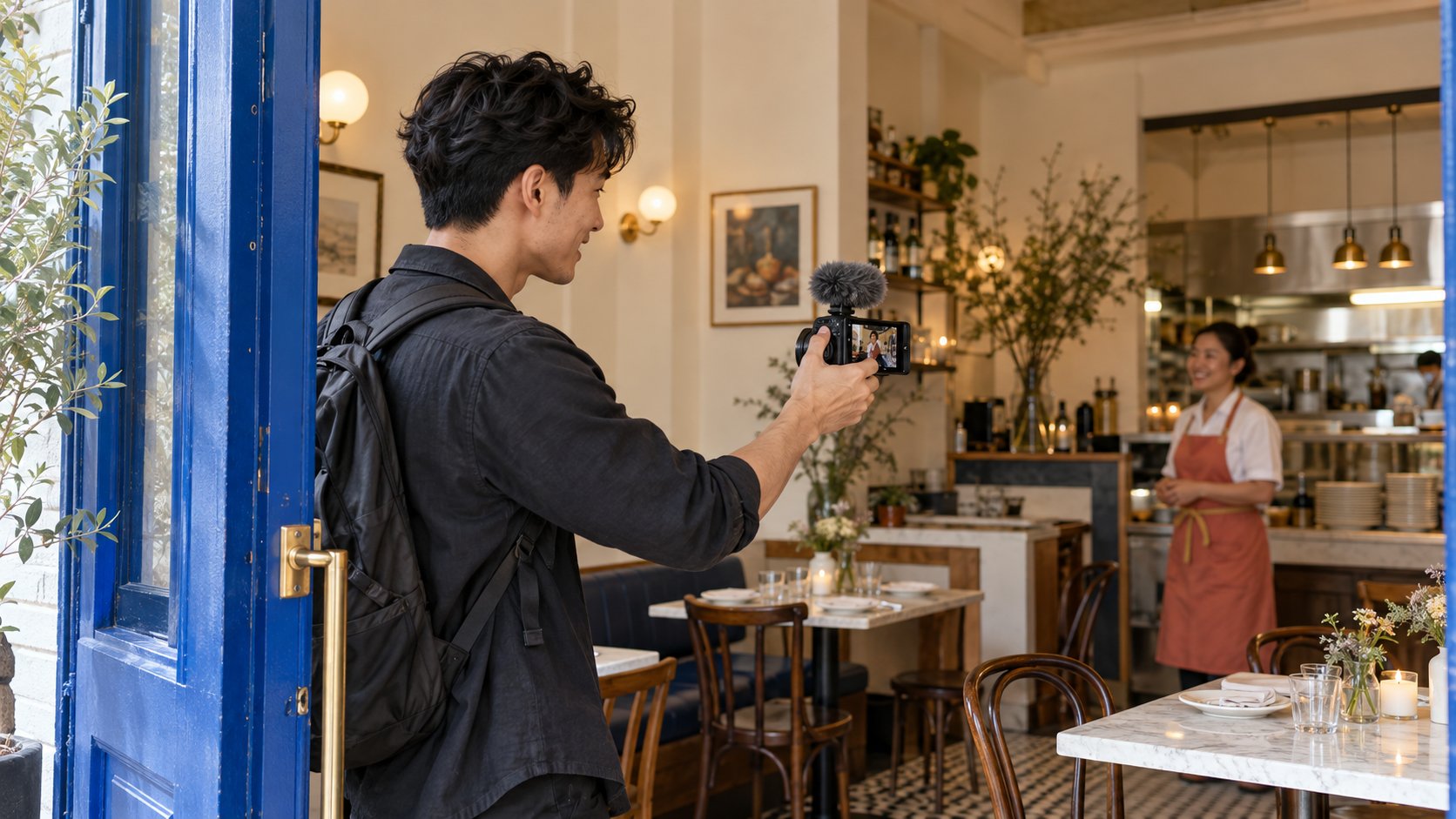
AI-generated editorial illustration, not named people or actual events in the article.
THE SHORT ANSWER
An NYC foodie partnership should connect the content promise to an experience the restaurant can actually deliver. Research official work such as EatingNYC, then specify the audience question, menu facts, visit conditions and reservation route. Attractive footage alone does not establish dining demand, and video views should not be reported as new restaurant guests.
Start with the diner’s decision
A diner may need to know which occasion fits, how to reserve, how the menu works or what happens on a first visit. Choose one main question instead of placing every dish and offer into the same video. The content needs to reduce a practical uncertainty, not merely prove that the restaurant has photogenic food.
The restaurant-content brief helps translate that question into a production task. Show conditions a guest can actually obtain. A specially arranged filming table or tasting portion should not be presented as ordinary service available to everyone if it is not. Coordinate the content promise with the restaurant’s current operations so the campaign does not create expectations the staff cannot recognize when viewers arrive.
What EatingNYC provides as a research route
EatingNYC’s about page introduces Alexa Matthews and connects restaurant, recipe and New York lifestyle work. Review current samples for how the experience is explained: the opening question, the information conveyed and the connection between visual appeal and a useful dining decision. Save the samples relevant to the proposed assignment.
An undated audience statement on a website is not today’s Instagram measurement. This research entry also does not establish that Alexa has accepted an invitation, endorsed a restaurant or offers a fixed package. Confirm the actual commercial arrangement through the current public route. The source is useful because it connects identity and content scope, while the new project still needs its own facts, availability discussion and evidence of fit.
Align the filmed and ordinary experience
Check opening hours, reservation rules, the menu version, any displayed prices and availability dates. If a dish exists only during a particular service, reflect that condition in the content and destination page. The restaurant should own the current fact sheet rather than ask the creator to infer operational details from an old menu image.
Provide a useful on-site contact without requiring the creator to pretend to be an uninvited guest. Personal descriptions of taste must come from genuine experience, not a brand-mandated positive sentence. Separate factual corrections from subjective judgment in the review process. A restaurant can correct an incorrect opening time; it cannot turn the creator’s truthful reaction into a guaranteed endorsement simply by calling that change a factual revision.
Walk the reservation route
Test the mobile route to the correct location, party-size choice, available service and confirmation. If the restaurant uses telephone booking or a walk-in queue, describe that honestly instead of promising an immediate reservation route that does not exist. A beautiful content asset cannot repair a broken or misleading destination.
The landing-page conversion guide helps inspect the connection between the content and the next action. Brief staff on any campaign-specific conditions so guests do not receive a contradictory explanation on arrival. Record who owns updates if the offer changes or availability closes. This is especially useful when the creator’s post remains accessible after the restaurant has moved to a new menu or service arrangement. Agree a practical correction route before the information becomes stale.
Worked example: two different dining jobs
Suppose a restaurant serves both two-person dinners and larger group occasions. The two stories should explain different setting, ordering and booking conditions. Quiet footage from a table for two should not imply that a large group will receive the same experience. These are hypothetical restaurant tasks, not recommendations for a specific venue or package.
Choose one operationally supported occasion for the first commission and allow the creator to experience it genuinely. Then decide whether a second task needs separate production. This creates a more useful test than a generic everything-for-everyone video. The review can examine whether the chosen dining decision became clearer, while the restaurant keeps responsibility for the actual capacity and service conditions behind the promise.
Observe booking relationships carefully
A tracking link, booking note or campaign code can be useful if it fits the actual reservation process. Agree the definitions and collection window. Do not fill incomplete records with an all-from-the-creator assumption. Code use shows a defined relationship and does not, by itself, prove that the booking would not otherwise have occurred.
The conversion-tracking guide helps specify the source and window. FTC guidance also explains the importance of disclosing material relationships. Hosted or paid conditions should not disappear simply because the creative looks like everyday dining. Keep the operational and commercial records together so the report can distinguish content delivery, observed booking relationships and unresolved attribution. This supports a reasoned next commission without inventing a causal sales claim from a good-looking video.
What happens when the menu or booking conditions change?
Assign the restaurant notification owner, creator contact route and feasible correction options. First ask whether the change makes the content inaccurate, then discuss an explanation, destination update or another agreed action. Do not assume permanent free reshoots, and do not ignore misleading information merely because the asset was previously accepted.
Preserve the earlier version and change date so the team can understand the promise a viewer may have seen. A destination update can sometimes clarify current availability without changing every historical post, but it is not a universal solution. Assess the actual claim and arrangement.
The brand should also update staff guidance and any campaign-specific booking notes. Otherwise the visible correction may coexist with an outdated service script. A useful change process coordinates the information chain rather than only repair the most obvious caption. This keeps responsibility practical while acknowledging that a restaurant experience can change after production.
Should the brief purchase a positive review?
Purchase defined truthful content and production scope rather than a predetermined personal reaction. If a claim lacks support, revise the task or remove the claim instead of using enthusiastic wording as a substitute for evidence.
QuickKOL can assist with work discovery and brief preparation. The menu, hosting, reservation route and final commercial conditions still need explicit confirmation between the restaurant and creator. A useful partnership connects what viewers see to what diners can actually obtain. Keep that connection as the central review question when selecting the format and approving the final information.
Research date, evidence and limitations
Sources reviewed October 23, 2026. Workflows are editorial recommendations. Numerical examples are hypothetical, not client outcomes, quotes or rankings.
A working comparison
Editorial analysis and labeled hypothetical examples, not performance rankings, quotes or guarantees.
| Task | Evidence | Action |
|---|---|---|
| Content question | Occasion or first-visit decision | Choose one main job |
| Experience facts | Menu, service and booking conditions | Confirm the current version |
| Measurement | Link and booking relationship | Preserve attribution limits |
CHECKLIST
Before you put this into practice
Record the answers in the campaign working file.
- Make the experience deliverable
- Assign the menu fact owner
- Test booking on mobile
- Views are not new diners
Sources and further reading
External pages can change. Recheck platform rules, contracts and local law before launch.