
THE SHORT ANSWER
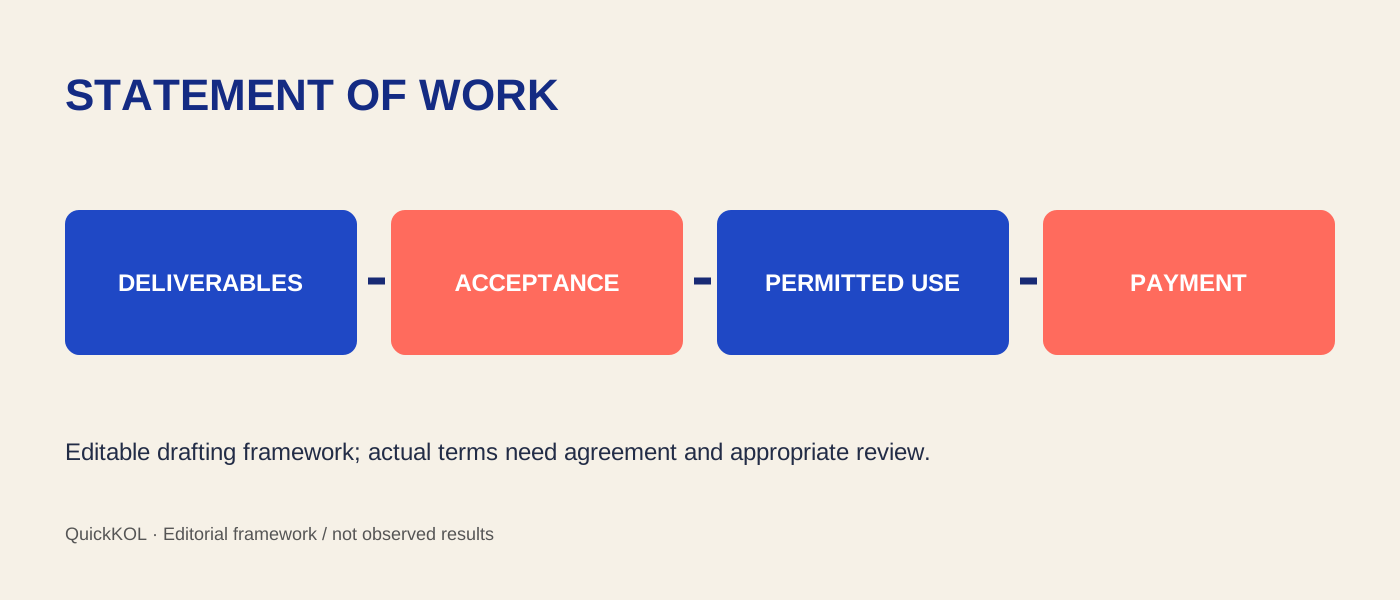
A useful influencer contract template identifies the parties, purchased work, acceptance process, permitted use and payment. The fields and example wording below form an editable statement of work, not a complete agreement valid in every jurisdiction. Review it against the main agreement, actual rights and applicable requirements. Leave unresolved fields visibly open; an omission should not silently become unlimited permission.
Template opening: parties and document relationship
Copy these fields: project name; version; date; brand contracting entity; creator or authorized representative; working contacts; linked main agreement; and how document conflicts are handled. A public account name is not automatically the contracting party. Confirm who can make commitments and which document governs the relationship.
Example wording for review: This statement describes the specific project to be purchased. Other applicable terms are set out in [agreement and version]. Unresolved document conflicts are referred to [contacts] before the affected work proceeds. This is a drafting prompt, not a recommendation that one priority rule suits every transaction. The scope checklist helps identify missing fields before the team treats a saved template as a signed agreement.
Deliverables: make the acceptance object identifiable
Copy these fields: asset ID; platform; format; quantity; duration or dimensions; language; required supported facts; draft date; publication window; retention conditions; and reporting items. List extra edits and paid-ad versions separately. The deliverable should be identifiable even when a different teammate handles acceptance.
Example wording for review: Deliver [quantity] of [format] for [channel], subject to the specifications listed here. Additional formats, platforms or claims require a written scope update. Avoid leaving all content needed as an expandable obligation. A brief can explain the creative purpose, while the statement of work identifies what is actually purchased. Connect the two by version so a later creative note does not quietly replace the agreed production scope.
Acceptance and revisions: distinguish correction from expansion
Copy these fields: reviewer; response window; included revision rounds; feedback method; handling of technical nonconformity; and scope-change process. Example wording for review: Delivery is reviewed against [specification]. [Owner] supplies consolidated feedback within [window]. New scenes or uses are discussed as a scope change. Define what constitutes a round so fragmented comments do not become unlimited revisions.
Do not assume silence always means acceptance. Do not classify every change in brand preference as a creator error. Agree the actual acceptance mechanism, late responses and escalation process. The change-control guide helps preserve the distinction between correcting a missed agreed requirement and purchasing a different idea. Both may be reasonable requests, but they have different implications for time, work and compensation.
Rights: identify assets and permitted uses
Copy these fields: assets; permitted user; channels; organic or paid media; territory; start and end; edit permissions; third-party material; and takedown or renewal contacts. The U.S. Copyright Office explains copyright and exclusive rights. That background does not establish that commissioning content automatically transfers every right to the brand.
Example wording for review: [Entity] may use [identified assets] in [specified ways] on [channels and territory] during [period]. Other uses require separate agreement. Confirm the actual legal terms with the parties. The licensing-schedule guide helps separate copyright permission from technical account access. Enabling advertising access does not by itself define the content license, and a content license does not automatically grant access to the creator’s account.
Truthful expression, facts and disclosure
Copy these fields: brand-supplied substantiation; unsupported claims that must not be used; truthful personal-experience requirements; and disclosure responsibility and review. FTC guidance provides a US reference for material-relationship disclosure. The actual arrangement still needs review against its facts and applicable requirements rather than a universal label copied into every jurisdiction.
Example wording for review: The brand supplies current product facts. Statements about personal experience must reflect actual experience. The parties confirm applicable disclosure arrangements before publication. Do not draft the commission as a purchase of a predetermined personal reaction. A factual review can correct an inaccurate specification without authorizing the brand to invent use history or remove a necessary disclosure because it interrupts the creative.
Fees, payment, cancellation and handoff
Copy these fields: fee components; currency; tax treatment; invoice route; payment trigger and date; expense cap; cancellation stages; completed work; and asset or permission handoff. Leave unknown costs unresolved rather than fill in includes everything. A clear total is useful only when the scope behind it is equally clear.
Example wording for review: [Event] triggers payment of [amount and currency] through [process]. Changes and cancellation are handled under [agreed terms]. The actual payment conditions need agreement and appropriate review. Preserve signatures or acceptance records, version and remaining open items. QuickKOL can assist brief preparation, while contract formation and rights need direct confirmation. The downloadable draft accompanying this article is a starting worksheet to edit, not evidence that the parties have accepted the project.
How should open template fields be handled?
Keep an open-items list with field, consequence, owner, due date and resolution status. Permission period, payment trigger, cancellation and third-party material should not default to whichever interpretation is most convenient for the brand. An unfilled field can affect whether the proposed work is feasible or whether a later use is permitted.
Save discussion and accepted versions separately. Connect the acceptance record to the actual version rather than only the project name. If a party says the main agreement already covers an issue, inspect the relevant text and resolve conflicts before closing the item. Do not copy a remembered clause into the summary without checking its applicability.
For a small commission, the list may be brief. Its value is in making the few consequential uncertainties visible. Reference the actual deliverable filenames when available. The template can then remain concise without pretending that missing terms are harmless. This gives both sides a concrete document to review and a clear account of what still needs agreement before the affected work or use proceeds.
Can you sign this without further review?
Complete the actual fields and review the main agreement, authority and applicable requirements before deciding whether the document is sufficient. A template title cannot resolve blank terms, conflicting documents or a signatory without authority.
Even a small assignment benefits from clear obligations. Simplicity should come from a defined scope rather than omission of the rights and payment conditions both parties need to understand. Keep proposed wording visibly distinct from agreed wording until the review and acceptance process is complete.
Research date, evidence and limitations
Sources reviewed October 23, 2026. Workflows are editorial recommendations. Numerical examples are hypothetical, not client outcomes, quotes or rankings.
A working comparison
Editorial analysis and labeled hypothetical examples, not performance rankings, quotes or guarantees.
| Task | Evidence | Action |
|---|---|---|
| Purchased scope | Assets, specifications and dates | Identify the deliverable |
| Rights | Use, period and permissions | Do not fill omissions silently |
| Transaction | Fees, acceptance and cancellation | Obtain actual agreement |
CHECKLIST
Before you put this into practice
Record the answers in the campaign working file.
- Verify contracting entities
- Discuss additions separately
- Separate license and technical access
- Confirm payment conditions
Sources and further reading
External pages can change. Recheck platform rules, contracts and local law before launch.