
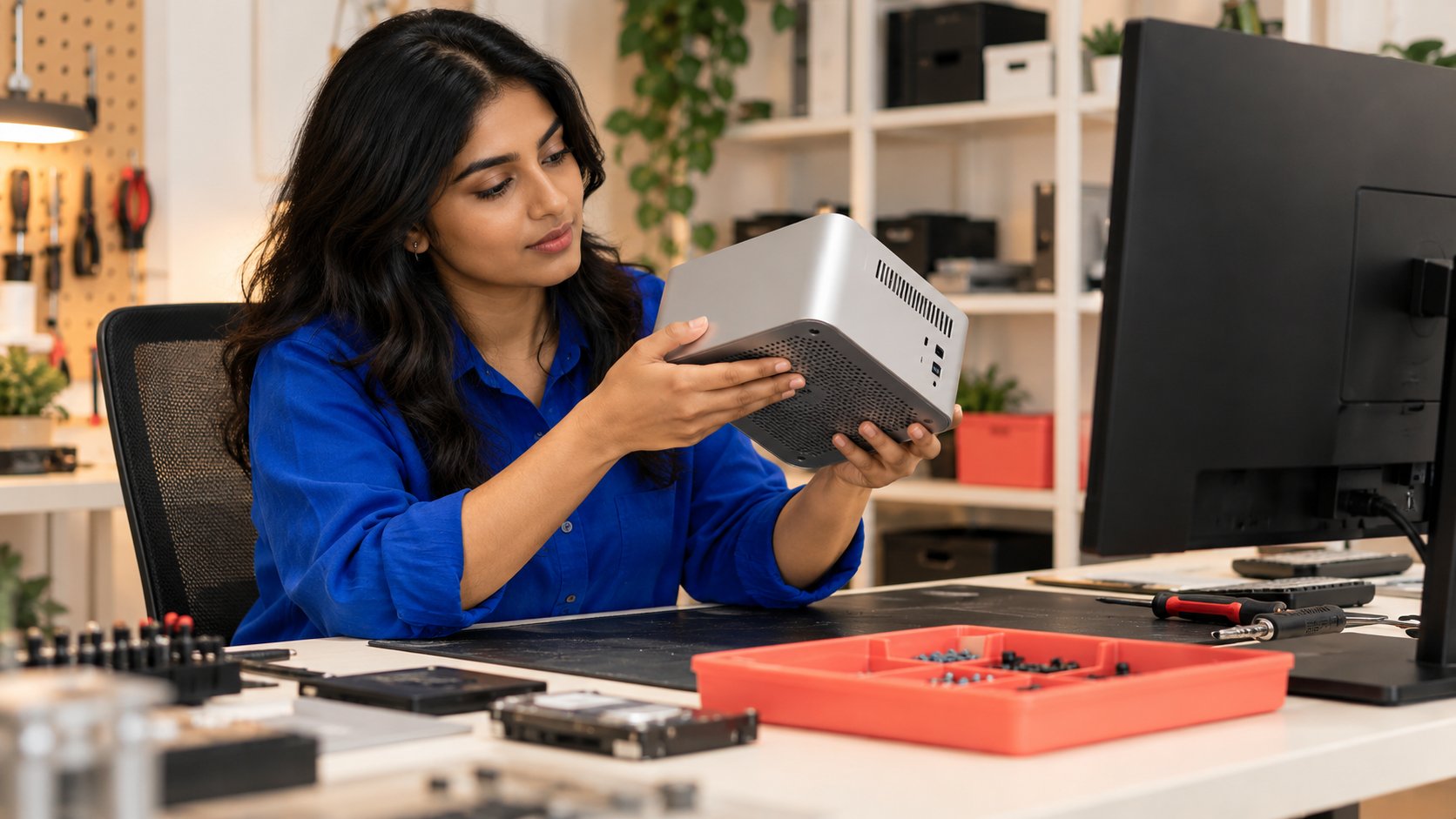
AI-generated editorial illustration, not an actual creator, client, product or event.
THE SHORT ANSWER
Research top tech influencers by first choosing unboxing, actual use, technical explanation or methodical testing, then checking relevant work. Linus Media Group and iJustine provide different first-party research routes, not a live ranking or partnership promise. A review brief should preserve sample, software version, conditions and evidence, distinguishing factual correction from a purchased positive conclusion.
Distinguish tech roles through the reader’s decision
Tech brands often group unboxing, hands-on experience, reviews and explanation under review, although they support different conclusions. An unboxing can show what arrived. Short-term use can demonstrate operation. Technical explanation can clarify choices. Performance comparison needs appropriate methods and conditions. Identify which evidence the reader needs before selecting a creator and scope.
Specify product stage, intended user, market and main question. A consumer choosing a portable device and an enterprise team evaluating deployment do not necessarily need the same demonstration. Several roles can serve one plan, but a short video should not replace every technical verification and procurement discussion. No creator’s judgment automatically certifies every operating environment.
The creator selection beyond followers guide helps connect work with tasks. Retain specific videos, dates, explanatory capability and conditions to verify. A clear reason why a content approach serves this decision is more executable than an unexplained top-ten list. Public recognition can guide research without replacing evidence. It also matters whether the assignment is independent editorial work or a commissioned explanation, because the brand’s control and the creator’s expected deliverables need to be understood before the invitation becomes a commitment.
Linus Media Group: research distinct channel jobs
Linus Media Group channel descriptions distinguish public directions including technology entertainment, reviews and engineering at Linus Tech Tips, unboxing-oriented ShortCircuit, and explanatory Techquickie content. Shared ownership does not make them interchangeable deliverables or establish that any product can purchase a particular kind of coverage.
Choose relevant public work and inspect how it asks a question, shows a process and separates demonstration from findings. If the brand needs a conditional comparison, confirm that it can supply the required versions and material. A preproduction sample should not be used to demand conclusions about every aspect of a shipping product.
Describe a discussable assignment, such as explaining a connection method or examining an actual use condition. Do not infer rates, availability, sample acceptance or brand approval rights from channel names. Verify arrangements through an appropriate first-party business route. The research value is understanding format differences, not claiming every channel in a group fits the same brief. This helps a brand avoid sending a general request for a positive review when the real need is a narrower demonstration or explanation with a different scope and evidence requirement.
iJustine: study experience, demonstration and presentation
The iJustine official profile describes work as a tech creator, producer and host. It is a first-party entry into experience and presentation, not verification of current follower totals, market audience or availability. This article does not rename self-description as an independent effectiveness assessment.
Inspect work related to the product task. Record whether operation is clear, how personal impressions are identified and how the product enters a real situation. For portable use, a demonstration approach may be relevant. A technical-performance question requires separate confirmation of method, time and evidence; polished presentation does not establish that testing occurred.
Outreach should identify what was researched and which job deserves discussion. Do not expand public hosting experience into certification across every device category or assume willingness to endorse. For a similar role, the brief can specify trial time, functions to show, factual review and usage scope. Natural expression needs genuine inputs rather than a prescribed performance of unverified benefits. Let the creator flag features they have not used and conditions they cannot assess, so the final explanation remains accurate about the difference between first impressions and a more extensive evaluation.
Record the sample and operating environment
At minimum, record model, configuration, sample state, firmware, software, accessories and receipt date. Identify relevant preproduction, loan or brand-preconfigured conditions. When a version changes, tell the creator which operations and conclusions may be affected rather than assuming previously filmed material remains accurate.
Keep environment fields relevant to the question, such as power mode, network conditions, connected devices or software settings. Unrelated parameters do not make the work more rigorous. If a condition cannot be controlled consistently, record the circumstances and comparison limit. Do not apply a hidden correction to make an unreproducible result match expectations.
Assign a support contact and a decision path for failed samples, missing accessories or delayed updates. Narrow scope, verify further or reschedule instead of requesting a conclusion without a usable product. The creator sample delivery guide helps check the physical handoff. Shipping and technical support are production dependencies. Their timing and ownership belong in the scope, not entirely inside the creator’s assumed preparation work. A useful sample record allows the editor to understand what was actually evaluated, while the public explanation retains the context that matters to a reader trying to assess the same product.
Match the test question, method and conclusion
For each test, define the question, conditions, comparator, repetition approach and supportable conclusion. One file-transfer demonstration does not establish every workload, and one use period does not establish long-term reliability. Suitable people should design and interpret methods. The brand supplies facts and conditions without expanding the result for promotional convenience.
Hypothetically, if two devices differ on one task, inspect configuration, versions, settings and observation windows before interpreting the difference. This is a method illustration, not a real product comparison. Controlling some conditions does not justify a claim across every consumer environment. Retain missing, unusual and unreproducible results instead of displaying only the best run.
Keep evidence close to the published wording. Readers need to understand what was tested, what was not and how impressions differ from measurements. If support is insufficient, present a limited demonstration or initial observation rather than retaining a comprehensive-review title after removing the method. Credibility does not require uniformly positive results. It requires conclusions that stay within the evidence. Make this expectation part of the accepted assignment so neither party discovers at the editing stage that they intended a fundamentally different kind of content.
Separate factual review from control of opinion
The brand can check names, configurations, versions and public facts, and flag a reproducible error. A creator’s preference, interpretation or judgment should not become a factual error merely because it is insufficiently positive. Agree on feedback scope, timing and disagreement handling before delivery rather than introducing unlimited revisions at the end.
The FTC endorsement FAQ discusses authentic expression and supportable claims in US advertising. An expert image cannot supply evidence the brand otherwise lacks. Check other markets separately; this article does not establish compliance for a particular partnership. Review product facts, personal experience and broad performance claims as different categories.
When a material error appears, provide specific evidence and discuss correction. If the parties intended different jobs, reconfirm scope or stop instead of editing a sentence to imply agreement with another conclusion. Retain approved files and decisions so a later sales team knows how statements may be quoted. A bounded experience should not become a comprehensive recommendation through extraction. Make the same distinction in subtitles and translations, where removing a condition or strengthening a verb can change the claim even when the original spoken passage was accurate.
Confirm disclosure, advertising and reuse separately
YouTube branded-content guidance describes paid-promotion notification and related responsibilities. Check samples, travel, fees and other relationships against the actual assignment, channel and market. Review is not a reason to omit relevant context. The final video and description should reflect the relationship, with short extracts checked again.
Original publication, delivery of files and advertising use are different scopes. Reusing a testing passage in sales material needs context, term, territory and editing conditions. A public video praising one operation does not establish consent to endorse the entire product line in every promotional asset.
Record actual placements and expiry actions. When a product changes, check whether older passages remain accurate rather than only whether the license is still in term. Platform report access is not content permission either. Hand over commercial conditions separately from technical settings so media and regional teams can identify the usable version and the owner of a new request. This preserves the meaning of the original review and gives the brand a practical process for reuse instead of relying on a screenshot of favorable words detached from the conditions that supported them.
Use the evidence package for the next decision
Suppose a brand wants to explain a small computer’s desk setup and connections. It may choose an experience-led demonstration without requiring a comprehensive performance comparison at the outset. If the business later needs workload evidence, add an appropriate method, time and scope. This illustration describes no actual product and no accepted partnership with a named reference.
Hand over the task, work research, sample versions, methods, approvals, permissions and limits. Findings can support retaining an explanation, adding a condition or changing the next test question. They cannot automatically establish stronger purchase intent across the audience. Do not invent views, sales or efficiency improvements without observations.
Translate top into verifiable capability suited to this particular question. Preserve unknown availability, rates and audience fields for appropriate verification. An evidence-led brief helps the brand make a meaningful request and lets a creator judge whether the assignment is worthwhile and feasible, including the room for independent judgment it requires. The resulting shortlist is a research decision with conditions, not a declaration that recognition alone guarantees the right partner or a successful review.
Research date and limitations
Sources reviewed October 29, 2026. Methods and tables are editorial recommendations; hypothetical numbers are not industry benchmarks. Platform conditions can change. Named references are research entry points, not live rankings, endorsements or confirmed partnerships.
Evidence by tech content job
Named routes support format research, not current rankings, quotes or partnership commitments.
| Content job | Preparation | Does not automatically establish |
|---|---|---|
| Unboxing | Accurate sample and contents | Long-term use or all performance |
| Experience demonstration | Genuine use, versions and situation | Suitability for every user |
| Technical explanation | Citable facts and clear definitions | Certification of every product |
| Methodical testing | Question, conditions, comparison and limits | Universal results across environments |
CHECKLIST
Review brief preparation
Keep claims within the evidence.
- Define the reader’s question and content job.
- Retain relevant public work and reasons.
- Check sample, software and environment.
- State supported and unsupported conclusions.
- Agree on factual review and judgment boundaries.
- Confirm disclosure, use and expiry separately.
Sources and further reading
- 01Linus Media Group: Channels
- 02iJustine: About
- 03FTC: Endorsement Guides—What People Are Asking
- 04YouTube: Branded-content disclosure labels
External pages can change. Recheck platform rules, contracts and local law before launch.