
THE SHORT ANSWER
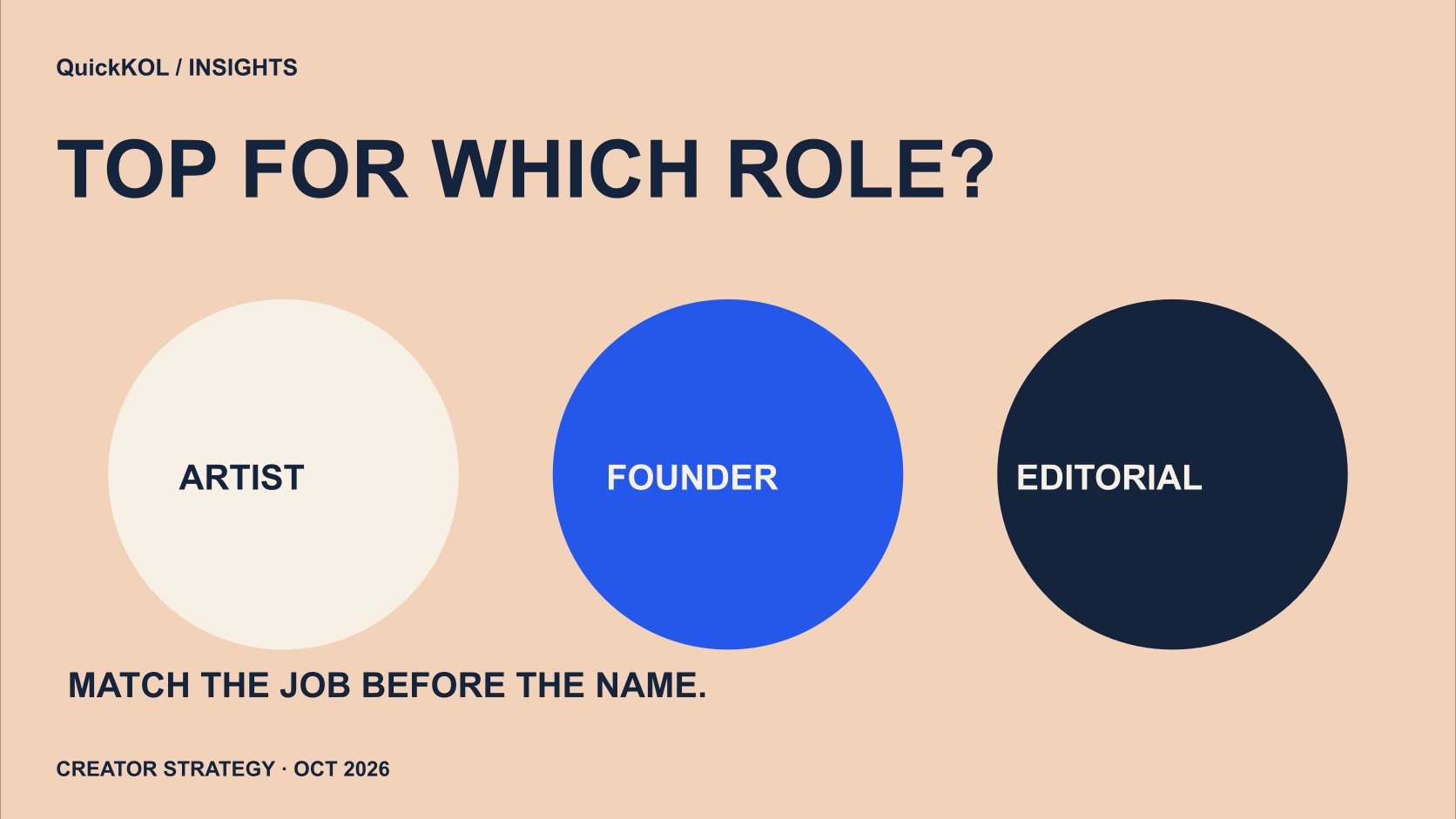
Top on Instagram needs a stated criterion and date. This article does not publish a live follower ranking. Instead, official media references associated with Selena Gomez, Huda Beauty and Leonie Hanne illustrate different partnership models: artist-led, founder-linked and editorial fashion work. Choose the assignment first, then verify the actual account, content, market and commercial conditions. Recognition alone does not establish that a person is suitable, available or able to grant the rights your campaign requires.
Choose the meaning of top
Largest audience, most relevant explanation, strongest market fit and most executable production are different criteria. Decide which matters for the assignment and what other conditions remain mandatory. A list becomes misleading when it silently changes the criterion from one entry to the next.
For product setup, fame may add little if the explanation is unclear. For a major launch, attendance, rights and project scale may be relevant alongside distribution. The creator selection guide provides a work-based framework. State the question before studying recognizable references so the team does not reverse-engineer a reason to approach a famous account whose actual format or commercial structure does not match the task.
Artist-led media: inspect channels and entities
Selena Gomez’s official store provides an artist-associated commercial and media route. It is useful context for studying an artist-led ecosystem, but it does not establish that an Instagram endorsement is available to purchase or provide a current follower count verified by this article.
For an artist-led opportunity, identify the representative team, exact account, event commitments and contracting entity. An official merchandise route is not permission to imply personal endorsement of another brand. The agency-role guide explains authority and representation. The reference helps the team understand why a celebrity partnership can involve more than one published asset and why the name alone is insufficient to define the scope, cost or rights of a new commercial engagement.
Founder-linked media: check brand relationships
Huda Beauty’s official about page provides a route into the brand and founder story. Keep a brand account, a founder’s personal account and product distribution channels as distinct entities. Establish which one is being researched and which one a proposed contract would cover.
Founder-linked media has an existing commercial relationship at its center. Another brand should investigate conflicts rather than assuming that expertise creates an open advertising slot. The database guide explains entity separation. A reference can be valuable for studying how education and a brand world connect while remaining unsuitable as an outreach target for a competing product. Understanding that distinction prevents a recognizable name from becoming an unrealistic candidate merely because its subject area matches the campaign category.
Editorial work: inspect the actual portfolio
Leonie Hanne’s official biography lists fashion projects and provides an editorial partnership reference. It does not establish current availability or a general price for a new campaign. Use the official route to understand the type of work, then inspect the actual sample relevant to the proposed job.
For real candidates, identify whether the demonstrated capability is styling, event documentation, interview or another format. A portfolio containing luxury brands does not establish equal suitability for every production type. The fashion assignment guide develops these distinctions. Keep the task and evidence attached to the reference so the team can use it to improve a brief without implying that the person is already qualified, contacted or commercially confirmed for the brand’s particular project.
Verify scale and audience separately
Record current follower scale from the relevant platform with its date, preserving rounded precision. Audience geography, age bands and interests need appropriate evidence rather than inference from the person’s identity or language. Keep those questions separate from name recognition.
Do not add several accounts’ followers and label the total unique reach. Followers are also not the number of people who will necessarily see each post. The metric-definition guide explains these distinctions. A commercial decision needs the format, observation window and next-step path as well. A large potential audience can be relevant to a project without supplying the exact exposure or sales forecast a procurement spreadsheet may be tempted to derive from it.
Match scope to the account role
Specify appearance, creation, organic publication, brand reposting and advertising rights separately. A larger engagement may also include attendance, travel, on-site production and approval coordination. A single posting-fee label can hide several different purchases.
Check exclusivity, conflicts, asset duration and editing permission. Footage from an existing brand project is not automatically available for a new brand to copy. The rights guide develops those choices. Scope clarity matters across all three reference models, but the responsible parties can differ. The team should know who grants each right and who accepts each deliverable before comparing the total proposal with another account or deciding that a larger name justifies a broader commitment.
Worked example: compare assignment coverage
Imagine a launch requiring three outputs: initial attention, practical instruction and a lasting searchable resource. An artist-led account might fit the first, a specialist creator the second and a publication-oriented team the third. One person does not need to perform every job.
This is a hypothetical planning model, not a prediction about the named references. Identify the portfolio gap before allocating budget and rights. The portfolio-gap guide provides a structured way to make that decision. Comparing complementary roles can be more useful than forcing every candidate into one popularity ranking. It also helps the team explain why a smaller account belongs in the plan alongside a recognizable reference without pretending the two purchases create identical value.
Keep the verified account and its brand relationships in separate fields. A personal portfolio reference should not be relabeled as an official brand channel, and a brand account’s followers should not be attributed to its founder without evidence identifying the actual account being measured.
Make the shortlist actionable
Keep the account URL, relevant work, role, market evidence, conflicts and next action. Do not label someone a partner before agreement or interpret no response as a permanent refusal. Refresh the critical conditions before a new procurement decision.
QuickKOL can support brief interpretation, discovery and content understanding. The final shortlist should help the team know whom to contact, what to discuss and which facts remain unverified. A recognizable reference can sharpen the creative direction while the actual candidate pool remains practical and evidence-based. The most useful list is therefore one that supports the next clear action, rather than one that collects the largest possible number of famous names under an undefined top label.
Research date, evidence and limitations
Sources reviewed October 21–22, 2026. Workflows are editorial recommendations and numerical examples are hypothetical, not observed campaign results, creator rankings or offers.
The working sheet for this task
Editorial analysis and labeled hypothetical examples, not performance rankings, quotes or guarantees.
| Decision | Evidence to keep | Next action |
|---|---|---|
| Artist-led media | Representative, channel and project | Confirm the actual entity |
| Founder-linked media | Person and brand relationship | Check conflicts |
| Editorial content | Specific work and format | Quote the assignment |
CHECKLIST
Before you put this into practice
Record the answers in the campaign working file.
- State the criterion
- Invent no current ranking
- Separate accounts and people
- Make scope and rights verifiable
Sources and further reading
External pages can change. Recheck platform rules, contracts and local law before launch.