
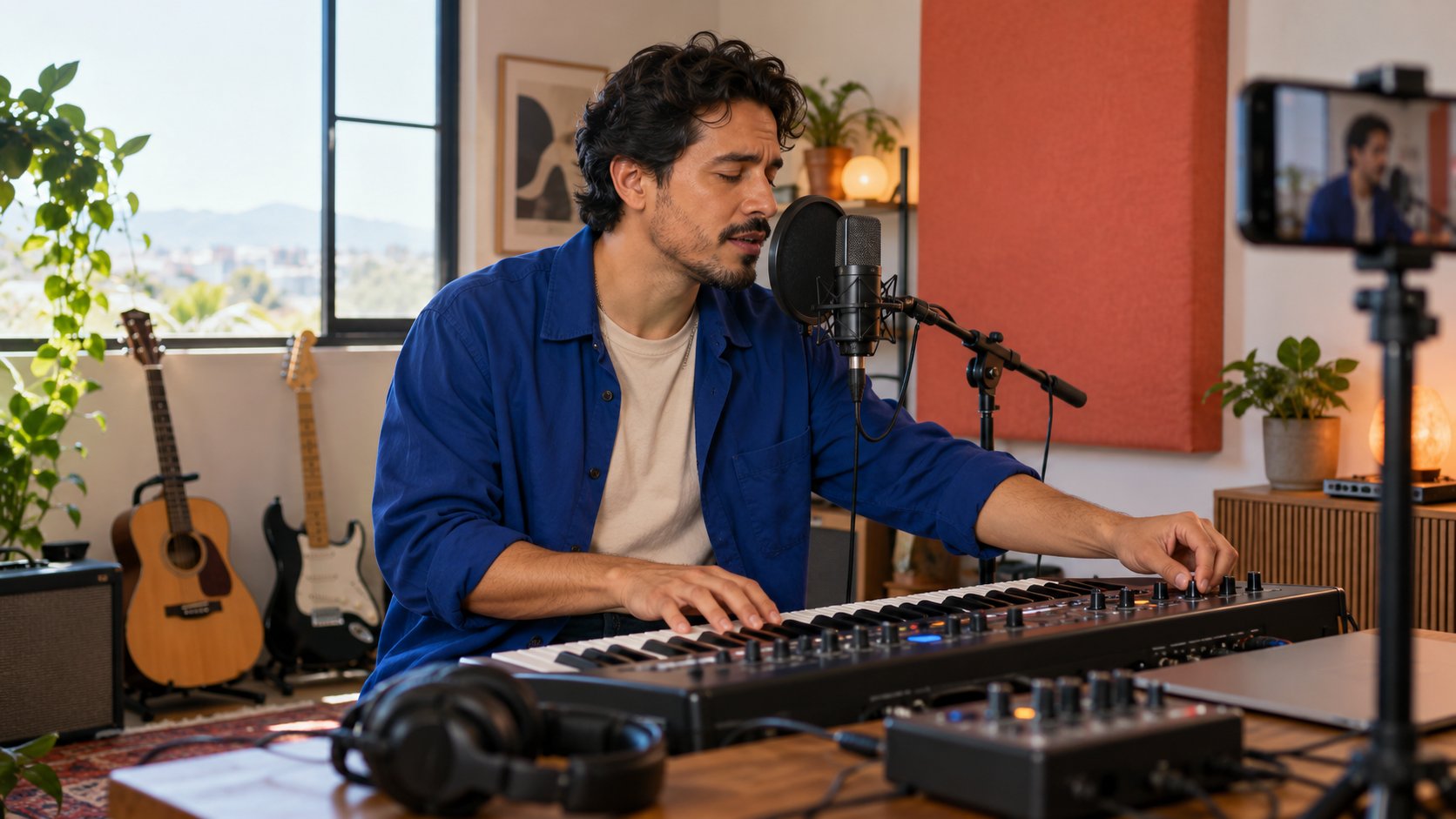
AI-generated editorial illustration, not named people or actual events in the article.
THE SHORT ANSWER
Use dated account evidence when researching TikTok musicians with large fan bases in 2026, and separate it from song usage and views. TikTok reported KATSEYE at more than 20 million followers in August 2026 and Charlie Puth at 22.7 million in March. These are platform statements at those dates, not an October live ranking or independent audit.
Define evidence for a large fan base
Account followers, video viewers, creations using music and listeners elsewhere are different sets. Broad use of a song does not establish an equally large follower count for its original artist. Define the evidence type before comparing musicians or selecting a partnership objective.
The metric-definitions guide helps record name, date and source. This article selects research entry points with 2026 primary disclosures; it does not cover every musician or rank the world from counts observed in different months. Large is descriptive here rather than a universal threshold. The useful record makes it possible to see what was reported, who reported it and whether it answers the brand’s actual question about a creator account, a music community or a distribution opportunity.
KATSEYE: an August 2026 platform disclosure
On August 17, 2026, TikTok described a KATSEYE fan experience around WILD and reported more than 20 million followers. Record the date and reporting party alongside the count. It is not a statement of guaranteed current reach, October account size or the number of people who would see a new sponsored post.
The participation experience offers a mechanism to study, but participation, song use and followers cannot be added into a unique-person total. Review the current official work and appropriate commercial route for a proposed assignment. The announcement establishes a useful historical observation and activity description; it does not confirm availability, fees or permission to reuse the artists’ performances, recordings or campaign assets in another brand’s advertising.
Charlie Puth: a March 2026 platform disclosure
On March 23, 2026, TikTok announced Charlie Puth’s In The Mix appearance, reported 22.7 million followers and identified T-Mobile’s sponsorship. This supports a dated account observation and the described activity. It does not establish a current position relative to a musician measured at another time.
Do not order a live ranking merely because this number exceeds a disclosure from a different month. Study interview, explanation or performance capability through actual work rather than infer brand outcomes from size. A proposed partnership needs its own content job and commercial discussion. Preserve the difference between an artist’s platform-reported prominence and the contribution the brand can realistically purchase, measure and use under an agreed scope.
Separate music participation from account following
TikTok’s 2025 music review can provide historical context for participation mechanisms, but it should not be relabeled as a current 2026 follower ranking. Music participation describes a content phenomenon. It does not by itself establish listeners’ identities, current account following or preference for a new sponsoring brand.
The cross-platform identity guide preserves differences between sets. Do not assemble views, creations and listeners elsewhere into one apparently large purchasable audience. A brand can have a valid reason to explore participation without knowing a unique-person total. State which evidence is available and which question it addresses. This makes the research useful while avoiding a misleading conversion of cultural activity into a precise distribution promise.
Separate the contribution and the music rights
A performance, interview, song use and recording license are different purchases. The U.S. Copyright Office provides background on copyright, while a real music arrangement may involve different works and rights that need specific confirmation. Identify what the brand wants to do before asking one party for a general permission they may not control.
A sound being discoverable on TikTok does not establish permission for every commercial advertisement. The licensing-schedule guide records assets, channels, periods and permission sources. Technical availability on a platform is not a complete license analysis. Keep the content contribution and the relevant rights clear so an attractive artist partnership does not fail when the team discovers that the purchased appearance did not include the proposed recording or advertising use.
Turn the research into a discussable task
Decide whether the brand needs conversation, performance or participation, then verify work, audience conditions, availability, quote and rights. If budget or evidence is insufficient, change the task instead of pretending the brand can purchase every effect associated with a celebrity example. The proposed contribution should remain coherent under actual conditions.
QuickKOL can assist research and brief preparation. Preserve the observation date, platform-reported nature of the count and unresolved items so another teammate does not mistake a historical statement for today’s guarantee. A credible shortlist can contain a few supported examples and clear next questions. It need not become a comprehensive annual ranking to be useful for a specific partnership decision.
Set an update rule for the research
Before a current purchase, refresh the account evidence the decision actually needs and save the observation date. Retain the old disclosure as a historical source rather than overwrite it with a value from another method. If the new number differs, align identity, time and definition before describing the change as growth or decline.
Commercial scope, music permission and availability have separate update needs. A refreshed follower count does not establish that a previous sponsor arrangement continues or that a recording is available for the proposed advertisement. Give each dependency an owner and next confirmation step. If two sources report the same account differently, retain both observations with their dates instead of silently selecting the larger number for the proposal.
If a refresh is unavailable, keep the dated observation and narrow the claim. The research can still explain a musician’s documented platform presence and relevant creative work without pretending to be live market data. That distinction helps the next planner use the material correctly and prevents a historical count from becoming an unsupported guarantee in a proposal copied months later.
Can this be presented as a full-year 2026 ranking?
No. The review date is October 23, 2026, the year is incomplete and the observations were reported at different times. Describe these as dated research entry points.
For a current list, collect observations under a consistent date and definition and preserve sources. Do not guess unconfirmed values or invent a third entry to make the table look complete. A shorter supported set is preferable to a larger ranking whose apparent precision cannot be traced to comparable evidence.
Research date, evidence and limitations
Sources reviewed October 23, 2026. Workflows are editorial recommendations. Numerical examples are hypothetical, not client outcomes, quotes or rankings.
A working comparison
Editorial analysis and labeled hypothetical examples, not performance rankings, quotes or guarantees.
| Task | Evidence | Action |
|---|---|---|
| KATSEYE | TikTok: Aug 17, 2026, over 20 million | Platform statement at that date |
| Charlie Puth | TikTok: Mar 23, 2026, 22.7 million | Not a current rank |
| Music participation | Record creations and views separately | Do not sum as unique followers |
CHECKLIST
Before you put this into practice
Record the answers in the campaign working file.
- Date each count
- Identify platform reporting
- Participation is not followers
- Confirm music rights separately
Sources and further reading
- 01TikTok
- 02TikTok
- 03TikTok
- 04U.S. Copyright Office
External pages can change. Recheck platform rules, contracts and local law before launch.