
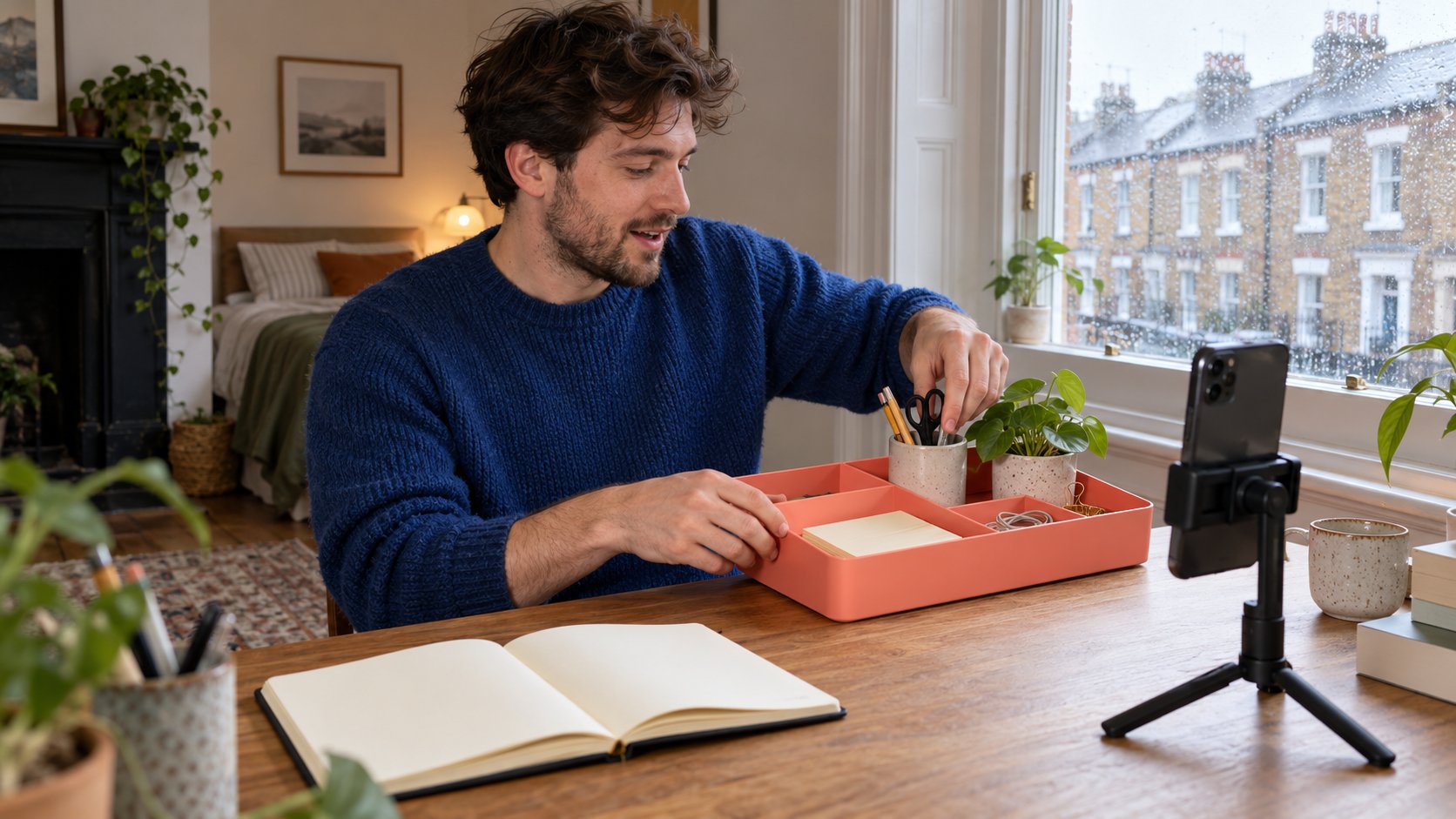
AI-generated editorial illustration, not named people or actual events in the article.
THE SHORT ANSWER
Find small UK TikTok creators by defining a content job and project follower range, then researching relevant public work, UK operating context and contact routes. A UK-based creator does not necessarily have a mainly UK audience, and a small account does not imply unpaid availability. Use a scoped paid pilot and confirm advertising recognition and rights for the actual arrangement.
Turn three labels into checkable conditions
Small might mean 1,000 through 20,000 followers for this project, but label that as a chosen interval rather than an industry-wide definition. UK also needs separation into operating location, content context and audience geography. These fields answer different questions and should not be reduced to one flag.
The local-research guide helps record them separately. Decide whether the product is sold only in the UK, whether attendance is required and which language or context the story needs. Then choose the necessary conditions. This avoids excluding relevant work or overstating audience fit because a profile includes a British location. The research should support a real project dependency, not simply satisfy every word in a broad keyword phrase.
Start with practical topic questions
Combine a product use, a real setting and an explanatory format, such as small-space organization, commute preparation or making something. Save the work first, then verify the author and related recurring content. The work should show why the person belongs in the research before follower size becomes a screening condition.
The topic-discovery guide helps preserve the query route. Trending sounds and broad tags may return many results unrelated to the product task. A small reviewable batch is more useful than a long generic sheet. Record what the search did not cover and avoid describing the result as the entire UK creator market. A clear route can be repeated and improved without claiming completeness that public discovery cannot establish.
Separate location and audience evidence
An official site, business introduction or the author’s own public statement can support operating context, while current availability still needs confirmation. Do not infer nationality or residence from appearance, accent or one background image. Keep the evidence appropriate to the commercial question.
Modash’s search documentation distinguishes creator and audience conditions. If the task depends on UK viewers, seek relevant audience-location evidence. A location tag does not replace it, and a documented feature does not prove a free plan includes every filter. The team can preserve unknown audience geography and choose a content-production scope that does not depend on it. It should not quietly turn an unverified geographic assumption into a promised distribution outcome.
Handle UK ad recognition for the arrangement
ASA guidance on recognising social-media ads provides a UK reference. A general ambassador statement in a biography is not enough to make every commercial post automatically clear. Review the identification needed for the actual arrangement rather than assume one profile label resolves the issue.
Do not ask a creator to hide payment or provided benefits behind vague wording. Explain the relationship, creative task and publication conditions together instead of treating recognition as a detail added after filming. The article provides a practical research route, not a complete legal determination for every campaign. Preserve who owns the review and which guidance applies so both parties understand the proposed conditions before the brand relies on the asset in a launch schedule.
Scope a small pilot fully
A pilot can purchase one specific demonstration, one consolidated review round and a clear publication arrangement without adding live hosting, multiple platforms and a sales guarantee. Confirm fees, product delivery, expenses and permission separately. Small scope should mean fewer obligations, not incomplete commercial terms.
The paid-assignment guide helps limit the first round. A small account can have mature commercial experience. Do not infer a low fee, unlimited revisions or willingness to work for free to prove commitment. The pilot should generate evidence under fair conditions for both parties. If the brand needs a different contribution after review, discuss the new scope rather than treat learning from the first delivery as permission to expand the original commission without agreement.
Worked example: a home-organization product
Suppose a UK brand needs to explain a real storage problem. Find relevant work, confirm UK product delivery and availability, then commission one use demonstration. Evaluate clarity, facts and delivery. Views do not establish sales, and a successful delivery does not prove that every larger format will perform similarly. These are hypothetical planning steps.
QuickKOL can assist discovery and brief preparation, while audience geography, available time and commercial conditions need actual evidence. Expand only when the pilot reveals a reason to do so. The report can recommend another explanation, a different format or no renewal. A small-creator strategy is useful when it improves the match between task and work, not when it is merely a euphemism for buying more obligations at a lower price.
What should happen after no reply?
First inspect the contact route, specificity of the message and feasibility of the dates. Follow up within a reasonable defined process rather than contact the person repeatedly through several accounts. No reply should remain no reply, not become a claim that the creator is unprofessional or has rejected every possible partnership.
Confirm product delivery timing before reserving a shoot. Keep other qualified candidates available so the project does not depend on an assumed response. If a reply proposes a different task, compare the scope before judging the quote. Small size does not create an obligation to accept the brand’s original request.
A useful outreach record captures status, last relevant action and next review point. It need not contain speculative reasons for silence. This helps the team continue discovery or change timing without turning an ordinary communication gap into an unsupported assessment of the person’s reliability. Respectful process also makes a later conversation easier if availability changes.
Do you need a ranked list of small UK accounts?
Not necessarily. Lists change, and different intervals, locations and tasks change the results. A reviewable discovery and selection method is more useful than copying an undated ranking.
When named candidates are needed, verify each against the same fields and record the observation date for current counts and commercial status. Keep the result scoped to the project. The absence of a ranking does not prevent a useful pilot; it encourages the team to explain the actual work-based reason for contacting each person.
Research date, evidence and limitations
Sources reviewed October 23, 2026. Workflows are editorial recommendations. Numerical examples are hypothetical, not client outcomes, quotes or rankings.
A working comparison
Editorial analysis and labeled hypothetical examples, not performance rankings, quotes or guarantees.
| Task | Evidence | Action |
|---|---|---|
| Small | Project-defined interval | Do not present as universal |
| UK | Operating context versus audience | Gather separate evidence |
| Pilot | Specific task and fee | Define recognition and permission |
CHECKLIST
Before you put this into practice
Record the answers in the campaign working file.
- Start with the topic
- UK identity is not UK audience
- Small does not mean unpaid
- Review ad recognition for the arrangement
Sources and further reading
External pages can change. Recheck platform rules, contracts and local law before launch.