
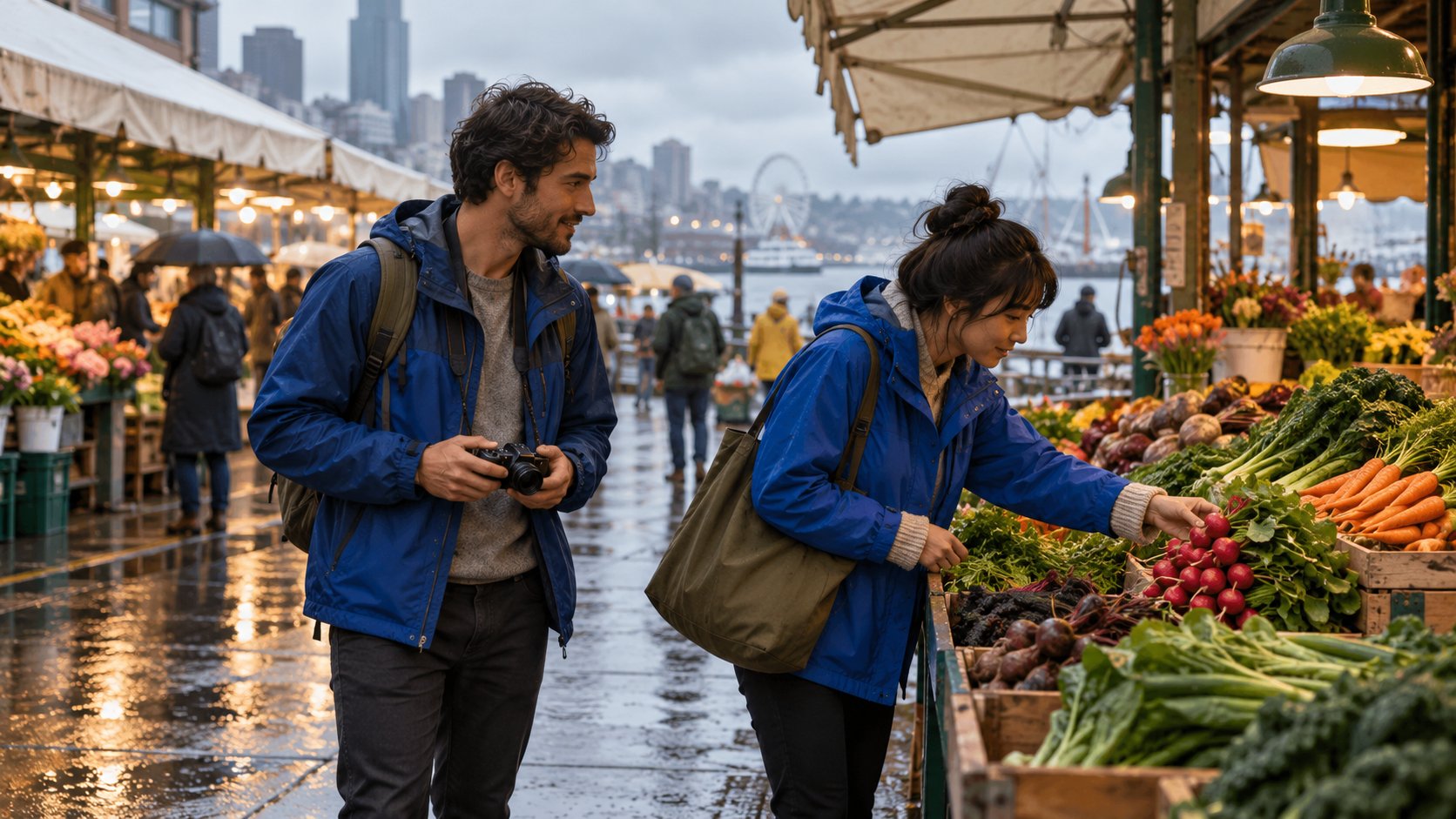
AI-generated editorial illustration, not the named people, pets or actual events in this article.
THE SHORT ANSWER
Seattle foodie can describe several types of partner rather than one Instagram persona. A physical guide, chef-led publication and individual restaurant-discovery account can serve different tasks. Decide whether the brand needs local discovery, food explanation or reusable creative work before choosing the medium. The first-party routes below illustrate that choice; they do not verify current follower size, availability or acceptance of a particular commercial proposal.
Choose where the content will be used
A physical guide, website article and short video have different reading situations and update cycles. If a restaurant changes its menu frequently, long-lived print material and timely online information need distinct responsibilities. Reusing the same undated copy everywhere can make a correct opening description misleading later.
The food-creator task guide helps define the output. Decide whether the customer needs location information, dish explanation or a cooking process before choosing article, image and video counts. A medium should serve the decision rather than determine it. This also helps procurement compare different offers: a durable guide placement and a short-lived social asset should not be evaluated as though they provide identical distribution, update rights or evidence of how people will encounter the brand.
Seattle Foodie: research the physical-guide route
Seattle Foodie’s website describes a physical food guide being built for Seattle and greater Western Washington and offers a partnership route. This supports researching an offline discovery medium. It does not establish a particular publication date, circulation or a guarantee that a restaurant can pay to be included.
Ask about the current stage, editorial policy, distribution and presentation of any commercial relationship. A partner link does not mean an independent review is for sale. Keep the difference between support, advertising and editorial selection explicit. If the medium is still being developed, distinguish a proposed placement from an accepted deliverable. The brand should understand what will exist, when it can be checked and what information would confirm completion before presenting the opportunity internally as already available inventory.
Eat Seattle: research chef-led food storytelling
Eat Seattle Food Blog describes recipes, restaurant recommendations and Pacific Northwest food stories from its chef team. That is a route for examining explanatory and narrative formats. The homepage description alone does not verify every team member’s qualification, current audience scale or commercial terms.
Inspect current work to identify the author, format and appropriate business route. A team publication and an individual influencer can have different review responsibilities and asset rights. Do not assume the person replying owns every photograph or can license every article. Ask which contribution is available for the proposed project. A chef-led format may be useful for explaining food preparation, but the brand still needs a specific sample and a clear agreement rather than rely on a professional-sounding category label.
Keep the geographic scopes distinct
Seattle city, metro-area delivery and greater Western Washington are different scopes. An event invitation needs an actual address and time. Content positioning should state what it covers instead of relabeling every nearby place Seattle. This matters for travel, local offers and claims about neighborhood relevance.
The local-market guide helps convert geography into working conditions. Audience location still needs its own evidence rather than being inferred from a publication’s coverage area or a filming scene. A local guide may serve visitors as well as residents. Decide which audience action the restaurant can support: a future visit, a nearby reservation or broader interest in a food story. The same place-based content can be valuable for different reasons, but those reasons should remain explicit in the commercial proposal.
Check facts, updates and relationship presentation
Prepare current menu, operating information and supported dish facts, with an owner for updates. For print, minimize volatile promises that cannot be corrected immediately after publication. Online material also needs an update owner rather than an assumption that anything can be changed at any time without cost.
Distinguish paid work, hospitality and independent editorial activity. Do not require a positive conclusion before the experience. Factual checking can correct a name or address without rewriting an honest evaluation into the brand’s preferred opinion. The food-partnership guide provides a broader commissioning framework. Keep the approved facts and the creator’s expression as separate inputs so later changes can be handled accurately. A useful collaboration depends on both current information and a clear account of the relationship under which the material was produced.
Worked example: two purchases for a new menu
Suppose a restaurant introduces a seasonal menu. A long-lived guide could describe the restaurant’s stable identity, while online chef-led material could explain a current preparation. Do not make the printed page promise that the same dish will be available months later, or require a short online asset to function as the complete restaurant directory.
For each deliverable, record the factual cutoff, correction route and license. These are hypothetical complementary contributions, not claims about the named references’ actual packages. One viewing metric cannot fully compare their value because the media serve different situations. The portfolio-gap guide helps identify what remains unanswered. A sensible commission can use one medium or both, provided each has a clear job and the brand understands which parts can be updated when the menu changes.
End research with a specific next step
Keep medium, work sample, geography, commercial status, update conditions and rights questions for each lead. In the inquiry, say whether you want to discuss advertising, production, an event or another form of support. A generic collaboration request makes the recipient guess the commercial relationship and often produces an equally vague answer.
Use the food-creator task guide, local-market guide and portfolio-gap guide to prepare an answerable invitation. QuickKOL can help content research and personalized outreach, while the final arrangement follows the confirmed scope. A useful Seattle foodie partnership is chosen for how it helps people understand or discover food in a defined context. It does not need a fabricated influencer ranking or an assumption that every local publication sells the same kind of attention.
Can the website replace a media kit?
No. A website establishes a research starting point, while current distribution, audience, fees, timing and rights require project confirmation. Leave those fields pending when unavailable. An attractive page is not completed due diligence. Do not announce distribution or an accepted placement while those conditions are still pending. Ask a focused commercial question and retain the response so the next reviewer can distinguish a public description from terms actually offered for this assignment.
Research date, evidence and limitations
Sources reviewed October 23, 2026. Workflows are editorial recommendations. All worked examples are hypothetical, not client results, creator rankings or quotations.
A decision sheet for this assignment
Editorial analysis and labeled hypothetical examples, not performance rankings, quotes or guarantees.
| Condition | Evidence | Decision |
|---|---|---|
| Physical guide | Seattle Foodie project description | Verify stage and distribution |
| Chef-led media | Eat Seattle content direction | Inspect current work and author |
| Brand assignment | Place, facts and deliverable | Then discuss commercial scope |
CHECKLIST
Before you put this into practice
Record the answers in the campaign working file.
- Match medium to task
- Separate city and region
- Own changing facts
- Do not buy predetermined praise
Sources and further reading
External pages can change. Recheck platform rules, contracts and local law before launch.