
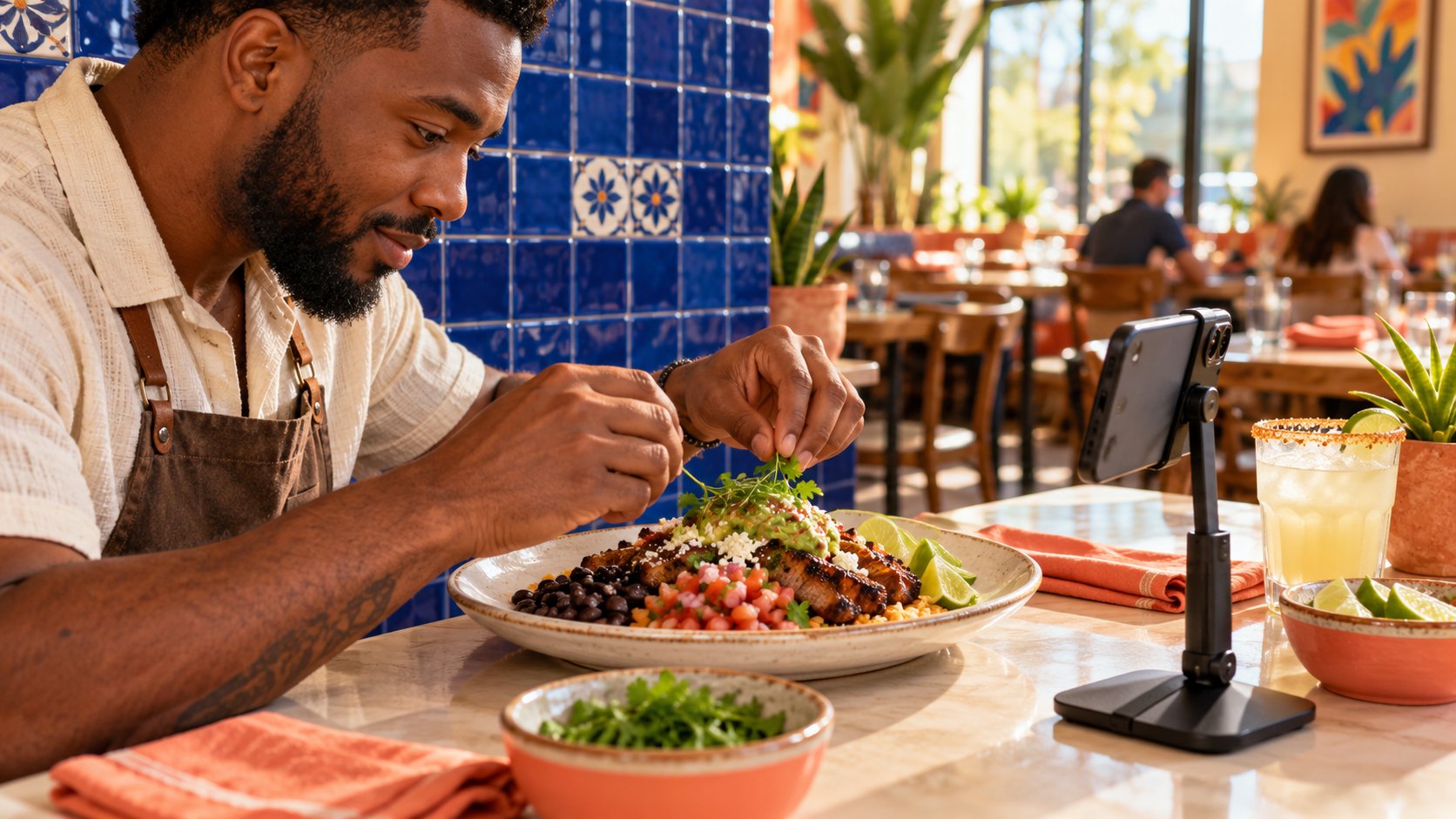
AI-generated editorial illustration, not the named people, pets or actual events in this article.
THE SHORT ANSWER
A Houston foodie can be a restaurant-discovery voice, a home-recipe creator or a storyteller covering the local food scene. Decide which contribution the brand needs before choosing a name. A local base does not establish that every viewer lives nearby, and hospitality is not an automatic exchange for a positive review or unlimited content rights. The most useful invitation describes the experience, the requested work and the commercial relationship separately.
Separate venue and kitchen assignments
A restaurant assignment needs a venue, service arrangement, menu, guest policy and filming plan. A recipe assignment needs ingredients, testing, process documentation and a finished dish. Both involve food, but they do not share the same production burden or quotation structure. Define the actual work before approaching a creator.
The food-creator task guide helps distinguish these formats. A local restaurant launch may not need a detailed recipe, while a packaged ingredient may require more explanation than a dining montage can provide. Ask what the viewer should understand afterward. This question narrows the search and prevents a common mismatch: inviting a strong recipe teacher to produce local nightlife coverage, or asking a restaurant-discovery account to develop and test a recipe under the timetable of a complimentary meal.
Research first-party identity
Dude That Cookz’s author page connects Eric’s recipe work with a Houston base. It is a first-party starting point for researching home-cooking and recipe content. It does not verify a current local-audience percentage, follower tier or willingness to accept this particular assignment. Keep those commercial conditions open until checked.
Follow the creator’s own identity links and inspect current relevant work. If the brief needs restaurant discovery, research that capability separately rather than assume a Houston-based recipe creator covers every dining situation in the city. Save one or two samples with a specific reason for relevance. A traceable creative lead is more useful than a large city roundup in which every account is labeled foodie but the actual work ranges from baking instruction to nightlife promotion.
Define the practical local area
Specify the venue address, filming dates, access arrangements and any travel between locations. Houston is not a complete production instruction. A creator should not discover after agreeing that the project involves several distant stops or additional guests whose role was never discussed. Clarify reimbursable expenses and hospitality arrangements before the visit.
Verify audience geography according to the objective. A reservation campaign may need appropriate evidence of local relevance, while a recipe-asset commission may place more weight on teaching and licensed usage. The local-market guide offers a way to separate these requirements. Avoid treating every viewer outside the city as waste or every local follower as a likely diner. The useful comparison is between the purchased contribution and the customer action the restaurant or product can realistically support.
Design hospitality for an honest experience
Share available dishes, current price information, restricted kitchen areas and staff-filming conditions in advance. Tell the creator which details may change. Do not require praise to be written before the food is experienced or a recipe has been tested. A useful factual review can correct the dish name without dictating an untrue personal reaction.
FTC guidance addresses material relationships in US endorsements, including relevant hospitality. Describe the relationship clearly in the assignment. Keep a hosted invitation separate from a paid content commission: accepting a meal should not quietly create an obligation to deliver a favorable review. If the brand requires specific assets, negotiate them explicitly. This gives the restaurant a clear production agreement and gives the creator an honest basis for deciding whether to attend or quote for the work.
Allow for recipe testing
For a recipe commission, specify the product version, ingredient budget, serving description and expected test process. The brand can review product facts, but it should not require failed tests to be hidden or unreliable steps to be edited into a guaranteed outcome. Leave space to revise a concept that does not work with the actual ingredients.
Agree whether the delivery includes final images, process photos, video and written instructions. Define where each asset may be used. A publication fee does not automatically include packaging, printed menus or ongoing paid advertising. The usage-rights guide helps record those permissions. Different outputs can be priced separately, and a recipe that requires another test may need a schedule change rather than an unexplained additional revision request.
Worked example: three contributions to a launch
Suppose a restaurant wants to explain its opening location, the making of a signature dish and a family-dining occasion. It could purchase a practical visit video, a chef interview and contextual photography as separate contributions. One creator might cover more than one, but a single hosted meal should not be assumed to include all three without a production agreement.
Name the owner, factual source and deliverable for each contribution. Track reservations, content viewing and asset acceptance separately rather than adding them into a single conversion count. These are hypothetical planning choices, not performance predictions. The portfolio-gap guide helps identify whether the commissioned set actually answers the intended questions. More posts are not automatically useful if they repeat the same attractive plate shot and omit the location or occasion information people need.
Send an invitation with a defined scope
State why you are contacting this person, which work sample is relevant, the expected timing, hospitality arrangement, whether a production budget exists and the next step. If you are only collecting quotes, say so. Do not ask for a finished unpaid script as a substitute for deciding what the restaurant actually wants to buy.
Use the food-creator task guide, local-market guide and usage-rights guide to preserve a clear project record. QuickKOL can assist with discovering relevant work and preparing personalized outreach; the actual commercial arrangement remains for the parties to confirm. At closeout, pay for accepted work and distinguish future interest from a committed renewal. A useful Houston foodie partnership begins with a specific food-content contribution and ends with evidence of what was actually delivered.
Can a meal replace a content fee?
That depends on an explicit agreement. Hospitality and commissioned production are different exchanges, and a meal should not be presumed to compensate filming, editing and licensing. If there is no production budget, send an honest invitation without mandatory deliverables and respect a refusal. If assets are necessary for the launch, budget for the actual work rather than describe the requirement as an optional visit. Keep the relationship and any disclosure clear even when no separate cash fee is paid.
Research date, evidence and limitations
Sources reviewed October 23, 2026. Workflows are editorial recommendations. All worked examples are hypothetical, not client results, creator rankings or quotations.
A decision sheet for this assignment
Editorial analysis and labeled hypothetical examples, not performance rankings, quotes or guarantees.
| Condition | Evidence | Decision |
|---|---|---|
| Visit information | Address, timing, menu facts | Define visit arrangements |
| Recipe creation | Ingredients, tests, process | Commission production scope |
| Asset use | Media, term, edits | Agree the license |
CHECKLIST
Before you put this into practice
Record the answers in the campaign working file.
- Separate hospitality and production
- Verify the actual location
- Do not presume praise
- Tie rights to assets
Sources and further reading
External pages can change. Recheck platform rules, contracts and local law before launch.