
THE SHORT ANSWER
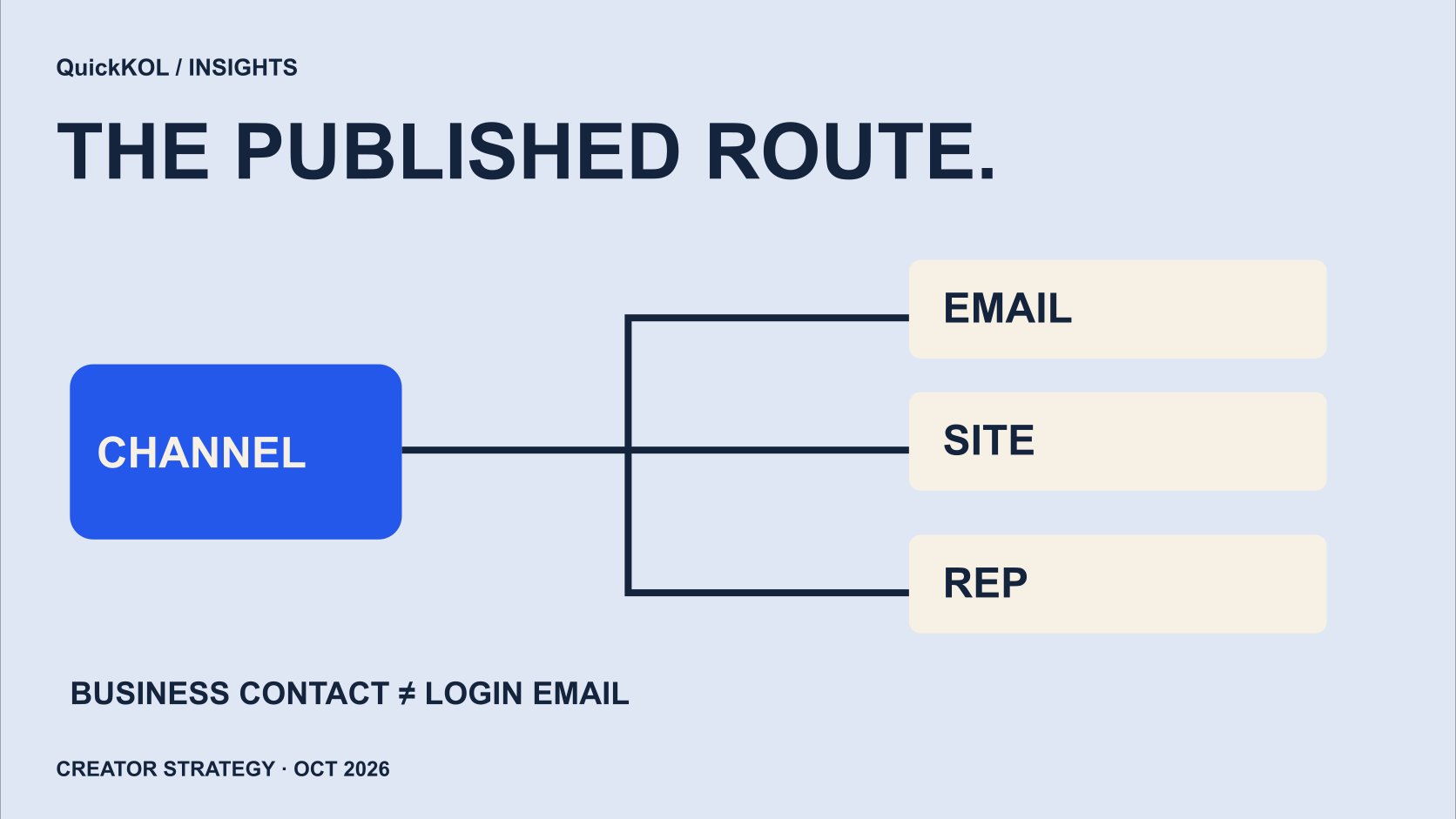
Find a YouTube channel owner’s business email through the channel’s published About information and verified official links. YouTube displays an inquiry email only when the owner has provided one. It is not necessarily the login email or a personal inbox. If no address is published, use an official contact form or representative route. This guide helps identify the appropriate commercial contact without guessing private addresses or bypassing access controls.
Verify the channel first
Start with the complete channel URL and recent work rather than the display name alone. Check official cross-links, account context and original content. Similar names, fan pages and repost channels can appear in search results beside the intended creator. Verify identity before collecting contact details.
Save the channel identifier and the work-based reason for contact. A valid email route for the wrong channel still produces incorrect outreach. The account-identity guide explains these checks in more detail. This first step also helps when a creator operates several channels: the brand should know which audience and production format the assignment concerns before asking a representative to quote a partnership or determine whether the category is suitable.
Use YouTube’s published inquiry route
YouTube’s official help describes opening the channel, expanding the description to reach About and selecting View email address. The address is available only when the owner has supplied one. Follow the current ordinary interface, since placement can change.
Complete any normal platform steps without bypassing verification or access restrictions. Record the route and date. An unavailable address means the channel has not exposed that route to you; it does not prove that the creator never accepts business inquiries. Keep the distinction clear in the candidate record. A contact-research process should preserve what was actually found rather than filling a missing field with an assumption that later teammates may mistake for a verified fact.
Follow verified official links
A website linked by the channel may offer a partnership page, contact form or media information. Verify the domain and cross-links rather than relying on a third-party directory or an old reposted address. Use the business route the creator has intentionally published.
Forms and inboxes can serve different purposes. If the official page directs commercial inquiries to a representative, respect that route instead of contacting several employees to bypass it. The outreach operations guide helps assign one sender and preserve contact ownership. A legitimate alternative is useful when it clarifies where the inquiry belongs, not when it merely increases the number of channels through which the same uninvited message reaches the team.
Identify the contact’s role
A channel may route inquiries to a business team, company or talent representative. Confirm which channel the contact represents, what scope they can discuss and which entity would contract. An available business address should not be labeled the owner’s private email when that has not been established.
If payment or contracting details change after a reply, verify them through the brand’s ordinary process. An official route and consistent context are stronger evidence than a friendly signature alone. The agency-role guide explains representation and authority. Understanding the role also improves the first message: a representative needs the proposed job and timing, not a personal appeal written as though the creator necessarily reads every inquiry directly.
Keep an absent email absent
If official routes expose no business email, record not provided. Use a clearly appropriate official form if one exists, or defer contact. Do not guess common name patterns or seek recovery addresses, login credentials or private information. Those are different from a published commercial contact route.
Completing research can mean identifying a reliable alternative or confirming that no suitable route is available for this round. Every blank field does not need an address. The database guide helps distinguish missing from invalid or stale information. This makes the record more useful than a plausible guess, because the next teammate can decide whether to revisit an official route later without unknowingly sending a commercial proposal to an unrelated or private inbox.
Write for the channel and assignment
Reference relevant work and identify the brand, intended channel, format, timing and compensation context. Avoid large unsolicited attachments or a request for a complete unpaid creative concept. The first message should allow the team to route and qualify the opportunity.
A fictional example is: “We would like to discuss a paid product demonstration for November, related to your recent desk-organization series. May we send a one-page scope, or could you direct us to the appropriate contact?” Adapt it to the real assignment. The useful-reply guide develops the next step. A clear business inquiry is more likely to produce a useful routing decision than a long compliment that hides the proposed work until the recipient asks several follow-up questions.
Worked example: measure contact readiness
Suppose twenty channels are researched: twelve publish inquiry emails, five provide official forms and three expose no suitable route. Seventeen have a usable business route, but calling all seventeen verified emails would be inaccurate. These figures are hypothetical and say nothing about YouTube-wide coverage.
Track identity, route type and invitation readiness separately. A usable contact does not establish that the channel is commercially suitable or available. The shortlist still needs content evidence and relevant operating conditions. Measuring readiness in this way can reveal whether the bottleneck is finding the correct route or defining a credible offer. More addresses will not help if the team cannot explain why it wants to approach the channels it has already verified.
Record a form submission as a contact event even when it creates no sent-email copy. Otherwise a teammate may repeat the invitation through another route, incorrectly assuming that an empty email history means the channel has never received the brand’s proposal.
Deliver a maintainable contact record
Keep the channel URL, source page, capture date, contact role, intended use and next action. After sending, add relationship state and stopping conditions to prevent duplicate outreach. Recheck important opportunities rather than relying indefinitely on an old directory.
QuickKOL can support content understanding and preparation of the work-based outreach reason. Contact details still need verification through official sources. Judge the research by whether the right team can receive and evaluate a relevant assignment, not by the largest possible address count. A sourced record with an honest missing value can support better collaboration than an apparently complete contact sheet whose entries cannot be connected reliably to the channel or business role the brand actually needs.
Research date, evidence and limitations
Sources reviewed October 21–22, 2026. Workflows are editorial recommendations and numerical examples are hypothetical, not observed campaign results, creator rankings or offers.
The working sheet for this task
Editorial analysis and labeled hypothetical examples, not performance rankings, quotes or guarantees.
| Decision | Evidence to keep | Next action |
|---|---|---|
| Published email | Channel About and date | Keep the business purpose |
| Official alternative | Verified site or representative | Contact the appropriate role |
| Not provided | Checked routes and outcome | Keep missing or defer |
CHECKLIST
Before you put this into practice
Record the answers in the campaign working file.
- Verify the channel first
- Do not equate email and login identity
- Guess no private address
- Keep source and date
Sources and further reading
- 01YouTube
External pages can change. Recheck platform rules, contracts and local law before launch.