
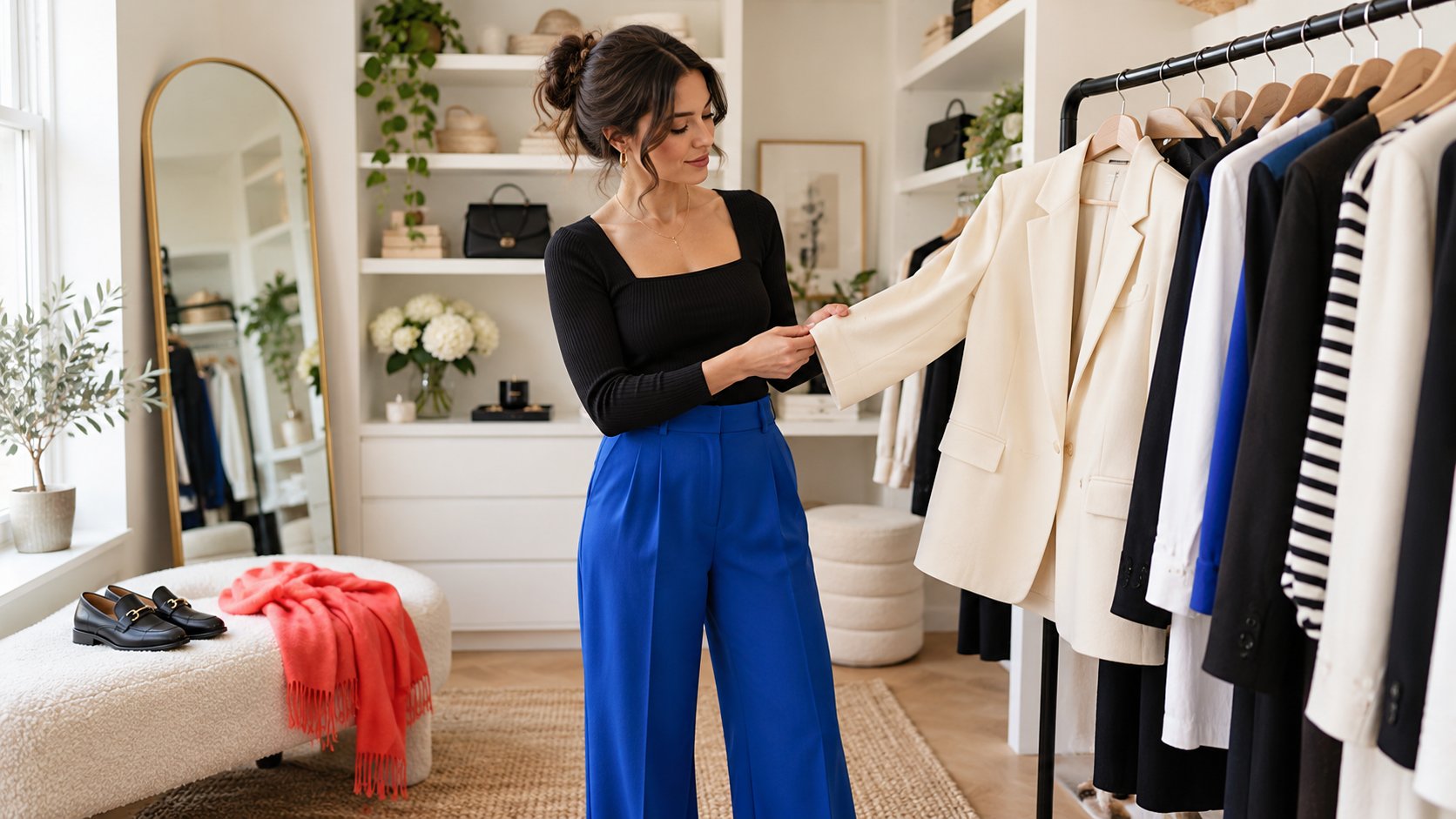
AI-generated editorial illustration, not an actual creator, client, product or event.
THE SHORT ANSWER
For repeat-wear content with fashion influencers, give one garment distinct, genuine use questions and retain size, styling, observation time and care conditions. Justine Leconte, Allison Bornstein and Aja Barber provide different public research routes, not a live ranking or partnership promise. Repeated appearances can demonstrate styling choices without independently establishing durability, universal fit or environmental benefits.
Give repeat wear a defined question
Repeat wear is not one garment photographed against three backgrounds. A brand can help readers understand how an item enters an existing wardrobe, what changes across situations and which aspects suit the individual. Choose the main question before the observation count and deliverables. Additional versions should add information rather than simply increase the post count.
The fashion styling assignment guide supports initial role selection. This article follows one garment through repeated use and a content record. An office-and-commute discussion and formal-event styling may need different creators and preparation. Specify audience, market, garment and existing pieces instead of assuming every assignment requires an entirely new outfit.
Evaluation should follow that question. If the job explains styling tradeoffs, inspect whether the reasons are understandable rather than choosing a winner from photo likes alone. Garment presentation, personal fit, care observations and broad performance claims are different forms of evidence. Different roles may handle them more accurately. A concise repeat-wear brief should identify what the audience will learn at the second appearance that was not already clear at the first, giving each additional production moment a defensible purpose.
Justine Leconte: study materials and reasons for choices
The Justine Leconte official site provides a public direction in design, materials, style and wardrobe education. It supports research into explaining clothing choices, not current audience scale, availability or openness to every competing brand. This article does not adopt statistics lacking a complete method as industry evidence.
Choose relevant public work and record how terminology is explained and how material, construction and individual choice are distinguished. For a brand helping people understand a garment, reasons for a styling choice may be more useful than repeatedly calling it versatile. Composition, origin and care requirements still need the actual product information.
A similar assignment can address one choice without demanding a universal judgment about every fabric or body. Identify the product, evidence and room for independent expression in the invitation. Public educational capability supports research, while scope, relationship and acceptance require discussion. An expert presentation is not comprehensive product certification. Preserve that distinction when turning a longer explanation into a short caption, where a conditional material discussion can otherwise become an absolute statement about the item being promoted.
Allison Bornstein: study connections to an existing wardrobe
The Allison Bornstein official profile offers an entry into wardrobe consulting and styling. A brand can research how content connects with an individual’s existing choices without inferring acceptance, current audience proportions or fixed rates. Relevant work and an appropriate contact route still need task-specific verification.
Repeat wear can begin with pieces the creator already owns and is willing to show. Ask what combines naturally with the new garment, what is borrowed for production and which changes actually alter the situation. A real wardrobe is not a demand to disclose every private possession, and a commission does not give the brand control of all everyday clothing.
This research direction turns outfit count into an explanation of choices. Does the same jacket serve another task because of shoes, layers or a different base? The answer should come from actual fitting. If only the background changes, reduce versions or redesign the question. Fewer understandable examples may be more reusable than several unexplained looks. Keep the reasoning visible so the audience learns a decision method instead of being shown combinations that depend on undisclosed styling support or items absent from the brief.
Aja Barber: study use and consumption context
The Aja Barber official profile provides public context for writing, styling and consulting related to fashion and sustainability. It supports research into consumption questions, not environmental endorsement of a particular item or availability to any brand. Historical website content does not establish present commercial terms.
If the brand wants to discuss repeated use, define the practical help: use existing pieces, avoid unnecessary outfit purchases or understand a care choice. Three appearances should not become a quantified emissions saving. Lifestyle storytelling and product environmental benefits require different evidence. A creator’s public position cannot supply research the brand lacks.
A similar assignment may need room to discuss whether the product is needed and where it has limits. If only praise is allowed, reconsider role fit. Studying a named writer helps the brand understand the questions, not acquire a green-credibility label. A precisely scoped use story is easier to cite responsibly than an unconditional better-for-the-planet slogan. Retain the difference between an editorial idea about consumption and a verified comparison of product impacts, particularly when the same asset later enters advertising with stronger commercial language.
Plan fitting, fit and care records
Confirm the actual style, size, color, composition label and received condition, with fitting before the final shoot commitment. Identify alterations, pins or other styling interventions. These may be legitimate production tools without establishing that the pictured result applies to every unaltered item.
Describe fit through observed movement and individual experience, not a verdict for every body. Collect only relevant information the creator is willing to provide, avoiding unrelated private details. If the garment does not fit, change size, change the task or stop. Schedule pressure should not turn discomfort into a scripted comfort claim. Separately confirm whether samples are retained or returned and how alterations affect that arrangement, so return logistics do not become unbudgeted work at closure.
Care work should follow the actual label and permitted treatment, retaining actions and observation intervals. No visible change over a short period does not prove long-term durability. One care observation does not cover every method. Plan care separately from styling instead of performing unsuitable treatment for a shot. Clarify creator inputs, brand facts and permitted editing before filming. This produces a useful record even when the observation is that the item does not suit the proposed task, rather than forcing every sample into a successful look.
Use repeated observations to add information
Give each appearance a different question, such as preparation, movement or condition after use. Record which conditions stayed constant and which changed so the editor can explain differences. This remains bounded content observation, not a controlled durability study. A complete-looking table does not make it scientific testing.
Suppose a jacket appears in three production situations: work preparation, a short outing and evening styling. This hypothetical structure is not evidence of three actual wear occasions. Retain what happened. If the work consisted of studio fittings, call them fittings instead of adding an all-day-use claim for credibility.
When a situation is canceled, choose another question or reduce delivery, then confirm schedule and cost. The creator scope checklist helps record additional edits, shoots and later updates. Repeat wear is not unlimited free documentation. Use executable completion conditions so the brand understands the deliverable and the creator knows when the assignment ends. The record should preserve genuine differences between observations without encouraging an editor to assemble separate moments into a continuous use story that did not occur.
Preserve relationships, opinions and version conditions
The FTC disclosure guidance explains material brand relationships in the US context. Review fees, gifted clothing, discounts and other support for the actual relationship and market. Calling a piece everyday styling does not remove its commercial context. Check disclosure in the actual publication rather than only the project sheet.
The brand can correct style identifiers, shades, composition and public facts while the creator retains genuine impressions and suitability limits. Editing should not turn I liked this combination into a claim about every situation. Translation, advertisements and quotation graphics can strengthen wording, requiring attention to individual conditions and experience time.
Confirm files, edits, accounts, territories and term. Index original footage, time codes, changes and placements for later versions, and revisit facts if the product changes. Permission for one use is not comprehensive assurance for every future version. Clear management enables meaningful reuse and reduces repeated requests for the creator to reconstruct old conditions. Preserve the distinction between fashion advice, personal experience and product evidence when the material moves from an explanatory post into a more direct sales placement.
Hand over repeat wear as a specific assignment
An executable brief identifies the garment, primary audience, three questions or the count actually needed, fitting and care conditions, production plan, fact owner and intended uses. Establish these inputs before discussing candidates and quotes. Do not request universal suitability or substitute recognition for inspection of work and task fit.
At closure, deliver observations that occurred, approved versions, remaining unknowns and the next decision. Retain an explanation, improve sizing information or change the next styling task without claiming unsupported sales, waste or environmental effects. Quantified outcomes need other appropriate evidence; short-term content cannot supply them by itself.
Repeat wear makes the choice process understandable. Keep that purpose central to the imagery, claims and usage scope when working with fashion influencers, so the result helps readers rather than merely increasing a new item’s appearance count. Named routes support further research; actual cooperation depends on current first-party information and accepted conditions. A record another colleague can use should explain why the role was selected, what was observed and what would need fresh verification before another commission or reuse.
Research date and limitations
Initial research was conducted October 29, 2026, with additional verification October 30. Methods, examples and tables are editorial recommendations; hypothetical numbers are not industry benchmarks. Named entries support research, not live rankings, endorsements, availability or acceptance. Interfaces and data depend on accounts, permissions and versions. Some Meta help pages could not be fully retrieved, so unverified button paths and fixed thresholds were excluded.
Repeat-wear observation jobs
Research entries are not rankings; situations and quantified claims need their own evidence.
| Question | Record | Interpretation limit |
|---|---|---|
| How does it enter the wardrobe? | Existing pieces, reasons and situation | Styling is not universal fit |
| How does fit work in movement? | Size, interventions and experience | One observation is not every body |
| What happens after use and care? | Actions, label, interval and condition | Short observation does not prove long-term durability |
CHECKLIST
Repeat-wear preparation
Each appearance should add an answer to a clear question.
- Define garment, audience and distinct questions.
- Retain work and selection reasons.
- Confirm size, interventions and capture conditions.
- Separate care observations from durability claims.
- Record scope, disclosure and usage.
- Deliver actual observations and an executable next decision.
Sources and further reading
- 01Justine Leconte: Wardrobe and design
- 02Allison Bornstein: Wardrobe consulting
- 03Aja Barber: Writing, styling and consulting
- 04FTC: Disclosures 101 (US, 2019)
External pages can change. Recheck platform rules, contracts and local law before launch.