
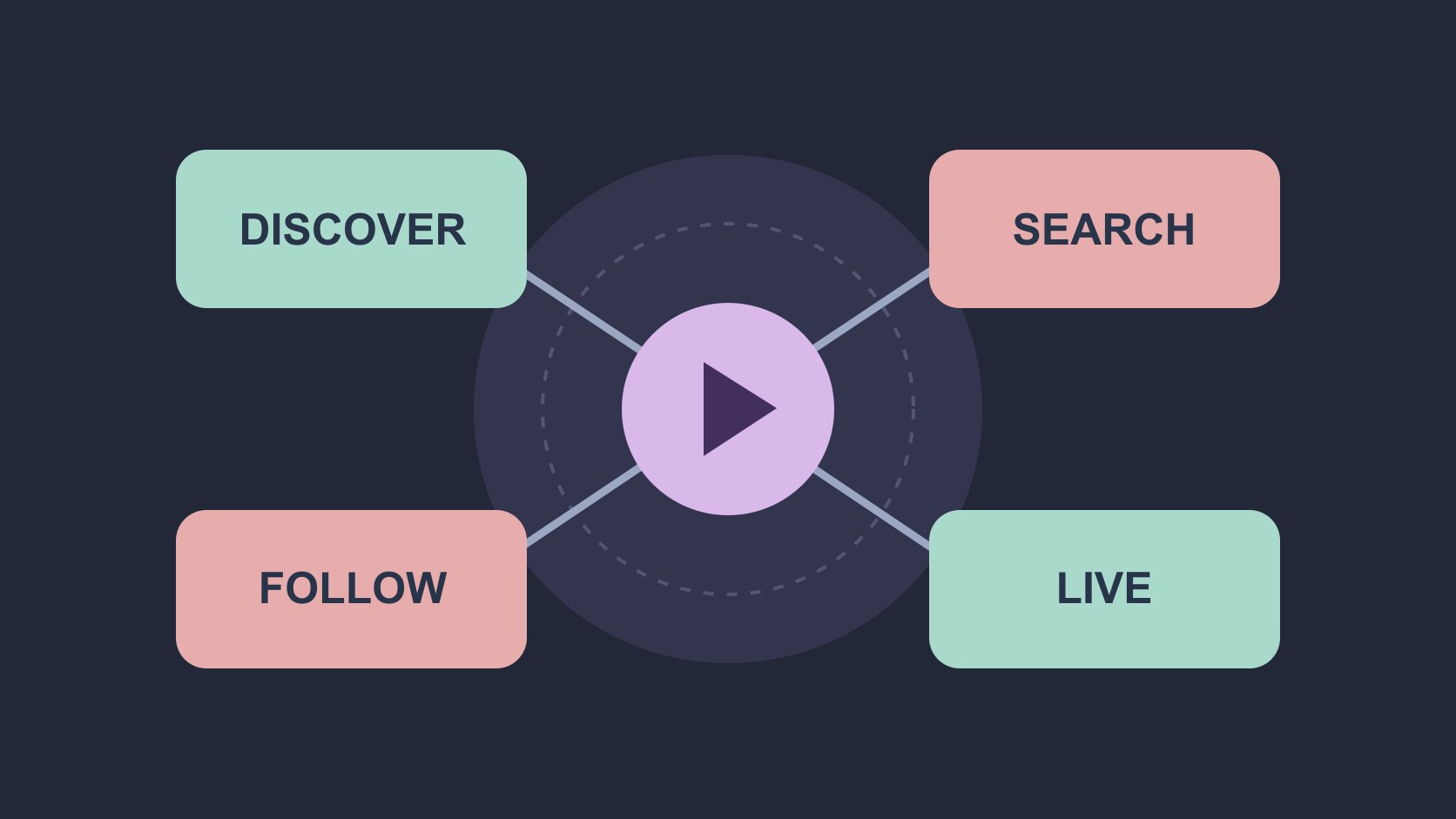
QuickKOL editorial graphic; not actual account metrics or a platform interface.
THE SHORT ANSWER
TikTok is a social platform for creating, discovering and watching content. People find content through personalized recommendations, Following, search and LIVE. Brands can also use paid distribution where available. Start with the audience question, then choose the appropriate surface, asset and evidence. Verify distribution and reporting scope for each separately.
Decide whether people discover, search or return
The TikTok company overview describes creation, community and discovery. For a brand, one product question can appear in several places. A viewer encountering a camping stove for the first time needs to understand the product and job. Someone searching for it may want a model identifier and operating limits. An existing follower might want the next part of a series. A LIVE audience may want to ask a specific question. Define the action the audience is trying to complete before choosing the asset. Use the campaign brief guide to record owner, market, language, scope and acceptance. Decide whether the video will be understandable to someone who does not know the brand. For a product with significant use instructions, give the viewer a reliable official destination for the complete conditions. A short introduction can help them decide whether the guide is relevant. Assign a product reviewer to verify the actual content instead of assuming that platform familiarity is enough to approve the instructions.
Use For You as a personalized discovery context
The TikTok recommendation help describes For You as a personalized stream and discusses interactions, content information and user-related factors. Two people can see different combinations. Give a new viewer the problem and subject without assuming they watched a previous video. A stove stand clip might first show the folded and unfolded positions and identify the model. Review actual feedback without treating a template as a delivery guarantee. Distinguish a reported source from an observation about the creative and a hypothesis about distribution. Suppose a brand edits the same footage into an installation answer and a general introduction. These versions ask viewers to do different things. If one receives more views, compare audience context, publish time and other distribution events before attributing the difference to the opening. Give each asset a defined role so a team can choose which one to improve. Do not infer exact ranking weights or promise that a particular tag will produce a certain audience.
Make search-oriented content answer a specific question
The TikTok recommendation help also covers search results and suggested searches. A search-oriented video can answer a concrete question, such as whether a stand fits a particular model. Put the correct model, action and limits in the footage, captions or description so someone can understand the answer. Do not distort a product fact to match a popular phrase. Record the intended query, publication date, relevant comments and any search-source evidence actually available. Search results change, so record what was observed and when. Ask a colleague to try the plain-language question and report whether they can find an answer in the asset. If the title asks about compatibility and the video only shows an unboxing, it has not delivered the promised answer even if it appears in search. Make the next action useful, such as a compatibility guide, and check that its language matches the audience. Where distribution source is missing, report the creative review and leave traffic attribution unknown.
Give followers a series they can find again
Give followers a clear reason to return. Divide a series into self-contained steps, such as storage, identifying parts and finding cleaning instructions. Name the actual task in each post and give the profile a way to locate the series. Following an account does not mean a person sees every post, and the official recommendation help describes personalization for feeds beyond For You. If the series changes names, connect earlier videos to the new guidance. Use relevant questions, repeat interest or available native responses as evidence. A person may discover the second part first. Include enough context for them to follow the action and locate the earlier material. Avoid making an essential safety condition available only in the previous episode. For recurring support questions, ask who will update the old videos if the product changes. A series designed for ongoing use needs a way to signal which model, version or season each episode describes.
Use LIVE for questions that need real-time responses
The TikTok recommendation help describes the LIVE stream discovery surface. Before planning a broadcast, verify the account’s actual ability to host and use needed features. Assign host, moderation, product review, connectivity fallback and recap ownership. Use demonstrations that can be shown under the actual conditions. Where a motion needs a controlled setup, use an appropriate approved recording or explanation. Decide how to route questions you cannot answer on air. Use the creator live campaign runbook to plan a rehearsal. Keep concurrent observations, later replay and campaign actions under their own reporting definitions. Suppose a viewer asks whether a stand is approved for a different product. The host can say which model is being shown and direct the person to official compatibility information. The team should have approved language for questions about use outside the test. A short live discussion with a defined purpose may be a better pilot than a long broadcast with no follow-up owner.
Treat creator sponsorship and paid distribution as separate uses
A creator post needs an agreed account, asset, review, disclosure and reporting scope. If the brand will also advertise with it, verify the ad account, available format, asset authorization, market and term. The FTC influencer disclosure guidance addresses clear disclosure when there is a material connection for a U.S. audience. Have the relevant owner confirm rules for the actual market. Use the corresponding paid records for delivery, spend and results and the appropriate native scope for the organic post. Buying a video does not establish ad rights or guarantee an outcome. If a creator agrees to publish a tutorial and the brand later needs a shortened paid edit, check permissions for the edit and soundtrack before adapting it. Give the media team the authorized version and expiry date. The measurement plan should identify when paid distribution begins and whether the report can distinguish it from earlier activity. Preserve the earlier result separately if it is relevant to an organic pilot.
Choose surfaces and measures through one small pilot
Suppose a stove brand wants fewer questions about disassembly before storage. Start with one demonstration that a first-time viewer can understand and a search-oriented answer with the correct model. If questions still cluster around a specific action, consider a small LIVE session when the account and staff can support it. Review whether each step is visible and collect relevant questions, destination visits and available platform outcomes. Leave source attribution unknown when reporting cannot establish it. If the pilot shows that users cannot find the instructions page, fix that route before adding more content. For each format, record the owner, asset, publication date and next action. A product manager can review the questions without needing access to every social account. A publisher can identify which posts need an update when the product changes. At recap, decide what to repeat, change or pause based on the stated job and the observed evidence.
Assign an owner after each content release
Give operations the posts and response routes, product the open questions, media the applicable rights and analytics the definitions and windows. If a tutorial names the wrong model, identify the actual posts and related ads, then correct them by version and account. Tell the next owner which changes to tools, permissions or markets require another check. A launch brief can stay short if the exact links and evidence are accessible. A public FAQ can answer a recurring question while a separate internal issue remains with product. Review both when the next campaign starts.
Select two surfaces for one product as a worked example
Suppose the team has half a shooting day, one presenter and one editor. Most questions concern the orientation of a storage stand. The owner can use the time for a three-step tutorial and a separate search answer about the model, leaving LIVE for another cycle. Show the product, motion and final position in the tutorial. Put the exact model and exclusions in the search answer. Give both a reliable destination for the complete instructions. Record the actual edits, publication times, platform-provided source where available and recurring questions separately. If several new questions arise, sort them into the next production or support task. Send an unanswered technical issue to the product owner. Review whether the short videos help people find the instructions. An unexplained view count cannot substitute for actual destination evidence. If paid distribution is added, define the ad objective and asset permissions and retain the first organic report. If a viewer shares the video, record the public event you actually observed and its time without assigning all later traffic to it. This example gives the team a practical way to choose surfaces from staffing and customer need. At the end of the test, have a colleague open both posts and locate the same correct instruction page. If one directs to the wrong model, fix the destination and document the affected period. Repeat the test after the correction instead of pooling incompatible windows. If both paths work, ask which questions need an additional asset and which can be resolved by improving the current copy on the official product page.
Research date and limitations
Sources reviewed November 6, 2026. Methods, tables and decision rules are editorial recommendations. Hypothetical examples are not actual client results or industry benchmarks. Source geography and periods are specified where relevant.
TikTok surfaces and jobs
Tools and measures can vary by account, market and product.
| Surface | Job | Evidence |
|---|---|---|
| Discovery or search | Understand the product or find an answer | Asset and verified source |
| Following or series | Find the next useful item | Topic, path and feedback |
| LIVE or ads | Real-time answers or paid delivery | Account eligibility, rights and reports |
CHECKLIST
First TikTok content pilot
Start with the viewer’s task, then define the deliverable.
- Identify the expected surface
- Make the asset self-contained and accurate
- Assign publishing, response and rights
- Keep evidence for each surface
Sources and further reading
External pages can change. Recheck platform rules, contracts and local law before launch.