
THE SHORT ANSWER
TikTok Shop is TikTok’s commerce system connecting merchants, products and content-led shopping in supported markets. For influencer marketing, the question is whether the actual product, available link, collaboration task and commission rules correspond, rather than whether a product appears on screen. This article uses official U.S. Creator Center and sample resources to explain the route; other markets and accounts need their own applicable checks. Receiving a sample, publishing, recording sales and receiving settlement are different states, with no step automatically guaranteeing the next. Define the creator’s contribution before arranging products and fulfillment.
Understand Shop through the brand assignment
A brand may need a demonstration, answers about use or a recommendation through an applicable product link. Define that job before deciding whether a Shop route fits. Not every creator partnership needs a transaction link, and not every product appearance establishes participation in an affiliate arrangement.
The affiliate-content role guide separates production, referral and advertising uses. A Shop partnership likewise needs owners for product information, genuine experience, the available version and transaction questions. A connected platform route does not remove those responsibilities.
For a complex product, make the real conditions understandable before choosing the next action. Calling an assignment selling does not replace product preparation, creator capability and mutual arrangements. A small, defined assignment is easier to progress than a brief listing every feature without an owner. It also gives the creator a useful basis for declining an unsuitable product or suggesting a demonstration that better matches their actual experience.
Use the U.S. Creator Center as a scoped example
TikTok Shop’s U.S. Creator Center guide describes discovering affiliate products, adding them to short videos or LIVE content and the associated commission route. This explains one concrete workflow without establishing identical access for every market, account and product.
No private account was tested for this article, and the guide’s thresholds or sample counts are not presented as universal current standards. Inspect available account functions and applicable requirements before commissioning; a brand cannot promise activation on a particular day.
Retain geography and date when reading platform resources, especially rather than combine TikTok One, ordinary account tools and Shop into one qualification. The useful outcome is a route both parties can actually execute. A creator’s ability to publish ordinary videos does not by itself answer whether the proposed commerce features, product category or payment arrangement are available for that particular collaboration.
Match the actual product to the content selection
Check the sample against the product name and default linked selection. Color, size, bundles and accessories can change viewer understanding. A finished video does not establish that its linked choice is correct.
The brand supplies accurate facts and the creator speaks from actual experience. Do not replace a demonstration with another item while linking to an unexperienced specified product. If the product changes, identify which shots still apply and which need review.
Suppose a video shows a bottle with accessories while the destination offers the bottle alone. Address the difference through the destination, explanation or another shot rather than rely on viewers to discover it. This is a hypothetical version issue, not a finding about a real product. Checking the actual route can reveal a problem that is invisible in a script review because the wording may be accurate while the selected transaction option is not.
Samples do not mean unconditional free products
TikTok Shop’s U.S. sample guide distinguishes free samples from refundable samples, with the latter involving an initial purchase and applicable conditions. Inspect the particular order and account requirements instead of interpreting a sample button as an unconditional gift.
During research, portions of the page’s summary, body and older text expressed inconsistent deadlines. This article therefore supplies no universal day count or refund guarantee. For a real arrangement, retain applicable order terms and confirm questions with the platform rather than substitute a search summary.
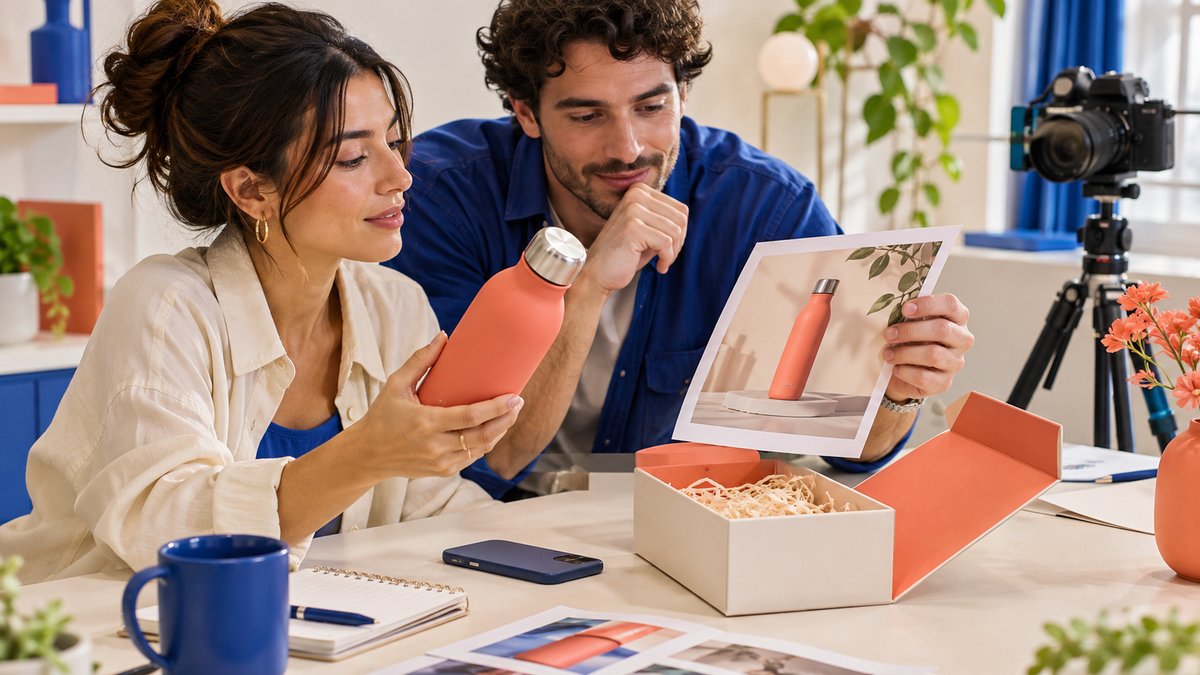
The photograph shows preparing the physical item with product information. Receipt still leaves experience and filming suitability to establish, with problems handled through the actual support route. Do not present an unused item as a verified experience or skip necessary work to meet an output count. Keeping sample status separate from content status helps both parties see what has actually happened.
Define production, posting and commission separately
Affiliate compensation forms under applicable rules and should not replace production and publication arrangements. Discuss any fixed compensation, the required content, publishing account and revision owner specifically.
Creators should understand what the brand is purchasing. Production can exclude account publication, and publication does not automatically include advertising reuse by the brand. Additional uses return to the actual purpose and workload rather than fall inside the broad name Shop partnership.
Record confirmed work so a change can be discussed through its real effect. Uncertain commission does not erase completed production value; successful filming does not guarantee purchases. These contributions have different completion conditions and cannot substitute for one another. The arrangement becomes easier to review when the brand can point to an accepted version and the creator can identify the remaining publication or referral task, instead of both relying on an undefined expectation to make sales.
Give product explanations verifiable information
Creators need usable information about the relevant version, conditions and statements the brand can support. The task is not to copy every marketing line but to help select accurate, understandable expression.
For performance the creator cannot personally verify, do not turn supplied information into invented personal experience. Identify the source accurately or omit an unsuitable statement, with the project owner confirming the expression. One clear operating demonstration need not contain every selling point.
Retain conditions if an action could be misunderstood. When showing disassembly or cleaning, confirm that the real product supports it. A production team’s ability to create a shot does not make that shot an appropriate product explanation; the brand remains responsible for the facts. The creator can raise a practical concern from using the sample, giving the team an opportunity to correct the brief before that concern becomes an unclear or misleading public instruction.
Keep the actual commercial connection understandable
FTC’s influencer disclosure guide explains clear expression of material connections such as payment, products and other commercial relationships in the United States. Examine the actual referral relationship too; a clickable product does not make the recommendation’s context self-explanatory.
Review disclosure with applicable platform requirements and the content itself. Check the finished video, description and actual presentation rather than only a sentence in the script. Shortening a video or rewriting copy should not remove the connection.
Disclosure cannot make an invented experience true or substantiate every product statement. Maintain accuracy of both relationship and explanation so viewers understand why a recommendation appears and which conditions matter to their judgment. A creator should be able to explain the agreed relationship without suggesting that receiving a sample or earning commission makes them responsible for every merchant promise about delivery, stock or service.
Route transaction questions to someone who can act
Shopping content can bring delivery, order and service questions. Creators can describe their own use without collecting private order details in comments or deciding every merchant dispute.
The brand needs an actual support route and owner so the creator can direct viewers accurately. Do not copy private information appearing in public comments into a content-performance report. Keep task-relevant questions in marketing review and handle transactions through appropriate channels.
For unavailable products or a broken destination, establish the current facts and effects before deciding whether to clarify or adjust content. Do not leave an otherwise useful demonstration pointing indefinitely to a page that cannot receive its audience. Nor should every purchase question become a criticism of the creator’s explanation. Responsibility follows the part of the route each party can manage, allowing a factual content correction and a merchant service response to happen separately when both are needed.
Report what happened at each stage
A report can distinguish sample receipt, content completion, published version, link activity and applicable sales records. Use each record’s actual definition and period instead of treating sequence as complete causal evidence.
Retain pending commission status rather than call an estimate received money. State limitations where purchase or return information is incomplete. Platform records also do not automatically answer what would have happened without the partnership, so they are not direct evidence of all incremental sales.
Suppose a short video produces useful questions about a bottle lid without sufficient settlement data. The team can still improve the explanation and product information. That specific finding has value without invented orders or earnings turning it into a complete success story. Separating these outcomes lets the next owner identify the missing record and the action already justified, rather than postpone an obvious content improvement while waiting for a broad return claim.
Turn Shop into an executable collaboration
A creator product route needs the item, information, task and destination to correspond. The creator commercial-work planning guide helps separate production, publication, use and commission rather than place everything inside one ambiguous request.
Before starting, let both parties state the assignment: which product, what content, where it appears, which actual route it uses and what remains unconfirmed. Resolve those questions before discussing scale or further asset uses.
For QuickKOL readers, the practical answer to what is TikTok Shop is a content-commerce route requiring real products and clear responsibilities. Platform functions create possibilities; task fit, evidence and mutual arrangements determine the actual partnership. That distinction keeps the creator contribution visible while leaving merchant operations, account access and settlement questions with the people and records able to resolve them.
Research date and limitations
Sources reviewed November 17, 2026. Methods, tables and decision rules are editorial recommendations. Hypothetical examples are not actual client results or industry benchmarks. Source geography and periods are specified where relevant.
Four states to keep distinct
U.S. official resources provide concrete examples; verify the actual market, account and order conditions.
| State | What it establishes | What it does not establish |
|---|---|---|
| Sample received | Physical receipt | Experience, publication or guaranteed refund |
| Content published | An actual version was released | Every condition was met |
| Sales recorded | A record under applicable rules | All incrementality or final settlement |
| Payment settled | A particular amount was handled | Guaranteed future earnings |
CHECKLIST
Before starting a Shop creator assignment
Translate the platform name into mutually understood work.
- Confirm the actual market and available account route.
- Match the sample, version and product selection.
- Inspect sample-specific conditions without promising refunds.
- Separate production, publication, use and commission.
- Retain actual experience and commercial disclosure.
- Arrange transaction support and accurate reporting.
Sources and further reading
- 01TikTok Shop’s U.S. Creator Center guide
- 02TikTok Shop’s U.S. sample guide
- 03FTC’s influencer disclosure guide
External pages can change. Recheck platform rules, contracts and local law before launch.