
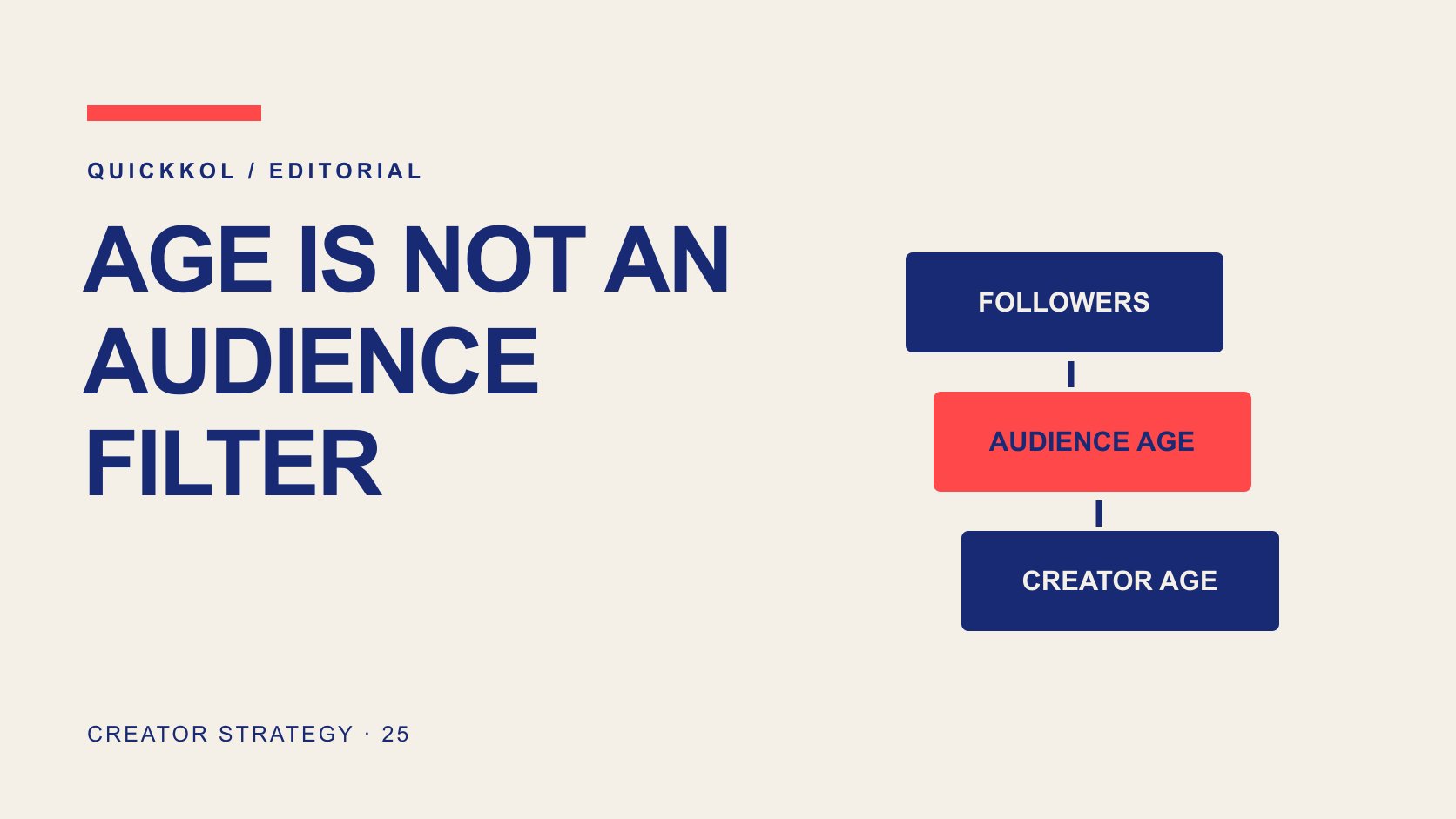
THE SHORT ANSWER
An audience-age filter in a follower-range tool does not verify the creator’s age or partnership eligibility. Teen can also include adults aged 18–19. Define the task and age condition, then make necessary confirmations through an appropriate business route. For minors, review guardian, work and agreement requirements for the actual jurisdiction and arrangement. Do not guess age from faces, schools or fitness imagery.
Explain why the age condition matters
First decide whether the brand actually needs a teen creator or wants to reach an age-defined audience. Those are different objectives. Do not collect unnecessary personal information merely because the query contains teen. The condition should have a real relationship to the product task and the intended contribution.
Define the project range explicitly rather than treat ages 13–19 as one legal status. Adults and minors may need different commercial routes, and the existence of a platform account does not establish authority to contract. This article describes a research and confirmation process, not a roster of young people to target. A useful plan starts with the task and eligibility conditions, then seeks only the evidence needed to decide whether a suitable arrangement is possible.
Separate follower range, audience age and creator age
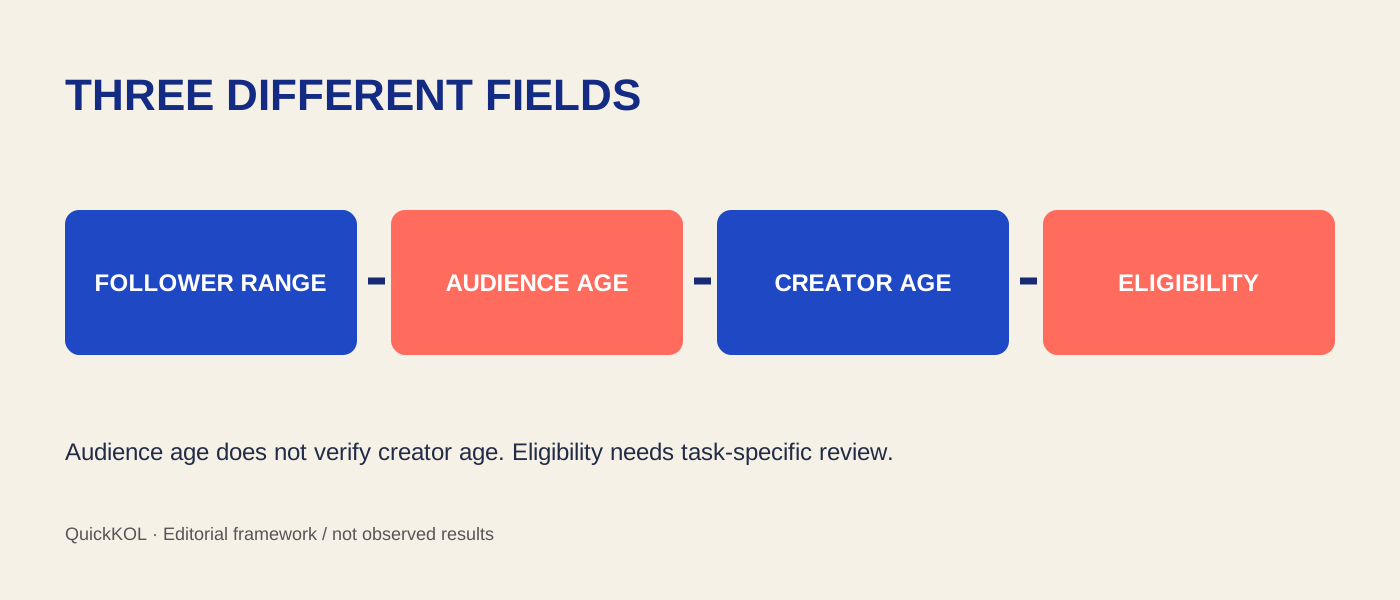
Modash’s filter documentation includes size and audience-age research conditions. An audience bracket such as 18–24 describes an audience distribution rather than proof of the account author’s age. Keep follower range, audience age and creator age as three separate fields with their own evidence and unknown states.
A search result is a candidate for research, not a verified list of minors. If a vendor claims a creator-age field, ask about its source, precision, updates and missing-data behavior rather than rely on the interface label. The tool-output guide helps inspect what a field actually means. A convenient filter can narrow discovery without establishing the commercial eligibility the brand must confirm before relying on a person’s participation.
Keep age confirmation necessary and proportionate
Use relevant information the person has voluntarily made public or an appropriate business route for necessary confirmation. Do not infer a school, address, birthday or live location, and do not request an account password as identity proof. The commercial task needs a supported eligibility decision, not a broad private profile.
The working marketing record can hold status, confirmation date and responsible owner rather than widely copy sensitive source documents. What documentation is necessary and how it should be retained depends on applicable requirements and the appropriate professional process. Keep unresolved eligibility separate from a negative judgment about the creator. If the required conditions cannot be established, the team can defer the arrangement without inventing facts or escalating into intrusive research to complete a shortlist.
Review minor arrangements for the actual facts
California DLSE publishes entertainment-work permit procedures. It illustrates why some arrangements need specific review; it does not establish one rule for every Instagram creator, country or task. Do not copy a jurisdiction-specific procedure into a universal eligibility checklist without considering the actual facts.
Assign who checks the relevant location, nature of work, guardian authorization and contracting capacity. Where professional advice is needed, provide the concrete arrangement rather than ask a generic blog paragraph to resolve it. The process should produce a clear status and next step. This enables legitimate work to be considered under appropriate conditions while preventing a follower-range result from being mistaken for confirmation that all employment, consent and commercial requirements have already been met.
Keep the fitness task within supported claims
A task can concern equipment organization, preparation for an activity or genuine product demonstration without requiring a teen to promise weight loss, physical transformation or health outcomes. Separate professional instruction from everyday documentation and verify any expertise the task actually requires. The product’s category does not justify unsupported claims.
The paid-assignment guide helps limit deliverables. Define participation conditions, duration, feedback, compensation and the public content scope. An opportunity for growth is not a substitute for discussing remuneration and obligations. The brief should be understandable to the relevant participants and decision makers. Keep the work tied to the supported product job rather than asking a young person to provide increasingly personal material because the brand thinks it will make the story more persuasive.
Include eligibility status in the handoff
Use statuses such as awaiting confirmation, confirmed for this task, conditions outstanding and not proceeding. Record the scope of confirmation and what would trigger another review. One confirmation is not permanent eligibility for every future project, location or type of work. Keep the decision connected to the actual arrangement.
QuickKOL can assist work discovery and brief preparation; it cannot replace age or legal-eligibility confirmation. Identity, age, agreement, venue and rights each need appropriate support. A concise handoff should say what is established, who checked it and what remains dependent on another action. That is more useful than either an unverified eligible flag or an oversized collection of personal data that does not resolve the project’s real obligations.
How can the shortlist preserve status without spreading sensitive data?
The marketing shortlist can record pending status, responsible owner, task scope and the date of a valid confirmation. Where an appropriate professional process needs source documents, handle access and retention under the actual requirements rather than copy identity documents or private birthdays into a broadly shared creator sheet.
If the necessary conditions cannot be established, defer the arrangement or revise the task. Do not ask a researcher to expand an investigation simply to complete a mandatory status cell. A clearly unresolved record is a valid output when evidence is insufficient.
The same restraint applies to later reuse. Confirmation for one assignment should not silently migrate into another project with different locations, work or rights. Preserve enough context for the next owner to recognize when another review is necessary. This provides a professional route for legitimate collaboration while avoiding a permanent personal-data record that exceeds the actual marketing decision.
Can a photograph establish adulthood?
No. Appearance cannot reliably establish age or contracting capacity. Do not infer it from a gym, uniform or friends either. Use an appropriate necessary confirmation route and retain an unresolved status when the evidence is insufficient.
This also does not mean every teen is a minor. The project must define its range and actual eligibility conditions rather than let a broad word replace judgment. Keep the task professional, proportionate and reviewable so suitable participation can be assessed on the relevant facts.
Research date, evidence and limitations
Sources reviewed October 23, 2026. Workflows are editorial recommendations. Numerical examples are hypothetical, not client outcomes, quotes or rankings.
A working comparison
Editorial analysis and labeled hypothetical examples, not performance rankings, quotes or guarantees.
| Task | Evidence | Action |
|---|---|---|
| Follower range | Account-size observation | Not age verification |
| Audience age | Audience-distribution estimate | Not creator age |
| Eligibility | Actual task and jurisdiction | Confirm appropriately and retain status |
CHECKLIST
Before you put this into practice
Record the answers in the campaign working file.
- Teen is not one legal status
- Do not infer age from appearance
- Limit confirmation to the task
- Collect only necessary personal information
Sources and further reading
External pages can change. Recheck platform rules, contracts and local law before launch.