
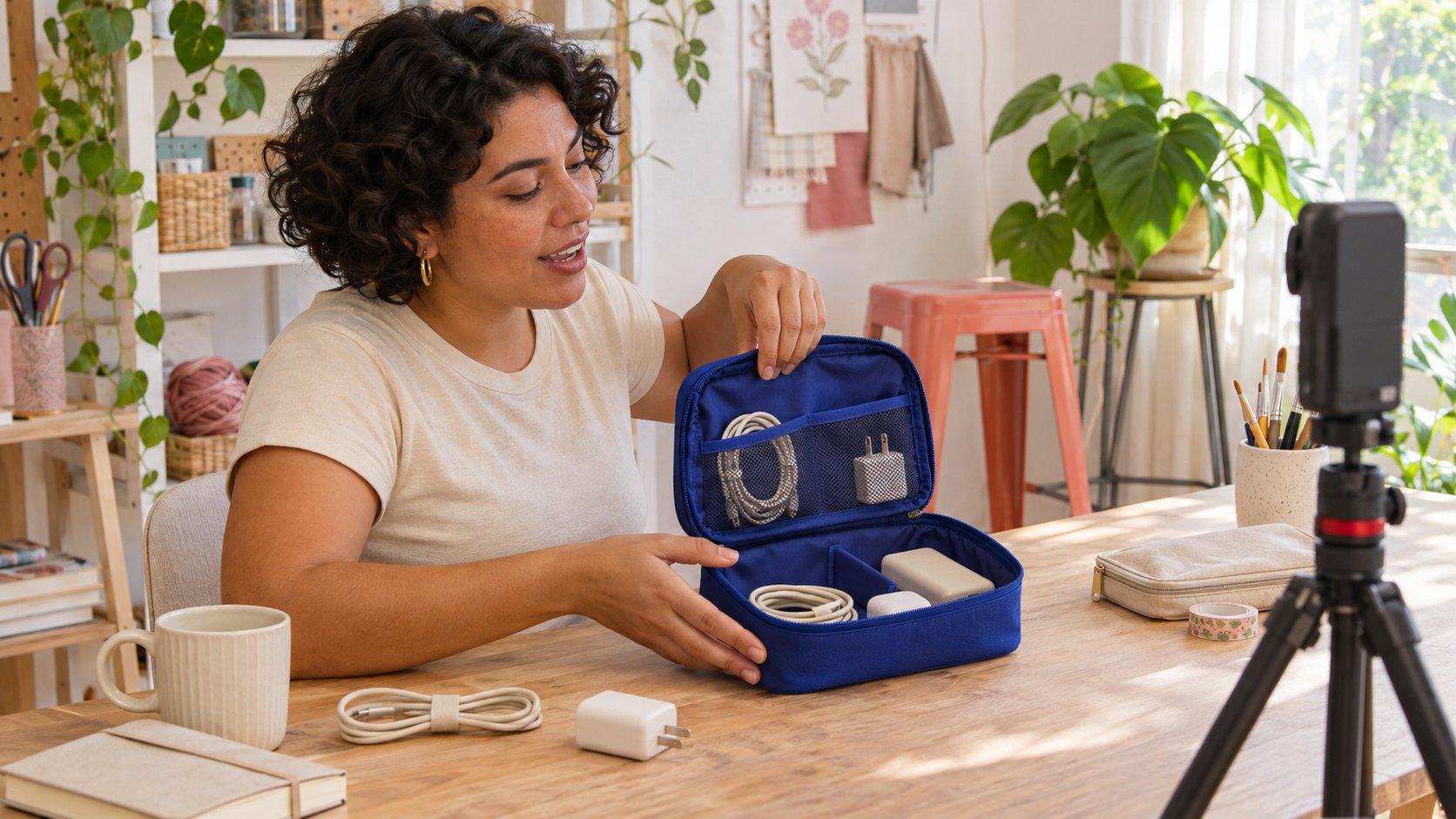
AI-generated editorial illustration, not an actual creator, client, product or event.
THE SHORT ANSWER
Reels is a video-content format on Instagram. For brand education, design each piece as a complete small explanation: the viewer’s question, a visible demonstration, its applicable limits and a relevant next step. Episodes can connect without requiring people to have watched earlier installments. This guide develops an educational assignment and hypothetical examples rather than claim that a hook, duration or editing style guarantees recommendations. Meta’s trial-Reels guidance describes a way to share with non-followers first. That is neither a private review environment nor an experiment that automatically establishes causation. The useful starting point is a question the brand can answer accurately, not a promise that every video will go viral.
Begin with one question the video can actually explain
Introduce the new product is an internal assignment, but not necessarily a viewer’s question. Reframe it as which compartment suits which item, what to check before first installation or how two settings differ. A concrete question makes shots and explanation easier to choose.
The GOV.UK content-design guide emphasizes user needs and an appropriate amount of information in a government-publishing context. This writing principle is adapted here, not presented as an Instagram algorithm requirement.
The brief-writing guide helps establish audience, question, evidence and limits. Define what this episode answers before deciding which background belongs on a fuller page.
If the question needs individual diagnosis, complex eligibility or complete safety instructions, do not remove essential conditions to fit a short video. Explain the foundational part covered and where fuller material is needed. A narrow answer can still be useful without pretending to replace the entire manual. Reviewers should be able to state the episode’s intended takeaway in ordinary language before production starts.
Make the context understandable on a first encounter
The second episode in a series may still be someone’s first encounter with the brand. Instead of opening only with continuing from last time, identify the object and current question before demonstrating it.
Suppose a brand explains an organizer pouch. Today we are looking at how a long cable fits into this side compartment is more accessible than requiring viewers to remember an entire product-naming system. The shot should also make the part being discussed recognizable.
Necessary context is not a lengthy corporate history. Retain the information needed to understand the current step and place organizational background, other products and complete policies in appropriate destinations.
Independent comprehension is an editorial goal, not a trick guaranteeing recommendations to non-followers. Continued watching depends on content, interest and distribution conditions that an opening line cannot predict. One practical drafting check is to remove the episode number temporarily: if the explanation becomes incomprehensible, supply the missing object or question inside the episode rather than rely solely on the sequence label.
Use shots to show the step rather than only describe it
Write what viewers need to see before choosing a shot. To explain an opening direction, show the hand and component clearly. To explain capacity, show the actual placement. Attractive environmental footage cannot replace the key demonstration.
Align narration with the image. If the voice explains the second compartment while the shot remains on exterior packaging, viewers must guess what is meant. Editing should resolve that informational mismatch first.
In the hypothetical pouch example, removing unsuccessful steps should not create the impression that every object fits. Retain relevant size or use conditions and avoid unsupported result adjectives in place of demonstration.
A short storyboard can connect the question, action, visible evidence and limitation before filming. Afterward, revise the explanation against actual footage; a result appearing in a script is not evidence that the video demonstrates it. Check any sped-up sequence as well: a production convenience should not quietly change the viewer’s understanding of effort, waiting time or the order in which a task must happen.
Review once without sound to inspect whether the essential action remains understandable, then listen to the explanation for conclusions the footage does not support. This is not a complete accessibility assessment, but it can expose a concrete information gap. If the demonstration depends on a particular product version, align the filmed object and wording rather than extend one model’s behavior to every product in the range.
Give captions, sound and text clear jobs
Narration explains the action, captions help communicate what is said and on-screen text can highlight a condition. Do not load all three with different information until a viewer must pause repeatedly to reconstruct the meaning.
Review captions manually for names, numbers, negatives and language. Automatic generation is not an accuracy check, particularly when one mistaken character changes a condition or claimed result.
Avoid making an essential explanation depend solely on decorative lettering, a fleeting flash or a color close to its background. Inspect whether the person, object and necessary text remain understandable in the actual preview rather than judge only a large editing monitor.
Music can serve a creative purpose, but platform-provided audio does not automatically answer whether a brand may reuse it elsewhere or in advertising. The usage-scope guide separates material, version and proposed use. Keep a version’s audio conditions visible when handing it to another team so a convenient exported file does not silently become a universally cleared asset.
Organize a series around different questions
Consider a hypothetical three-part organizer series: the first explains choosing a compartment, the second demonstrates arranging a long cable and the third explains which product information to check before cleaning. Each answers a different question and includes its applicable conditions.
Order can help returning viewers without requiring everyone to have watched episode one. Titles, openings and links can indicate related material while keeping the current answer in the current video.
The Instagram-campaign planning guide discusses responsibilities across accounts, creators and projects. When a creator participates, establish the experience and task they can genuinely demonstrate instead of giving different people the same advertising script to repeat.
Education and a commercial relationship can coexist, but an instructional tone should not conceal the arrangement. Handle relevant disclosure under applicable platform requirements and regional rules, with brand facts confirmed by an appropriate owner. The distinction also helps review: the creator can shape a useful explanation while the brand remains responsible for facts it supplies and claims it asks the content to make.
Allow different modes of explanation within a series. One contributor may demonstrate with close-up handwork while another explains a choice. Assign work accordingly, but keep shared facts consistent. A common factual reference and relevant limitations can support genuine explanation better than requiring every participant to repeat identical sentences, particularly when the content is intended to answer different questions.
Understand trial-Reels visibility before using the feature
The Meta trial-Reels guide describes showing a reel to non-followers first and notes that followers may still encounter it through other routes, such as a direct-message share or related-content page. It is not confidential review.
The guide also describes further sharing and optional automatic settings. Before use, the account owner should inspect current availability and actual settings, particularly whether the content is ready to be public.
The Meta creativity update later describes the feature’s expansion. Historical announcements explain product direction without replacing a current account check or turning platform-reported group outcomes into a forecast for the next video.
For an unreleased product, customer information or an unconfirmed claim, use an appropriate internal review arrangement. A feature named trial still involves external viewers and should not be treated as a private draft. Keep publication approval separate from a decision about which public distribution route to try, because those decisions answer different questions and may involve different owners.
Interpret results against the educational question
Look first for specific follow-up questions, feedback that a demonstration is unclear or a condition needing explanation. These observations can improve the next version without constituting a complete market study.
Record available viewing and interaction data with their actual definitions and windows. Plays are not automatically unique people, and likes are not automatically learning, purchasing or durable trust.
The monthly-engagement interpretation guide helps handle changes in content mix and distribution. If one episode receives paid support or reaches a different audience, totals alone cannot establish that its opening is inherently more effective.
A trial distribution is not automatically a randomized experiment. Report responses observed under particular conditions and explain what remains unresolved. Even without outcome evidence, revisions can improve factual accuracy and clarity. For example, replacing an ambiguous shot with a visible demonstration can be justified as an explanation repair without inventing a conversion uplift or calling the repaired version a statistically validated winner.
Keep unknown denominators and unequal observation windows visible rather than enter zero to complete a chart. If full data are unavailable, report publication, observed feedback and outstanding information accurately. Missing fields are not a basis for a precise-looking educational success rate.
Make the next step continue the explanation
The closing action should relate to the question. A usage explanation can point to a full guide or model information rather than make purchasing the only possible next step.
Review the video and destination together. If the guide version or model differs, or the page asks for a different task, repair the connection before offering it as the continuation.
An educational brand Reel delivers an accurate explanation that stands on its own and can support further questions. QuickKOL can help research creators’ relevant work; facts, material scope and commercial outcomes still require separate confirmation. Keep the resulting handoff usable.
Research date and limitations
Sources reviewed November 4, 2026. Methods, tables and decision rules are editorial recommendations. Hypothetical examples are not actual client results or industry benchmarks. Source geography and periods are specified where relevant.
A hypothetical educational series
Hypothetical editorial example, not product instructions, validated results or a recommendation formula.
| Question | Visual task | Retain |
|---|---|---|
| Which compartment? | Show position and suitable objects | Object and applicable conditions |
| How to arrange a long cable? | Show the actual placement | Sequence and size conditions |
| What to check before cleaning? | Point to relevant product information | Model, version and full instructions |
CHECKLIST
Educational Reels preparation
Review the content assignment; this checklist publishes nothing or changes no account settings.
- This episode answers one specific question.
- A first-time viewer can identify the object.
- Key steps are visible on screen.
- Captions and facts have human review.
- Material and publication scope confirmed.
- Results interpreted within actual evidence limits.
Sources and further reading
External pages can change. Recheck platform rules, contracts and local law before launch.