
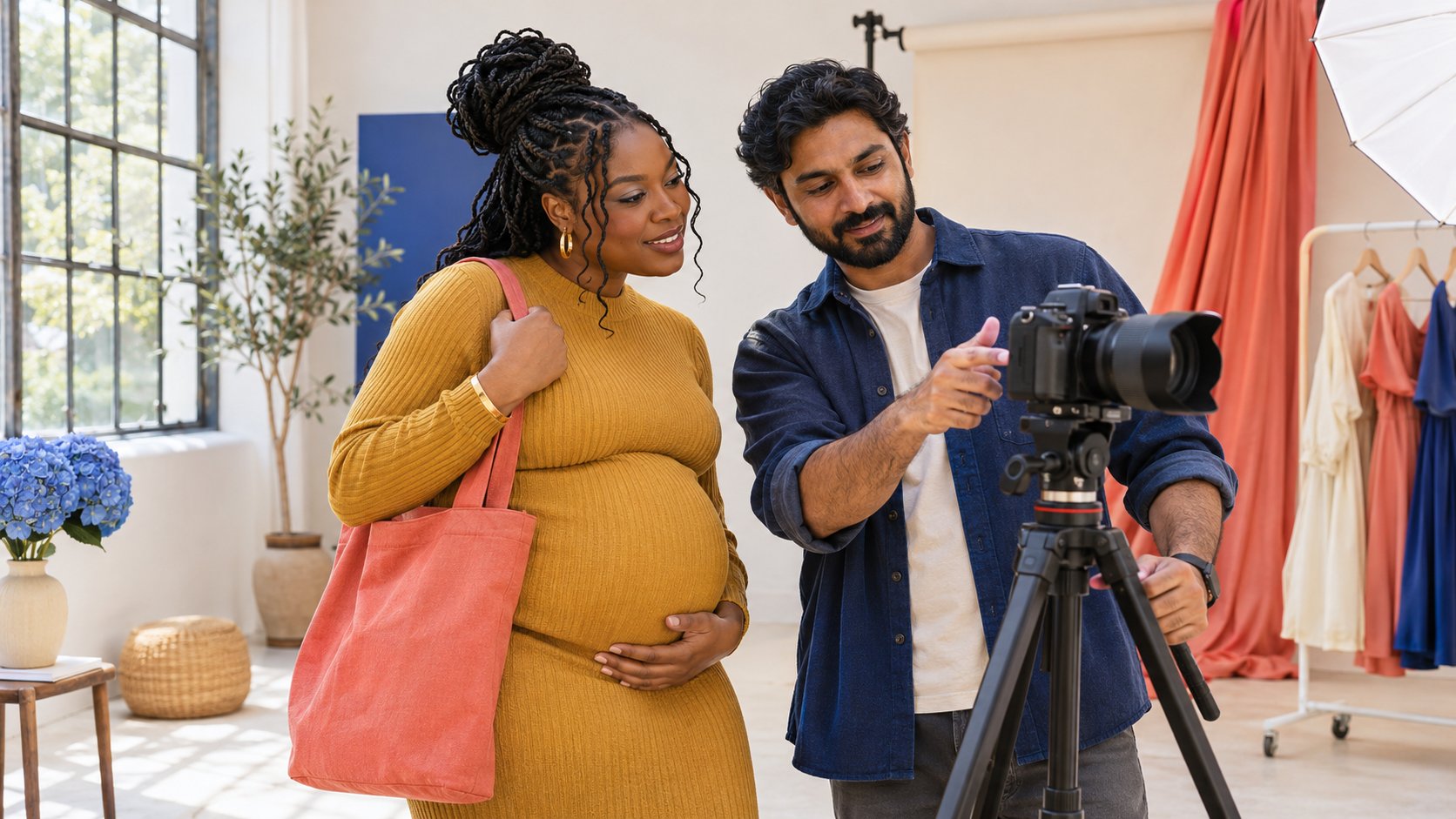
THE SHORT ANSWER
For maternity photography in a creator campaign, first agree on the story the creator wants to share and the content assignment, then select images together. The participant contributes to clothing, setting and image choices; the brand supplies accurate product information and the photographer develops the visual expression. Review the image, caption, crop and actual use together. Photographed, selected and cleared for publication are different states. This is guidance for brand-creator production, not medical advice about pregnancy, timing or pose safety.
Define the job the photographs need to do
Maternity photography can support a creator's personal narrative and, where relevant, show clothing, everyday objects or actual experience. Define one understandable viewer task rather than treat pregnancy as a reason every product belongs in the picture.
If the assignment shows how the creator prepares everyday items for an outing, a tote has a specific role. If the only purpose is borrowing attention from a life stage without a relevant contribution, reconsider the assignment. The creator should not supply an experience they have not had.
The maternity-photography production-brief guide addresses roles and inputs before the shoot. This article continues into selecting material for publication, with reasons for image choices, expression, product context and version.
Write a short story and identify the photographs it needs. A commercial project need not include the creator's entire private life, and one image should not carry an unverifiable lifestyle promise. A defined task also helps the photographer propose a suitable visual approach without guessing which product detail or personal moment the brand considers essential.
Discuss preferences before choosing images
Adobe’s maternity-photography guide emphasizes preparation, communication with the participant and attention to comfort. The relevant point here concerns production preparation, not personal health judgments derived from timing or pose suggestions.
Discuss clothing, atmosphere, material the person does not want included and whether other adults participate. Stating a preference is not unprofessional; it can reduce unnecessary shooting and later disagreement.
Return to those intentions during selection. A pose or expression that felt appropriate on set may communicate differently after a tight crop, another caption or advertising reuse.
Keep only decisions needed for the assignment. The team generally needs the selected image and applicable restrictions, not medical details or unrelated personal information. This lets the right people make decisions without circulating unnecessary information. It also gives the photographer concrete direction: a preferred expression or framing constraint can be acted on, while a vague request to make the subject more relatable leaves both the production and the participant uncertain about what should change.
Select a small set that completes the story
Separate the main image, action detail and supporting setting by purpose instead of selecting the largest number of attractive photographs. A main image establishes person and task; a detail explains the product role; a setting supplies context. They do not always need separate photographs.
For an outing-preparation assignment, the main image could show the person and organized items, while a detail shows the tote arrangement. The images should complement one another instead of repeating a pose while omitting the necessary explanation.
Record filename, image purpose, proposed use and open questions. The photographer can explain composition, the creator assesses expression and the brand checks product facts. A reply saying they all look good is not a specific selection.
If no image completes the essential task, discuss additional capture or a narrower assignment. More similar photographs do not replace a missing action. The caption also should not invent a result unsupported by either the image or the person's actual experience. This makes selection a content decision rather than simply a contest between visually polished files.
Give the product an accurate, proportionate role
A participant can use an object naturally, but the photograph alone does not establish comfort, health effects, universal suitability or long-term performance. Separate visible facts from the claim the brand wants to communicate.
FTC’s influencer disclosure guide addresses actual experience and commercial relationships in applicable US contexts. Do not ask someone to discuss experience with an unused product or let an intimate-looking scene conceal the partnership.
Confirm version, color and necessary conditions before checking the caption. An attractive photograph using another sample may need a different selection or explanation; visual quality is not a reason to ignore the difference.
Product size, position and any detail photograph should follow the task. Packaging need not dominate every image. Brand identification can coexist with the personal story without an inaccurate use being staged merely to make the item more prominent. A useful review note identifies the specific product fact requiring correction, giving the photographer and creator something concrete to resolve together.
Review editing with the intended expression
Establish whether editing adjusts color, removes a temporary distraction or changes the meaning of the person or product. Calling every intervention routine beautification should not require the creator to accept any result.
Compare the original and proposed image for skin, clothing, product color and setting. The brand needs accurate expression rather than a body modification made to manufacture a product effect. An unconfirmed change returns to discussion.
A new headline or topic can also change the meaning of the same photograph. Review proposed wording with selection instead of having the person choose an image before another team independently writes a different story.
Approval should identify a file, not merely state that the photographer has processed it. Continued changes need a version and relevant reviewer. The creator then assesses the actual expression, and the brand can distinguish visual adjustment from factual change. This is particularly useful when the selected photograph moves between organic content and another format, where an edit or caption that initially appeared incidental may become the central statement.
Keep person and product context in each crop
Wide, portrait and square exports can come from one photograph without retaining identical meaning. An ordinary object in a wider scene can become the principal endorsement in a close crop, requiring another look at context and wording.
Check person, action, product and text for the actual placement. An untested fixed safe zone cannot guarantee every screen; inspect the intended display instead.
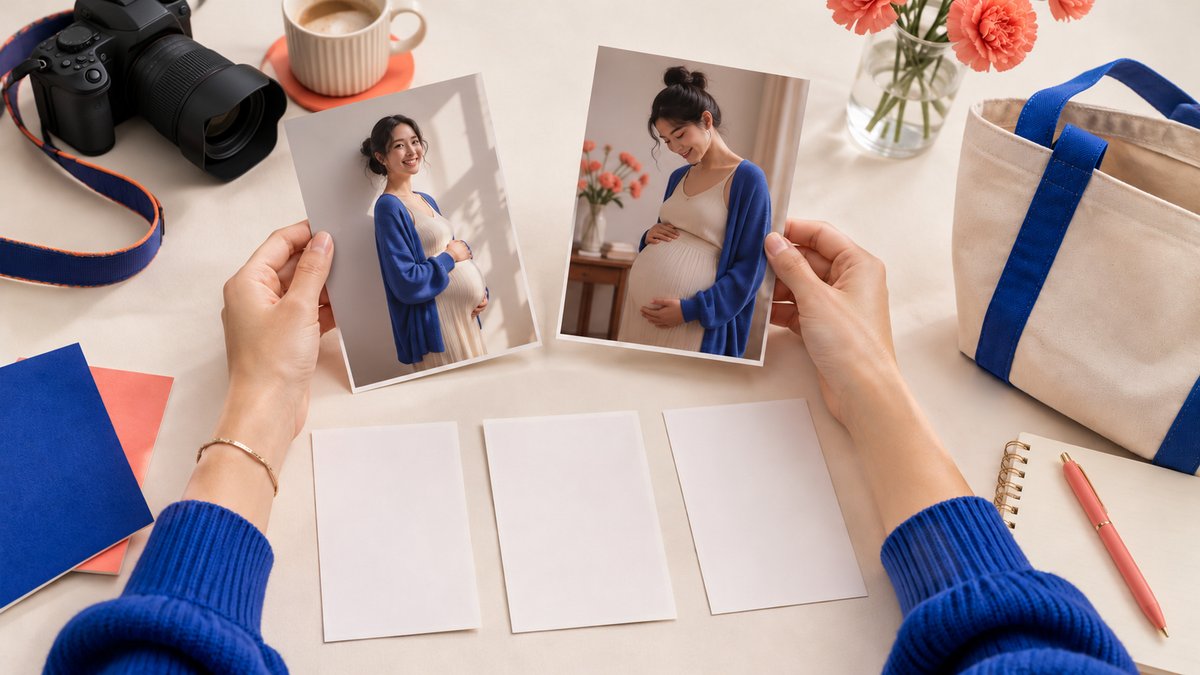
The selection photograph illustrates keeping the source image beside its decision record. Retain a few versions with named uses instead of delivering every export and asking the next editor to guess.
If a crop removes an important condition, reconsider composition or placement. Do not keep shrinking text or put essential explanation only in another post the viewer may never encounter. Each version should accurately complete its own task. A simple export list with file, placement and accepted caption is often enough to make the handoff usable without adding an elaborate management system to a small shoot.
Selection does not establish every use
The U.S. Copyright Office’s copyright overview explains protection for original photographs. A person agreeing to be photographed, a photographer delivering files and a brand selecting an image are different decisions; none independently establishes every channel and future use.
Confirm placement, editing scope, period and paid promotion. Additional languages or later advertising need an assessable request instead of an old selection reply replacing a new scope discussion.
The creator-material use guide distinguishes platform operations from commercial permission. A shared folder opening does not authorize every account operator to change a person's expression; access and content use need separate arrangements.
Retain relevant evidence and an owner without circulating all private conversation. Someone should be able to answer which image, for what purpose and until when. That gives later execution a basis beyond guesswork. It also makes a reasonable follow-up possible if the brand likes a photograph and wants another use, allowing the creator and photographer to assess a concrete proposal rather than an undefined request for more flexibility.
Work through a hypothetical outing-preparation selection
Suppose a creator and brand collaborate on outing preparation, and the photographer delivers a wide portrait, tote detail and setting photograph. Select a set explaining the preparation, then check product version, caption and public-use scope.
An attractive close-up may suggest a specialized use that has not been confirmed. Exclude it or choose an accurate view of the actual arrangement instead of asking the creator to promise an unsupported effect.
The creator confirms expression, the brand checks facts, the photographer supplies corresponding exports and the publisher inspects actual display. Leave unfinished items pending rather than describe image selection as publication.
This hypothetical contains no client result. It shows maternity photography becoming a defined influencer-marketing task: a meaningful story, participant involvement, an actual product role and a version the next owner can accurately receive. The decision record should explain the rejected image as well as the selected one, preventing a later operator from bringing it back simply because it looks attractive outside the context of the original review.
Attach a revision note to the specific image
If the brand wants the tote moved to the center, explain whether the purpose is clarifying actual use or increasing product prominence. The first may be solved by selecting another image; the second may change the story or use. The photographer should not have to guess.
An actionable comment identifies the file, issue, elements to retain and person needed for confirmation. A batch-level note that this one is unsuitable is insufficient when neither the image nor the problem is identifiable.
If the creator does not want an image published, remove it from the release set before discussing alternatives. Every team member need not receive the private reason; retain the actual restriction and the versions that can continue. This keeps a selection discussion focused on work while preventing a rejected image from remaining available as an apparently approved option.
Research date and limitations
Sources reviewed November 18, 2026. Methods, tables and decision rules are editorial recommendations. Hypothetical examples are not actual client results or industry benchmarks. Source geography and periods are specified where relevant.
Four separate image-selection questions
Brand-production and selection guidance, not personal medical, timing or pose-safety advice.
| Question | Confirm | Does not replace |
|---|---|---|
| Story | The content task the image completes | Relevance for every product |
| Expression | Actual image and wording | Every future modification |
| Product facts | Version, conditions and experience | Medical or performance proof |
| Use | Placement, edits and period | Unlimited channel permission |
CHECKLIST
Before handing selected images to the publisher
Match the version with its confirmation.
- Define one meaningful story task.
- Retain participant preferences and limits.
- Record filenames and selection reasons.
- Review product, wording and crop together.
- Confirm this use and display period.
- Identify pending matters and owners.
Sources and further reading
- 01Adobe’s maternity-photography guide
- 02FTC’s influencer disclosure guide
- 03U.S. Copyright Office’s copyright overview
External pages can change. Recheck platform rules, contracts and local law before launch.