
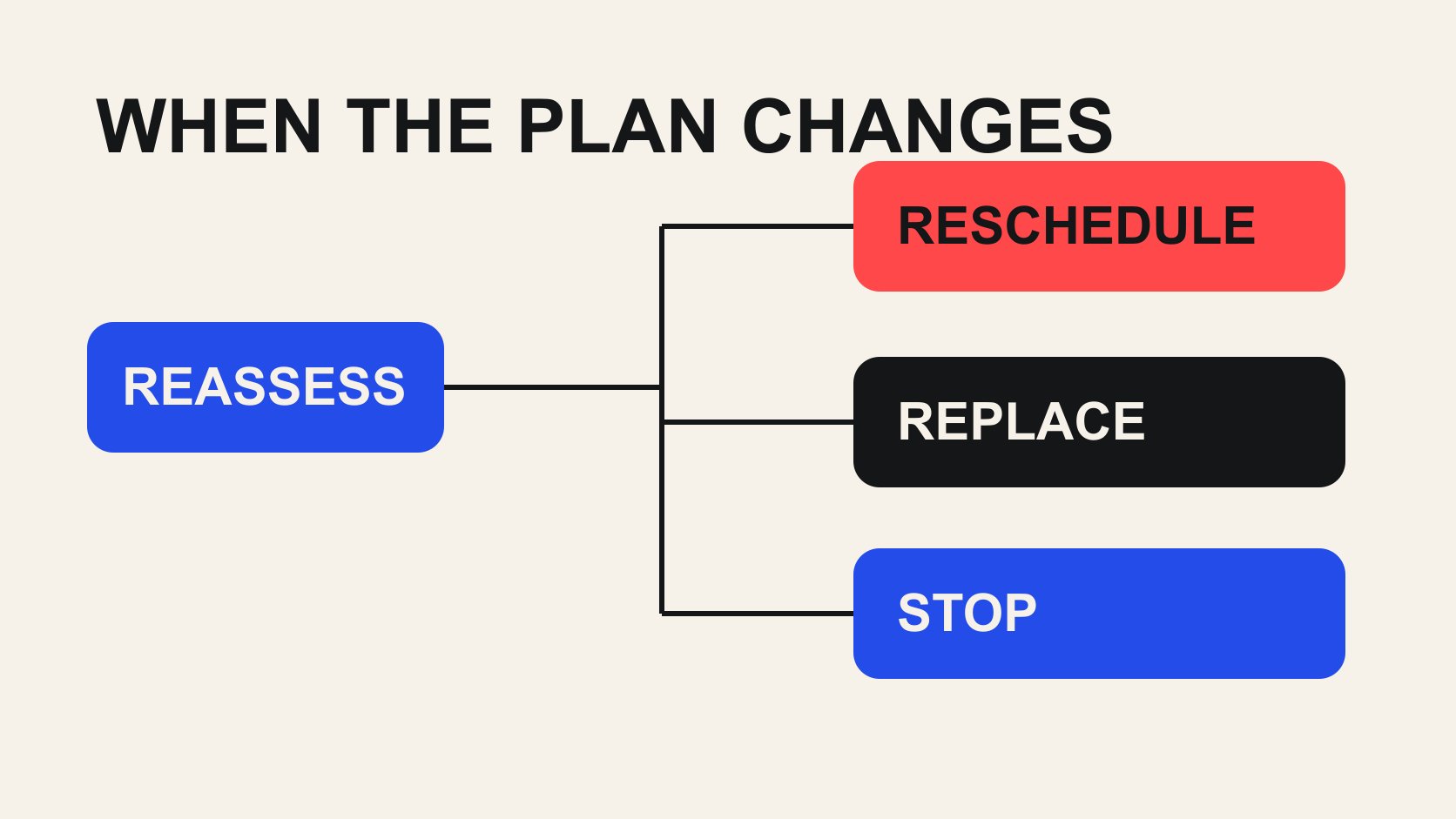
QuickKOL editorial graphic; not actual account metrics or a platform interface.
THE SHORT ANSWER
An influencers continuity plan defines who receives changes, which conditions need a new decision and who can approve delay, reduced scope, replacement or closure. Replacement is not forwarding the same agreement and creative work to another person. Recheck task fit, consent, schedule, cost and permissions. Retain facts and decisions so time pressure does not turn uncertainty into an unintended commitment.
Define the task that needs continuity
Continuity does not mean publishing on the original day regardless of circumstances. Identify the business task that must remain served: explaining registration before an event, demonstrating accurate features after access opens, or answering customer questions over a period. Different tasks have different alternatives. Labeling every plan must launch removes judgment when conditions change.
Distinguish fixed and movable moments. An exhibition appearance cannot simply move to next month, while a general tutorial may be delayed. Separate expertise specific to the individual from explanatory work that other authorized material can perform. If personal judgment is the main value, changing the creator requires redesigning the content rather than replacing a name.
The creator campaign risk register guide helps connect dependencies with impact and ownership. Keep the conditions that change a decision instead of accumulating unlikely scenarios nobody maintains. A useful plan tells the recipient what can continue, what needs to pause and which decision is missing. It should preserve the audience task even when the original execution changes. Start with the consequence of interruption, then decide how much contingency preparation is proportionate to the assignment, rather than treating a small asset commission like a major live event.
Agree how to report changes without unnecessary private detail
Give the creator a clear contact and explain which changes need early notice: unavailable essential samples, scheduling changes, insufficient genuine trial, altered filming conditions or a decision not to continue. The report needs the effect on the assignment and discussable options, not unrelated personal proof. For health or family circumstances, collect only information necessary to arrange the work.
The brand has reporting responsibilities too. A delayed product, changed brief, absent approver or expanded use can alter conditions the creator originally accepted. Do not impose a one-way promise against delay while treating internal changes as routine matters requiring no discussion. Record notification time so the team knows when particular facts became available.
Choose a channel suited to urgency and retain a traceable confirmation. An agreed project contact or email is clearer than pursuing several private accounts. If receipt is unconfirmed, do not record agreement. Return important decisions to a record both parties can review, reducing discrepancies between conversations and the schedule. The point is early coordination with appropriate information, not a demand that creators disclose personal circumstances unrelated to delivery. Make the same expectation available to agency and brand teams handling the project.
Re-decide scope and timing through a small set of options
When a change occurs, list completed work, unfinished work and affected items before comparing delay, reduced scope, changed format, replacement or closure. Do not jump directly from the original date cannot move to find somebody else. In some cases, publishing existing accurate information and arranging a later explanation is more useful than rushing a video without genuine experience.
For each option, state business consequences, feasible timing, additional inputs, costs and approval ownership. Mark unconfirmed amounts as pending rather than treating an internal estimate as an accepted creator quote. If the brand keeps the original date, identify what scope must change. Do not silently assume that scope, quality, time and cost can all stay fixed.
Ask the creator to confirm the revised arrangement they can actually perform, with a meaningful response deadline. No reply is not acceptance of a tighter schedule. Send the final decision to media, sales, event and other receiving teams so they stop making commitments from the obsolete date. A new plan understood by everyone is more useful than a calendar still showing an unsupported original deadline. Retain the reason for the choice so later reviewers can distinguish an intentional compromise from an unnoticed omission.
Re-establish fit for a replacement
A replacement pool can contain researched public work without being described as immediately available. Distinguish a research lead, contacted person, willing discussion and accepted terms. Unless explicitly agreed otherwise, do not expect an unsigned creator to hold time indefinitely or promise the business that anyone on the list can start filming at once.
Recheck task capability, product experience, local execution and schedule. A departing creator strong in detailed instruction and a replacement strong in quick demonstrations may answer different questions. The creator shortlist workflow helps express replacement reasons through work evidence instead of similar follower totals. Audience size cannot establish the ability to deliver this assignment.
Provide an accurate new brief identifying fixed and negotiable conditions. The replacement needs an opportunity to flag unsuitable or infeasible parts. Do not forward private details, undisclosed quotes or unlicensed creative work belonging to the previous partner. A replacement is a new partnership decision. Advance research reduces search time without removing consent and verification. Keep the candidate’s actual state visible until accepted terms and prerequisites support a production commitment, and let the receiving teams know if the creative task has changed rather than presenting every substitution as equivalent.
Check which files and permissions can transfer
Completed material from the departing partner does not automatically become available for a replacement to modify. The U.S. Copyright Office overview provides background on expression and rights. Check the agreement’s use, editing, transfer and termination conditions. Payment, possession of footage and approval of one version are not interchangeable with permission for every later treatment.
List the brief, brand facts, product files, creator-written scripts, tests, masters and third-party ingredients. Decide who may receive each. Brand-owned materials with appropriate permission can be shared as needed; uncertain items retain their restrictions. If the new creator needs to develop expression from scratch, recognize that in scope and timing rather than treating the job as a simple shot replacement.
YouTube brand partner access documentation likewise separates data sharing from content-use discussions. When account or video access changes, review reporting and promotion arrangements. Do not share account passwords or assume the original partner’s authorization transfers to somebody else. Give withdrawal, retention and new-access actions explicit owners. That prevents a replacement from finishing production only to discover the team cannot publish or support it as planned. The handoff should explain both what is available and what remains unavailable, with the original supporting records.
Connect cost decisions with completed work
Resolve costs through actual terms, completed scope and confirmed decisions rather than an improvised universal deduction percentage. Relevant items may include completed production, nonrefundable spending, cancellation arrangements, additional samples, reshoots and replacement costs. This is a recording method, not a legal determination of payment responsibility. Route necessary review to the appropriate owner.
Separate original budget, commitments, payments, change costs and pending items. If the original partnership stops and a replacement begins, merely changing the name in the sheet conceals costs already incurred. Do not assume all original fees are recoverable or that the remaining budget is a price the replacement will accept.
Retain the decision owner, basis and notification state so finance can connect each amount with a work package. Explain scope and payment changes to the creator, preventing content and finance teams from sending different messages. A clear cost record supports the current choice and allows a later review of the actual price of each continuity option instead of only the last invoice. It also helps distinguish unavoidable external costs from spending caused by a preventable internal delay, without turning that distinction into an unsupported claim against either partner.
Recheck publication and relationship disclosure
After a person or format changes, review actual copy, labels, product version and publisher. Do not combine a departing partner’s recommendation with a replacement’s image to create an endorsement neither made. If the plan required direct trial and the replacement has not used the product, change the arrangement instead of reusing the original experience script.
The FTC endorsement FAQ explains endorsements and material relationships in the US context. It does not establish compliance for a particular replacement project, but actual expression and relationship disclosure should match the actual partnership. Check other markets separately. Hand disclosure, platform settings and version information to the publisher rather than merely announcing a new name.
Cancel obsolete scheduling and inspect media assets, registration pages, sales materials and event agendas for the previous name or photograph. Updating the main sheet does not ensure downstream changes are complete. If an external explanation is needed, an authorized owner should prepare accurate wording; this framework does not instruct staff to contact media, customers or others independently. Internally, coordinate responsibility so different teams do not offer conflicting accounts of the change. Confirm completion at the actual publication locations, especially where another team manages the final asset.
Test the plan with a tabletop rehearsal
Suppose a B2B brand plans an expert tutorial on product-access day and learns beforehand that the guest cannot film on time. The team identifies the real need as accurate onboarding information, not necessarily that individual’s appearance. Options include delaying the interview, temporarily using a prepared brand demonstration or inviting another specialist. This is a hypothetical scenario, not a client case.
Ask who decides, whether product facts are ready, how existing material may be used, whether a new creator has time to understand the product, and whether the business accepts another format. When an answer is unknown, name the contact and cutoff instead of assuming every alternative is feasible. An explainable stop can provide more management value than maintaining an unsupported date.
Afterward, identify missing information, unclear authority and useful preparation for next time. Do not create unnecessary obligations for every creator merely because a rehearsal exposed one unusual event. Continuity planning should preserve reasonable choices while respecting actual work, rights and commitments. It should not treat individuals as interchangeable supplier labels. A successful plan makes a changed decision workable and traceable, even when the resulting content, date or partner differs from the original intention.
Research date and limitations
Sources reviewed October 29, 2026. Methods and tables are editorial recommendations; hypothetical numbers are not industry benchmarks. Platform conditions can change. Named references are research entry points, not live rankings, endorsements or confirmed partnerships.
Decision record after a change
Each option requires actual facts; no universal cancellation fee or presumed replacement commitment.
| Option | Confirm first | Required handoff |
|---|---|---|
| Delay | New date serves the task and both parties can deliver | Revised schedule, dependencies and notices |
| Reduce or change format | The core question remains accurately answerable | New scope, approval and cost |
| Replace | Recheck fit, consent and availability | New brief, permissions and execution state |
| Stop | Review completed work and obligations under terms | Files, costs, access and scheduling actions |
CHECKLIST
Continuity preparation
Let the next colleague execute rather than guess.
- Define the essential task and movable conditions.
- Both parties have a clear change-reporting contact.
- Distinguish researched candidates from accepted replacements.
- Check file, access and permission handoff scope.
- Connect costs with completed work and new commitments.
- Update actual publication locations and retain decisions.
Sources and further reading
- 01U.S. Copyright Office: What is Copyright?
- 02YouTube brand partner access documentation
- 03FTC: Endorsement Guides—What People Are Asking
External pages can change. Recheck platform rules, contracts and local law before launch.