
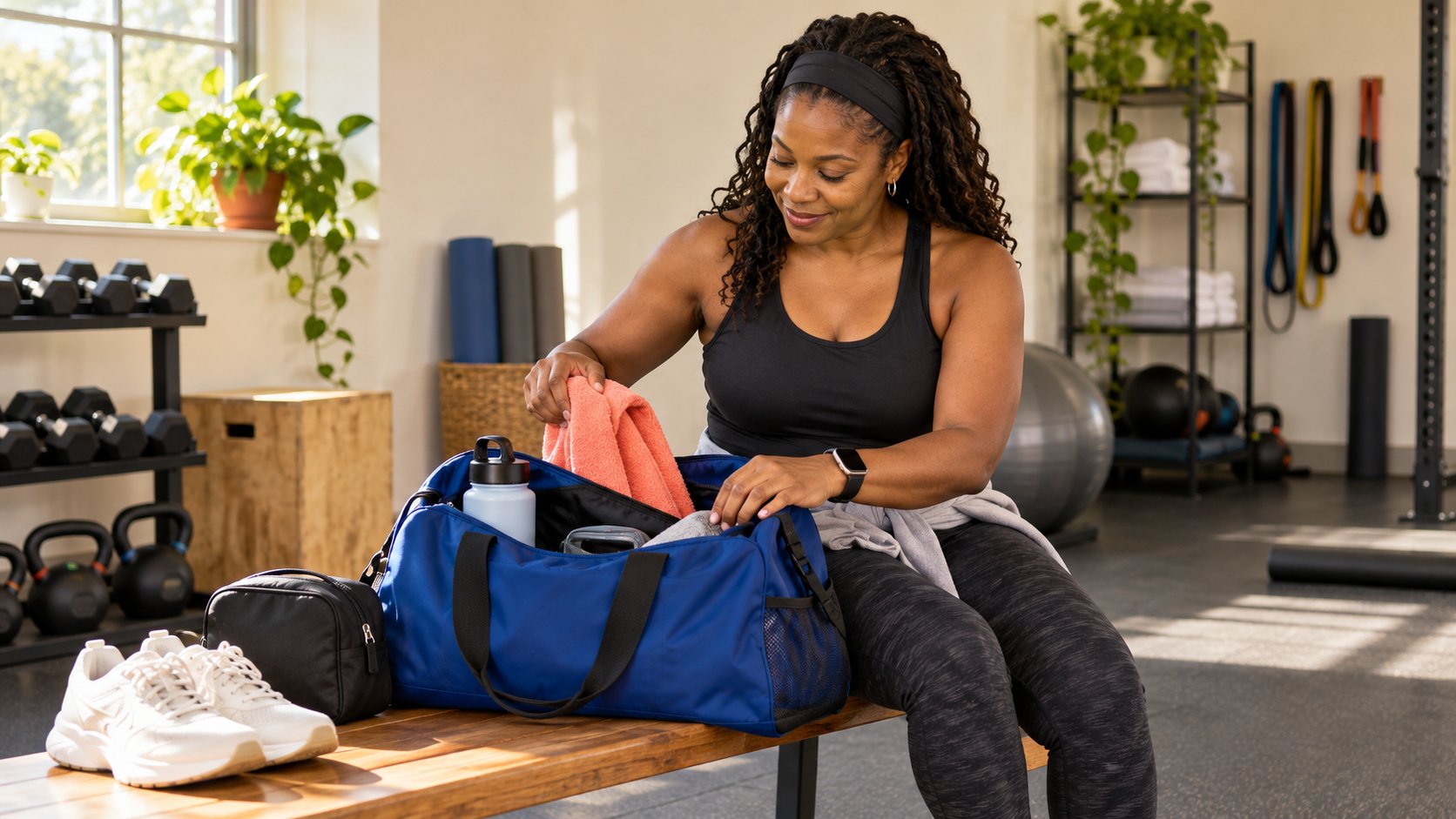
AI-generated editorial illustration, not named people or actual events in the article.
THE SHORT ANSWER
Research female fitness influencers through the product story, actual work and relevant expertise rather than physique. Caroline Girvan, Yoga with Adriene and Sohee Carpenter provide different official entry points, not a ranking or booking promise. Choose someone whose work supports this task and respect their expression. Body changes, health outcomes and appearance standards are not proof of commercial capability.
Separate the product story from instruction
Bag organization, preparing a home space and explaining an exercise require different evidence. Decide whether the task actually needs professional instruction before selecting the role. Not every fitness-brand commission should become a physical-transformation story. A truthful everyday product task may provide clearer evidence of usefulness without requiring a health claim.
The product-task guide helps narrow the brief. Appearance, clothing style and an impression of experience cannot replace work, relevant qualifications or direct confirmation of the arrangement. Assess what the creator has demonstrated and what the brand intends to purchase. This makes the assignment more precise and avoids treating a person’s body as a visual certificate for any product that happens to be marketed within fitness.
Sustained-work research: Caroline Girvan
Caroline Girvan’s site connects YouTube work, structured programs and CGX. It provides a route for studying sustained production and clear task organization. This article does not repeat a website audience statement as a live count or convert the existence of a long series into a prediction about a new short-form commission.
Review the format, explanation and production conditions relevant to the brief, then ask about current commercial arrangements. Publicly accessible free content does not give a third party free permission to edit or advertise with it. The useful research question is how the demonstrated work relates to the proposed contribution. Preserve that connection rather than rely on broad familiarity with the creator or assume every channel shares the same commercial scope.
Practice and community research: Yoga with Adriene
Yoga with Adriene’s official site connects practice videos, courses and community resources. It can support research into recurring participation and everyday expression. It does not represent every woman or establish that a product is appropriate for every person who practices. Avoid turning a broad community connection into an unsupported audience or suitability claim.
If the assignment concerns preparation or an everyday setting, propose a genuine scenario to discuss. If it requires professional health explanation, verify supporting material and the relevant scope separately. A channel topic does not establish a medical conclusion. The brand should know which product facts it can support and what personal experience remains the creator’s own. That distinction protects clarity without preventing useful commercial work around ordinary products and routines.
Explanation and behavior research: Sohee Carpenter
Sohee Carpenter’s about page describes fitness and behavior explanation and lists education and professional background. It is a starting point for researching specific work, not authorization to attach any health claim to the person’s name. Relevant credentials need to be considered in relation to the actual assignment.
Confirm the expertise and review arrangement the task requires. Do not place a creator’s name beside an unapproved product-effect claim and assume that a public professional biography supplies consent. A research entry is not an endorsement. The work-selection guide helps keep the assessment tied to evidence. The brand can reasonably seek a clear explanatory contribution while accepting that some proposed claims or formats may fall outside the creator’s role or willingness to participate.
Express representation through settings and choices
Different life stages, spaces, routines and experiences can shape a content question. Do not infer private health or family circumstances from images. Let the creator voluntarily describe a relevant perspective and confirm what they are comfortable including. Representation should improve the truthful story rather than create a new obligation to disclose personal information.
Avoid assigning women only appearance-led roles or asking one person to represent an entire group. Specify the contribution and adaptable conditions in the brief. A product demonstration can include different settings and routines without making unsupported claims about everyone sharing a demographic label. The aim is useful variation grounded in consent and actual work, not a presentation slide that treats people as interchangeable examples of a category.
Worked example: organization rather than transformation
Suppose the brand promotes a training bag. It can commission preparation, item access and cleaning or storage explanation without asking the creator to promise weight or training outcomes. Assess demonstration clarity and factual accuracy. These are hypothetical product tasks rather than proposals already accepted by any named person.
The rights guide separates creator publication from brand advertising. QuickKOL can assist discovery and brief preparation, while willingness, scope, fees and permission need direct confirmation. Keep the campaign connected to the supported product job throughout review. That allows the brand to learn from diverse work without making a person’s body the acceptance criterion or using a transformation narrative simply because the product belongs near fitness in a store category.
Which research fields should be omitted?
Omit unrelated inferences about private body, health, family and living circumstances. If fit or a specific setting requires information, explain the purpose and confirm it through an appropriate business conversation rather than fill the field from a photograph. Keep demonstrated capability, necessary conditions and voluntarily supplied relevant perspective.
This reduces wasted research and prevents subjective appearance preferences from acquiring the authority of evaluation data. A creator can decline to share a detail without that becoming evidence against unrelated professional capability. Reconsider whether the task genuinely depends on the information before making another request.
The research record should remain useful to the next planner: why the work fits, what conditions matter and what must be confirmed. It does not need to describe the person comprehensively. A focused schema can support more accurate selection because it keeps the team’s attention on the contribution it can actually purchase and evaluate.
Should physique be the selection filter?
Start with the task. Apparel fit may require truthful size and comfort information, but appearance should not become proof of expertise, authenticity or commercial performance. Relevant information should be confirmed voluntarily and used only for the stated purpose.
Demonstrated capability, practical conditions and genuine experience support a deliverable arrangement better than visual inference. Keep those fields separate so the brand can explain why a creator fits the work without turning a subjective appearance preference into a claim about professional quality or audience trust.
Research date, evidence and limitations
Sources reviewed October 23, 2026. Workflows are editorial recommendations. Numerical examples are hypothetical, not client outcomes, quotes or rankings.
A working comparison
Editorial analysis and labeled hypothetical examples, not performance rankings, quotes or guarantees.
| Task | Evidence | Action |
|---|---|---|
| Story | Product question and real setting | Do not default to transformation |
| Capability | Relevant work and expertise | Verify for the assignment |
| Representation | Voluntary expression and specific perspective | Do not ask one person to represent everyone |
CHECKLIST
Before you put this into practice
Record the answers in the campaign working file.
- Do not substitute physique for capability
- Verify professional claims separately
- Respect voluntary expression
- Obtain commercial-use permission
Sources and further reading
- 01Caroline Girvan: Training content and programs
- 02Yoga with Adriene: Yoga content
- 03Sohee Carpenter
External pages can change. Recheck platform rules, contracts and local law before launch.