
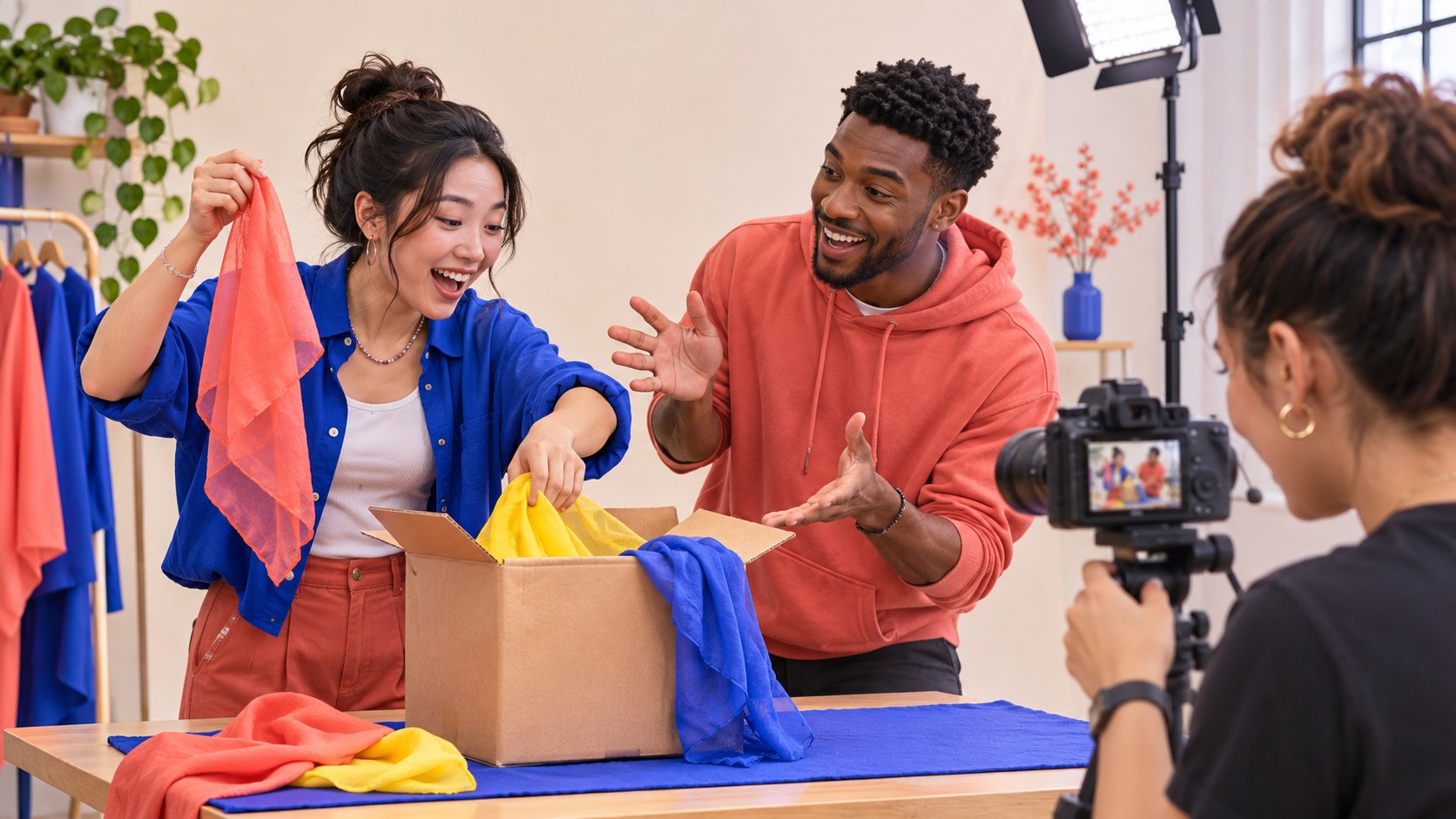
AI-generated editorial illustration. The scene is fictional.
THE SHORT ANSWER
Famous TikTokers can be a discovery starting point, but famous is not a confirmed partnership role. Establish identity through dated official profiles or public records, then research actual work, current public contact routes and proposed scope. The examples below involving Khaby Lame, Keith Lee and Tineke Younger are sourced research leads, not a live ranking, availability statement or guaranteed recommendation. A brand should specify production, performance, hosting or publication rather than send a vague invitation because the name is familiar. Recognition helps locate a public person; evidence and a concrete assignment determine what the brand can responsibly ask next.
Distinguish recognition from a defined assignment
Colleagues may recognize one name while disagreeing about the purchase. One wants event hosting, another account publication and a third wants a familiar clip in advertising. These are different jobs and permissions, not one generic collaboration.
Use the creator brief to define intended audience, question, role, deliverables, market and timing. A well-known creator’s representative team does not complete the brand’s requirements for it.
Clear scope also helps decide whether the assignment needs that person, their production team or another capable collaborator. Name recognition does not establish suitability for every production task. Before outreach, the receiving owner should be able to state what would count as a useful response: interest in one defined role, clarification of representation or a quotation for particular work. Otherwise even a prompt reply may leave the actual purchasing decision unresolved.
Read the Khaby Lame profile in its historical context
TikTok’s Khaby Lame profile, published in August 2021, documents @khaby.lame and a comedy context. A brand can use it to establish a public identity lead before researching work relevant to this assignment. This article does not present that historical milestone, age or ranking as current.
For visual comedy, ask whether the expression helps explain the product rather than demand recreation of a famous clip. Particular work, experience and rights still need checking.
A historical profile establishes what was recorded then, not current dates, fees or endorsement arrangements. Continue any procurement step through current public routes and applicable terms. The research note should therefore separate the verified identity reference from the proposed role. A role suggested by the brand is not an offer already accepted by the creator, even where the public work appears well suited to an initial discussion.
Use the Keith Lee and Tineke Younger record as a research lead
TikTok’s 2025 U.S. awards record, dated December 19, lists Keith Lee as Creator of the Year and @tinekeyounger as Storyteller of the Year. These are dated awards, not today’s global top three and not proof of suitability for every food, home or storytelling assignment.
Continue from that record to public work, examining narrative approach, actual subjects and relevance to the brand’s question. An award label does not establish willingness to perform a script, supply positive coverage or deliver fixed conversions.
Recognition also does not replace geography, language, production and commercial terms. Preserve the research between discovery and selection. A brand can reasonably decide to learn more without yet making a recommendation. That intermediate state is useful because it avoids both automatic endorsement of a familiar name and rejection of someone whose relevant work has simply not been examined yet.
Research the role through actual work
Distinguish performance, actual experience, professional explanation and production contribution. A person appearing in a video may not have produced everything. Familiarity with a face does not establish whether the work was independent, a guest appearance or commissioned by a brand. Preserve source and confirmed elements.
For new work, examine evidence of relevant capability. For existing footage, focus on rights and intended use. Those require different outreach questions rather than one vague email.
The candidate research method connects a specific question with work evidence. The brand need not judge a whole career; it needs to explain why a particular public piece warrants discussion. This also helps a representative route the request. A licensing inquiry can go to the appropriate rights owner, while a new production brief can identify the person responsible for considering a fresh assignment.
Use public representation rather than guessed private routes
Check business contact information from the creator’s current public account or site and corroborate representation. An unfamiliar email claiming agency status does not establish contracting authority, and a contact in an old interview may no longer apply. Use a public business route where evidence is missing rather than assembling private details.
Contact recipient, negotiating representative and final authorizer can differ. Ask who can confirm this role and scope instead of treating a fast reply as permission for every asset or account use.
This article supplies no private contact details and has sent no messages. Preserve public source and verification date in the handoff. A useful record tells the next colleague what the route appears to be and what remains to confirm, without presenting a discovered address as a guarantee of delivery, response or authority.
Ask about purchase components separately
Production, personal performance, account publication, attendance, advertising use and exclusivity can be distinct items. Provide market, duration, versions and intended use for an appropriate representative to confirm. Derive no universal fee from fame and assume no unlimited reuse from one collaboration.
If a claim requires actual experience, arrange suitable samples and time. Do not ask someone who has not used a product to say they have always used it or interpret refusal of a claim as unwillingness to collaborate.
Compare quotes alongside work rather than familiar names or totals alone. The person may accept one component and decline another. A responsible purchasing note preserves that distinction instead of summarizing the response as either wholly available or wholly unsuitable when the underlying discussion concerned different rights and responsibilities.
Preserve commercial context and genuine expression
TikTok’s commercial content disclosure guide is an official starting point for applicable platform treatment. Brand and creator should handle the actual commercial relationship. Fame does not replace disclosure, and an award does not establish completed review of product claims.
For personal-opinion content, distinguish brand-verifiable facts from the creator’s actual experience and expression. Payment is not purchasing an unconditional positive review, and editing should not alter the original meaning.
Check advertising, organic publication and subsequent reuse separately. An earlier brand collaboration does not establish a current right to reuse the work or change its commercial context. The final approval should identify the actual version and setting in which it will appear. A recognizable face can make contextual changes more consequential, which is a reason for clear scope rather than a reason to assume broader permission.
Rehearse a well-known-creator invitation
Suppose a technology brand wants a well-known short-video creator to explain a desk product but has prepared only make a viral video. First add the audience question, actual feature, creative latitude and publication scope, then invite discussion of the role. This is no actual invitation to the named examples.
If the real need is onsite hosting, describe the event assignment instead. If existing footage is wanted, ask about licensing separately. Do not keep adding account publication, exclusivity and ad duration after someone agrees merely to discuss.
The rehearsal succeeds by creating a proposal that can be quoted, declined or modified, not by guaranteeing a famous person accepts. A representative should be able to identify the decision and missing information from the document itself rather than arrange a call simply to discover what the brand intended to purchase.
An initial inquiry can be explicitly exploratory: state the proposed role and ask who handles that type of request before requesting a full quote. Do not imply a confirmed budget, approved contract or publication date that the brand has not established. It should also not ask the creator to produce an unpaid demonstration merely to learn the assignment. Clear stage labeling respects both teams’ time and makes a reply usable for the next decision.
Give shortlist states clear meanings
Distinguish identity lead checked, work relevance unresolved, public representation unresolved, scope answered and collaboration confirmed. These are not one verified state. A public award record does not complete audience verification, contracting or availability confirmation.
Record a specific reason where terms do not fit, without turning a decline or no response into a negative personal assessment. Another assignment may need a different role, and an old list needs appropriately dated updates.
A team can retain research on a recognizable person while acknowledging insufficient evidence for a current recommendation. Clear intermediate states are more useful than forcing every name into recommend or reject. They also protect handoff: a colleague opening the record later can see whether they are being asked to research, contact or execute an already agreed assignment rather than infer readiness from the creator’s fame.
Close with a concrete role
Hand over dated identity sources, specific work, proposed role, public contact leads, scope and unknowns. Names should locate actual research rather than obscure the purchasing question. Current checks not completed remain unresolved.
Well-known TikTok creators may merit a brand’s attention, but a suitable partnership still needs a defined task, genuine expression and appropriate terms. Separating historical recognition from current selection supports an invitation that respects the creator and can be understood by an internal reviewer.
A useful list explains not only who someone is, but why this person is being asked to do this work and what must be confirmed next. That is a stronger basis for creator marketing than a familiar name accompanied by an assumed audience, invented fee or promised result.
Research date and limitations
Sources reviewed November 12, 2026. Methods, tables and decision rules are editorial recommendations. Hypothetical examples are not actual client results or industry benchmarks. Source geography and periods are specified where relevant.
Well-known creator research starting points
Sourced research leads only, not a live ranking, endorsement or contacted roster.
| Person or account | Dated evidence | Does not establish |
|---|---|---|
| Khaby Lame / @khaby.lame | TikTok profile, August 2021 | Current rank or availability |
| Keith Lee / @keith_lee125 | 2025 U.S. Creator of the Year | Fit for every brand |
| Tineke Younger / @tinekeyounger | 2025 U.S. Storyteller of the Year | A fixed fee or result |
CHECKLIST
Before inviting a well-known creator
After recognizing the name, verify the role.
- Identity source and date are traceable.
- One specifically relevant work is identified.
- Proposed role and use scope are clear.
- Public representation and authority are confirmed on evidence.
- No ranking, quote or partnership guarantee is invented.
Sources and further reading
- 01TikTok’s Khaby Lame profile
- 02TikTok’s 2025 U.S. awards record
- 03TikTok’s commercial content disclosure guide
External pages can change. Recheck platform rules, contracts and local law before launch.