
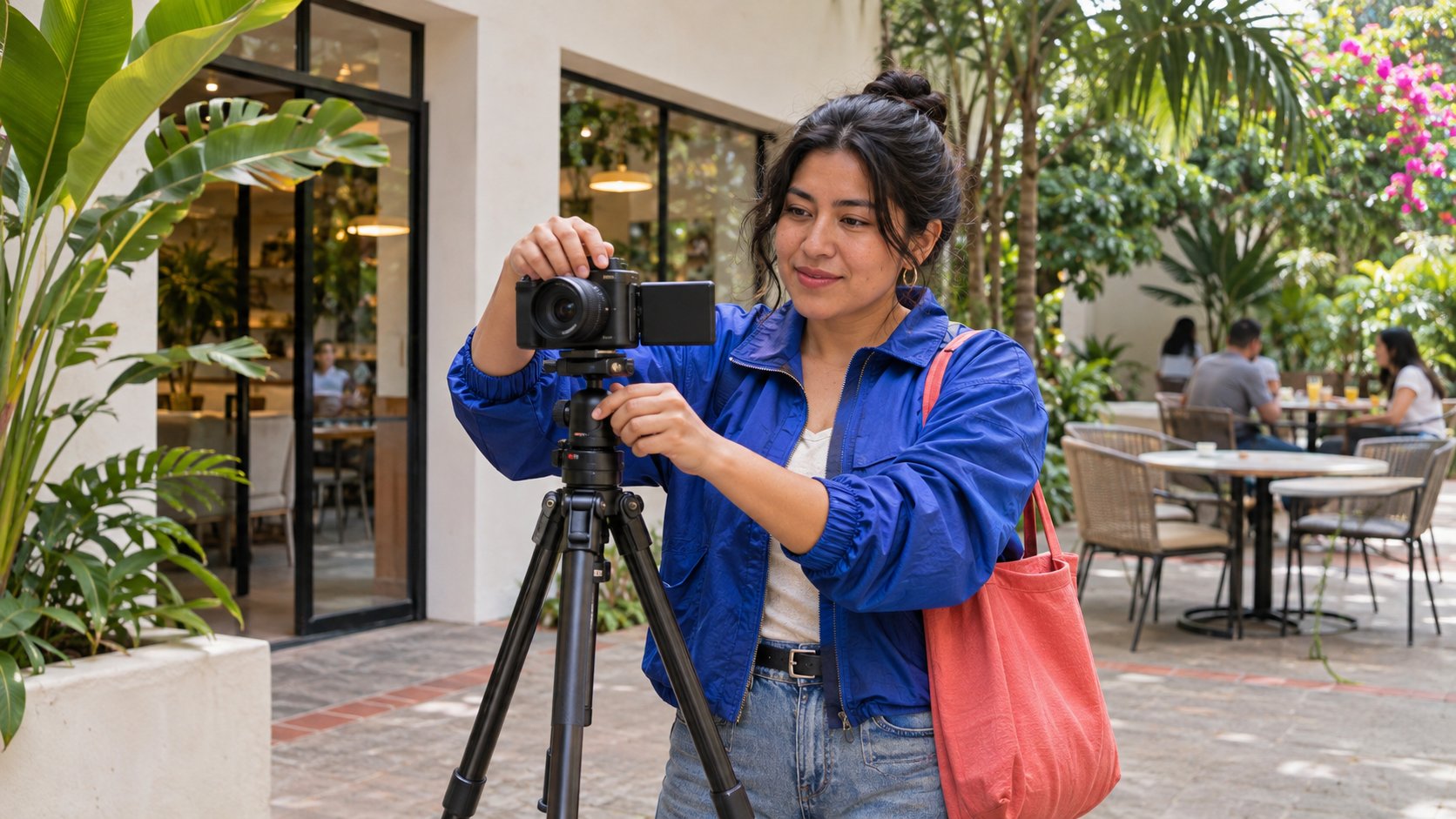
AI-generated editorial illustration. The people and setting are fictional.
THE SHORT ANSWER
For creator marketing, celebrities in Bolivia should be researched as different communication and production roles rather than copied from an entertainment ranking. Define the city, language, product conditions and required action, then verify official identity, actual work, relevant audience and representation. Hugo Dellien and Anabel Angus appear below only as traceable public-identity examples. They are not a live ranking or confirmed audience, pricing, availability or partnership recommendations. Familiarity can open a research route, but it cannot replace evidence for the assignment. A usable local campaign plan explains who might do what and which conditions still need confirmation.
Start with the local assignment
The brand may need a store visit, demonstration, event host or local lifestyle piece. Those tasks require different work and execution conditions; celebrity is not a sufficient role definition. Specify the city, applicable product, language, audience question and purchase format, including whether physical attendance is required or remote production would work.
Use the creator brief to separate mandatory from flexible conditions. For an event in one city, scheduling and travel are practical constraints. For a nationally available product explanation, the filming location may matter less. Nationality does not establish present residence, audience territory or ability to attend. Define the assignment before discovering names so the research does not become an unrelated celebrity profile. It also helps a representative respond to a real question rather than a vague request to collaborate with someone famous. The output should describe executable work, not merely public recognition.
Verify a sports identity through a first-party record
ATP’s Hugo Dellien biography provides a traceable first-party route to his professional tennis identity and Bolivian context. A brand can use it to identify the research subject instead of relying on a reposted ranking or fan page. This article does not supply a live ranking, income claim or private family analysis, and professional identity does not imply product endorsement.
If the assignment concerns a sporting experience, continue to original accounts and actual work before asking through an appropriate public commercial route. Athletic experience and a particular product claim are different matters. Participation in professional sport cannot automatically establish that a product improves performance or safety. Official information supports identity; work and suitable confirmation support the task. Keep those evidentiary steps separate so that a proposal does not borrow the authority of a sporting record for a technical statement that nobody has verified.
Verify a public media role through its own reporting
UNITEL’s report on Anabel Angus identifies her public presenter role with the broadcaster. That can support identity verification without extending into private life or inferring current audience size from one story. A media appearance, a personal-account publication and a brand purchase are different relationships.
If the assignment needs hosting or on-camera explanation, inspect relevant work for questioning, expression and live adaptation. Hosting a program does not establish acceptance of a commercial arrangement. Confirm the task, representation and timing separately. The named example demonstrates a route from a credible entry point into work research rather than deciding whom the brand should hire. A proposal should also specify whether it seeks an individual’s services, a broadcaster’s production or a combination. Public association between them does not establish that one representative can grant rights over every related asset or distribution channel.
Verify language, city and audience separately
A creator speaking a language does not establish that all viewers come from the same language market. Work filmed in one city does not prove current attendance is possible. Verify expression, production location, availability and audience evidence separately. Where local review matters, use an appropriate person familiar with the actual context rather than substituting stereotypes.
Do not treat Bolivia as one undifferentiated lifestyle setting. The brand needs expression relevant to its product and readers, not clothing, scenery or cultural symbols imposed merely to signal locality. Invite the creator to explain a natural approach and verify the facts involved. Relevance comes from actual content conditions, not assumptions drawn from a name or appearance. This also gives procurement a clearer distinction between required local expertise and optional visual choices, avoiding a brief that demands generic authenticity without explaining which audience question that requirement is meant to answer.
Build role groups around the task
Group research by roles such as hosting, physical demonstration, professional discussion and local scene production. Judge each through corresponding work. Well-known public figures and specialist creators can both belong in research without being asked to do identical jobs. A lack of national celebrity does not make someone’s ability to explain the product irrelevant.
Use the creator shortlist workflow to retain original accounts, relevant work, selection reasons, unknowns and next actions. Suitable work with pending timing differs from an unverified identity. The list should reveal what still needs checking rather than merely displaying names. Role research can also show whether celebrity attendance is necessary at all, or whether production ability and audience relationship matter more. That is a procurement insight, not a judgment about personal fame. It lets the brand choose a scope that matches its actual resources instead of paying for recognition without planning how the person will contribute.
Check the brand’s own readiness before inviting
Product delivery, venue confirmation and merchant fulfillment affect whether the invitation is real. If use is required, allow appropriate time and do not request an experience endorsement before the item arrives. For on-site work, define people, equipment, timing and change handling. A public contact route cannot replace preparation.
Explain whether production, personal attendance, original-account publication and asset use are separate purchases. A missing quote is not zero, and public recognition cannot be converted into a current price. If a representative is involved, verify authority and contracting scope instead of guessing private contact details. A clear statement of the brand’s own commitments makes a substantive reply more likely to be useful. It also lets the creator identify an infeasible condition early, before either side spends time preparing an elaborate proposal based on a product, location or release arrangement the brand has not actually secured.
Separate product facts, disclosure and permissions
The brand confirms product facts, the creator confirms genuine experience and the commercial owner confirms use scope. None replaces the others. For U.S.-relevant content, FTC’s influencer disclosure guide supplies material-connection context. Other territories and the specific arrangement still need appropriate review; the U.S. guide is not a complete account of local law.
Likeness, event filming, original posts and advertising edits may need different permissions. Attendance does not automatically grant permanent advertising use, and a photograph in public information is not automatically available for brand production. Verify source and scope before use. Recording these conditions gives the local partnership defined deliverables rather than relying on trust associated with a familiar name. It also enables meaningful budget comparison: two invitations are not equivalent if one includes an on-site role and limited organic use while the other assumes later paid distribution that has never been discussed.
Test the list against a hypothetical local activation
Suppose a brand needs to explain a kitchen product at a Santa Cruz store. Research may separate an on-site host, actual-use demonstration and later account publication. A sports professional, presenter and lifestyle creator could fit different roles; popularity alone should not make one person responsible for all of them. Find role evidence before confirming location, time and product conditions.
If the budget cannot purchase every role, narrow the task or select someone who can complete the core action rather than assuming the rest comes free. This case does not describe a real client or imply that the named people would accept an invitation. It tests whether a list can become purchasing and execution work instead of remaining a discussion of fame. Record the selected role, excluded scope and unresolved conditions so the next owner can communicate an accurate invitation without rebuilding the reasoning from a list of public names.
Close with a traceable task record
Retain public identity sources, original work, role reasons, language and location conditions, commercial unknowns and the next contact step. Date the record without presenting research material as a confirmed contract. Image captions should describe the actual scene rather than impersonating the real people mentioned in the text.
Celebrities in Bolivia can serve creator marketing when the article stays focused on finding appropriate people, tasks and evidence. A reader needs a research route that can be continued, not a directory of private lives unrelated to the purchase. Let recognition support discovery and base the decision on work and explicit conditions. Before handing over, ask a colleague to describe the proposed role and missing condition for each retained candidate. If only the name is memorable, strengthen the task explanation so that public familiarity does not become the sole reason the person remains on the list.
Separate identity from purchasable conditions
Distinguish a documented public role from a service the brand can currently purchase. A clear biography with unverified account, representation or timing calls for a focused next question, not a confirmed-candidate label. Conversely, a local creator lacking national coverage does not thereby have invalid identity or work; original accounts and appropriate public business routes may support further checking. Use evidence suitable to the role instead of making media visibility a universal qualification threshold. At handover, ask a colleague to identify one established fact and one pending condition for each person. This reveals whether the rationale contains usable evidence or only familiarity with a name, and gives the next researcher a specific question to pursue.
Research date and limitations
Sources reviewed November 11, 2026. Methods, tables and decision rules are editorial recommendations. Hypothetical examples are not actual client results or industry benchmarks. Source geography and periods are specified where relevant.
From public identity to partnership checks
Examples are not a live ranking, endorsement or availability confirmation.
| Research entry | Supports | Still to verify |
|---|---|---|
| ATP Hugo Dellien biography | Public sporting identity | Task work, audience and commercial terms |
| UNITEL report on Anabel Angus | Public presenter role | Specific task, representation and timing |
| Original account work | Observable expression and action | Local audience and permissions |
CHECKLIST
Local creator partnership research checklist
Define the role before verifying conditions.
- Specify city, language and required action.
- Verify public identity through first-party routes.
- Research work, audience and execution separately.
- Retain representation, rights and fee unknowns.
Sources and further reading
- 01ATP’s Hugo Dellien biography
- 02UNITEL’s report on Anabel Angus
- 03the FTC’s influencer disclosure guide
External pages can change. Recheck platform rules, contracts and local law before launch.