
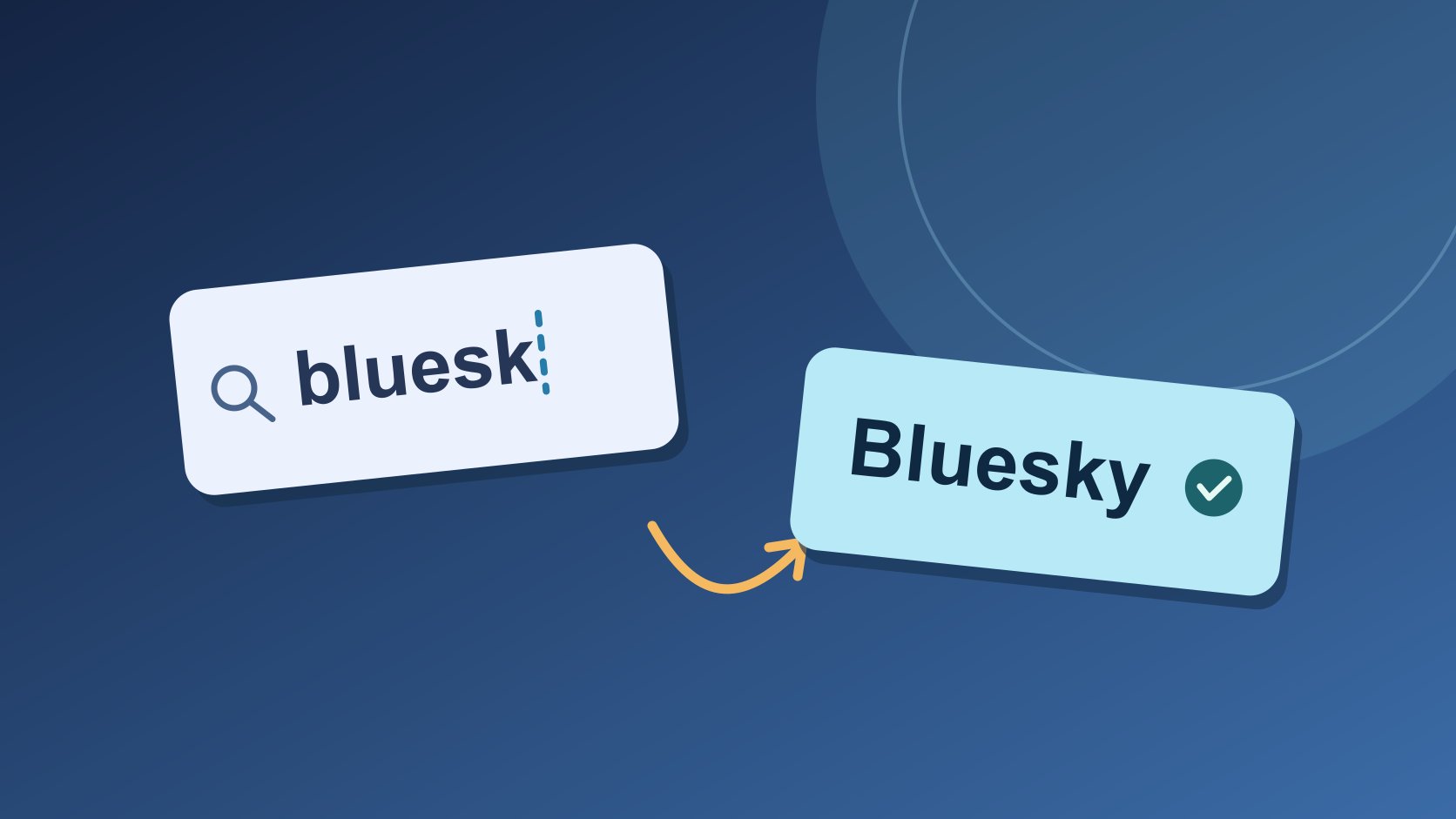
QuickKOL editorial graphic; not actual account metrics or a platform interface.
THE SHORT ANSWER
Bluesk may be an incomplete spelling of Bluesky. Use the surrounding note or search context to determine whether the intended reference is the social app, an account or an individual post. Cite official documentation for a platform claim. For a statement by a particular person, find the original post, author and date. If original evidence is missing, keep the reference unresolved and narrow the claim.
Preserve the original query before interpreting it
If an older research note contains only Bluesk, preserve the exact term, surrounding sentence, observer and approximate date. A campaign recap that says Bluesk comments described a difficult setup might refer to a Bluesky reply. It could also use an internal shorthand. Searching for the platform is a starting point. Quoting a user requires separate evidence of authorship and the actual post. Record probable platform and verified original as different statuses. Ask the original observer whether there is a link, capture or date window. Save the current editorial question beside it. Explaining the platform and documenting a customer statement are different assignments. If the word appears in a spreadsheet column shared across several tools, inspect the column’s definition before updating rows. A global replacement could overwrite a product code or a human label whose meaning is still uncertain. Keep an untouched original record for later comparison. Any revised field should identify the evidence used and the person who made the change. A colleague should be able to reconstruct the decision from those two versions.
Use official pages to confirm the platform reference
The Bluesky company overview describes Bluesky as a social app built on the AT Protocol and links to the official app. Use it to confirm the spelling and the application entry point. A statement that a particular post appeared on Bluesky also needs the post or sufficient historical evidence. If the old report calls all AT Protocol content Bluesky, check which application or service the source actually used. Retain distinct scopes where needed. The Bluesky public conversation guide can help separate a platform description from a team’s own observations. Distinguish the social application, a third-party client, a research database and the platform company when writing a source note. For example, a paragraph about a platform feature should cite the relevant first-party documentation, while an anecdote about a particular launch should cite the original public post. If an official announcement is only about a pilot or a dated release, do not rewrite it as a universal statement about all accounts. Record when you read it and check a newer primary source if the feature may have changed.
Distinguish display names, handles and persistent identity
The AT Protocol Handle specification distinguishes mutable human-readable handles from persistent account identifiers and describes the required bidirectional relationship between a handle and DID. The Bluesky domain handle guide describes one way an organization can use a website domain as its handle. Similar display names or a familiar-looking domain are reasons to check, rather than grounds to establish authorship. If a brand’s account is cited, look for a public reference from the organization and confirm the current identifier and observation date. Domain control and the authenticity of one statement are separate questions. The handle copied into an old report may have changed. Use permitted public information to resolve similar profiles. Suppose a brand has an international account and a similarly named regional one. Check which profile published the particular message and whether its scope was local or global. If a partner claims to speak for the brand, verify that separate relationship before describing it as an official company statement. When a persistent identifier is available through an appropriate source, store it next to the handle observed at the time.
Cite the particular record and observation time
The AT URI specification explains how addresses can refer to records using a handle or DID. A handle-based address can stop working or refer to a different repository after a name is reused. The contents of a record can also change. Give readers an accessible post link and keep the author, posting date, collection date, context and supported sentence in the evidence note. A DID-based reference can help with identity but does not promise perpetual access or immutable content. A capture can document an earlier observation under the team’s retention rules. On its own it does not resolve authorship or establish the current state. For a reply, review the parent post and nearby thread. If a screenshot says the account called an installation difficult, find out whether the author was quoting someone else or discussing a different version. Record a brief surrounding description rather than storing an entire thread when only one claim needs review. Distinguish a link that opens today from a primary statement that was observable at the time. Both can matter in an audit.
Narrow the conclusion when the evidence is incomplete
Suppose the saved link now opens a profile and the capture contains only an avatar and one sentence. You may be able to confirm the current profile while leaving the historical citation unresolved. In an internal report, describe an installation issue noted by the team and say that the public post remains unverified. A public article can omit that evidence and retain a correction note internally. If another account with a similar name later posts something similar, do not use it to replace the historical record. Use the social media operating plan to separate research observations from open follow-up tasks. Identify the owner and what evidence would close the item. A deletion, a permissions change and an incomplete link can produce similar symptoms. Report what you actually observed. An analyst can run a separate research task to see whether installation questions recur, with its own sampling method and dates. That new work may answer a business question. It does not restore the missing source of an old quote. Keep the two records distinguishable for later readers.
Use different fields for public copy and internal evidence
For public copy, use a readable link and the dates needed to interpret the claim. Avoid including personal details unrelated to the point. Internally, preserve the original query, context, source type, previous link and reason for any correction. A marketing note could summarize that three sampled posts asked about installation time if the team actually observed them. Three records cannot represent all customers. If a saved address changed, state what it now opens. Keep only evidence needed for review and restrict access when a record includes private or sensitive material. Reproduction of an image or substantial text calls for a separate permission decision. An approved statement should still be readable without the evidence workbook. Give the final copy editor a short supported sentence, rather than a folder of screenshots to interpret. When multiple team members collect examples, agree how to record repeated quotes so the same observation does not accidentally become a trend. A simple rule might group all reposts of a source statement under the original post, while documenting independent replies separately.
Correct one example and find other instances of the same error
Suppose a report claims that Bluesk lets every outside community change the rules for the whole service. A source that describes an app and its underlying protocol does not support that claim. Correct the name and the substantive statement separately. Search the report for related scope errors and update the summary, captions and other appearances of the fact. If downstream colleagues used the original sentence, give them the corrected wording and a usable source. Keep translations within the same evidentiary scope. A translation review can mark platform wording, account identity and direct quotations as distinct checks. Read the corrected sentence with its link, then ask another person which part the source verifies. If the reviewer sees an implication you cannot support, narrow it again. A public article might need a short editor’s note if a significant published claim changes. An internal draft can use a dated revision log. The right record helps later researchers explain why the platform name was normalized while a separate statement was withdrawn. It also avoids applying the correction to unrelated records that happened to contain the same short string.
Leave a reliable starting point for the next search
Save separate starting points for the official app, account identification and individual post evidence. When the shorthand appears again, read the surrounding note before interpreting it. If the project relies on someone’s words, locate the original before drafting the claim. Mark a confirmed platform spelling and an unresolved quotation separately. Choose a follow-up date in proportion to the decision. A minor navigation label may need no more than the official source. A statement that would affect how a named person or organization is portrayed deserves stronger evidence. If the original source remains unavailable, leave the narrow claim and update the correction record when evidence changes. Preserve only the material needed to explain that decision. Assign one reviewer the product documentation and another the permitted evidence for the particular statement. If the public report says that the official documentation supports a point, have a reviewer follow the link and identify the actual supporting passage. Split a sentence that depends on several sources so the reader can see which source supports each part. When a weekly report closes the issue, link that status to the correction reason. If a quote is still unresolved, keep it outside any metric that counts confirmed statements.
Research date and limitations
Sources reviewed November 6, 2026. Methods, tables and decision rules are editorial recommendations. Hypothetical examples are not actual client results or industry benchmarks. Source geography and periods are specified where relevant.
Evidence for a platform citation
Preserve the original shorthand and reason for correction.
| Claim | Preferred evidence | Open check |
|---|---|---|
| App name | Company overview and official app link | Intended reference |
| Author identity | Public profile and persistent ID | Identifier history |
| Statement | Original post, author and date | Changes and thread context |
CHECKLIST
Four citation checks
Record the scope you can confirm for each item.
- Preserve the original term and context
- Confirm the app from an official page
- Separate account and post evidence
- Record unknowns and reasons for correction
Sources and further reading
- 01Bluesky company overview
- 02AT Protocol Handle specification
- 03Bluesky domain handle guide
- 04AT URI specification
External pages can change. Recheck platform rules, contracts and local law before launch.